Tamil Nadu launches 25-year infrastructure plan for 16 urban bodies under World Bank project

Synopsis
Tamil Nadu is drawing up 25-year infrastructure blueprints for 16 cities — from Chennai to Hosur — under a World Bank-backed climate resilience project. With GIS mapping, population projections, and rolling five-year investment plans baked in, this is one of the most structured long-range urban planning exercises any Indian state has attempted.
Key Takeaways
Tamil Nadu is preparing 25-year City Infrastructure Development Plans for 16 urban local bodies , including major municipal corporations.
The exercise is funded under the World Bank 's Tamil Nadu Climate Resilient Urban Development Project .
TNUIFSL has invited consultancy firms via five proposal packages to carry out the assessments.
Cities covered include Chennai , Coimbatore , Salem , Tiruppur , Vellore , Thoothukudi , and Udhagamandalam , among others.
Plans will cover water supply, sewerage, drainage, solid waste, roads, climate vulnerability, and municipal finances.
Each city will receive a rolling five-year capital investment plan with phased priority classifications.
The Tamil Nadu government has launched a sweeping exercise to prepare comprehensive 25-year City Infrastructure Development Plans (CIDPs) for 16 urban local bodies, including major municipal corporations, under the World Bank-funded Tamil Nadu Climate Resilient Urban Development Project. The initiative, announced on 4 November 2026, aims to address accelerating urbanisation, upgrade civic amenities, and build long-term climate resilience across the state's key cities.
Scope and Cities Covered
The exercise spans 15 municipal corporations — Chennai, Coimbatore, Salem, Tiruppur, Erode, Vellore, Tirunelveli, Thoothukudi, Nagercoil, Sivakasi, Avadi, Tambaram, Cuddalore, Tiruvannamalai, and Hosur — along with Udhagamandalam special grade municipality. Together, these urban centres represent a significant share of Tamil Nadu's city-dwelling population and economic activity.
Tamil Nadu Urban Infrastructure Financial Services Limited (TNUIFSL) has floated requests for proposals to empanel consultancy firms, dividing the assignment into five packages. The initiative is embedded within the Chief Minister's Integrated Urban Development Mission (CMIUDM) 2026–2031, the state's flagship framework for modernising urban service delivery.
What the Plans Will Cover
Appointed consultants will conduct detailed assessments of existing civic infrastructure — including drinking water supply, underground sewerage systems, stormwater drainage, solid waste management, roads, and pedestrian facilities. The study will also examine the condition of public health facilities, schools, markets, community halls, parks, waterbodies, and digital municipal services.
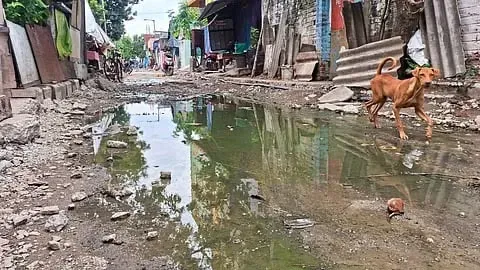
A key climate focus requires consultants to identify flood-prone areas, assess climate-related vulnerabilities, and recommend infrastructure upgrades capable of withstanding extreme weather events — a pressing concern for coastal and low-lying cities such as Chennai and Thoothukudi.
Methodology and Financial Assessment
The process will involve field inspections, Geographic Information System (GIS) mapping, municipal records verification, and stakeholder consultations to map infrastructure gaps and set development priorities. Consultants will also project population growth and service demand at 5, 10, 15, 20, and 25-year intervals.
A financial health review covering each local body's revenue performance over the previous five years will accompany the technical work, with recommendations to strengthen municipal finances. Each city will ultimately receive a rolling five-year capital investment plan classifying interventions into immediate, short-term, medium-term, and long-term priorities.
Why This Matters
India's urban local bodies have historically struggled with fragmented planning horizons — most investment decisions are driven by annual budgets rather than long-range demand projections. This exercise represents a structurally different approach: data-driven, climate-aware, and financially grounded. Notably, the World Bank partnership lends both funding and technical rigour, raising the bar on accountability compared with state-funded schemes alone.
Officials expect the CIDPs to give urban administrations a credible framework for attracting private and institutional investment, improving service delivery, and future-proofing infrastructure against population growth and climate shocks over the next quarter-century.
Point of View
Investing reactively rather than planning ahead. Tamil Nadu's 25-year CIDP exercise is structurally ambitious — but the proof will be in execution fidelity, not plan thickness. World Bank involvement typically brings discipline on methodology, but state governments have a mixed record of translating such master plans into funded, time-bound projects. The climate resilience angle is particularly significant: several cities on this list, including Chennai and Thoothukudi, face documented flood and sea-level risk. Whether the plans produce actionable investment pipelines or gather dust like earlier city master plans is the question that future audits will need to answer.
NationPress
4 Nov 2026
Frequently Asked Questions
What is Tamil Nadu's 25-year City Infrastructure Development Plan?
It is a comprehensive long-range urban planning exercise being undertaken for 16 urban local bodies in Tamil Nadu, covering infrastructure across water supply, sewerage, roads, solid waste, and climate resilience. The plans will project city needs at 5, 10, 15, 20, and 25-year intervals and produce rolling five-year capital investment schedules.
Which cities are covered under this initiative?
The 16 urban bodies include Chennai, Coimbatore, Salem, Tiruppur, Erode, Vellore, Tirunelveli, Thoothukudi, Nagercoil, Sivakasi, Avadi, Tambaram, Cuddalore, Tiruvannamalai, Hosur municipal corporations, and Udhagamandalam special grade municipality.
Who is funding this urban infrastructure planning exercise?
The exercise is funded under the World Bank-supported Tamil Nadu Climate Resilient Urban Development Project. TNUIFSL is the nodal agency managing the consultancy procurement process.
How does this fit into Tamil Nadu's broader urban development strategy?
The initiative is part of the Chief Minister's Integrated Urban Development Mission (CMIUDM) 2026–2031, the state government's overarching framework for modernising municipal infrastructure and improving urban service delivery across Tamil Nadu.
What is the climate resilience component of the plan?
Consultants are required to identify flood-prone zones, assess climate-related vulnerabilities in each city, and recommend infrastructure interventions capable of withstanding extreme weather events — a critical component given the coastal and low-lying exposure of several cities on the list.