Rijiju Accuses Prashant Bhushan of Spreading Fake News to Destroy India's Image
Synopsis
Union Minister Kiren Rijiju publicly accused senior advocate Prashant Bhushan of circulating fake news targeting India's judges and ministers, citing an earlier unretracted claim about a London badminton trip and calling the pattern a conspiracy against constitutional institutions.
Key Takeaways
Kiren Rijiju , Union Minister of Parliamentary Affairs, accused Prashant Bhushan of spreading fake news on November 4, 2026 .
Rijiju alleged Bhushan had earlier spread a claim that judges and ministers flew to London to play badminton — a claim Bhushan never apologised for.
The minister framed the episodes as part of a 'conspiracy to destroy India's image and constitutional institutions.' Prashant Bhushan was convicted of contempt of court by the Supreme Court in 2020 for tweets critical of the judiciary.
The exchange continues a documented pattern of government figures directly rebutting activist lawyers on social media over claims of judicial misconduct.
No apology or response from Bhushan had been issued at the time of publication.
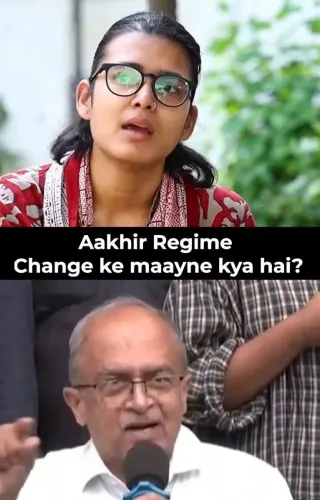
A sharp political salvo landed on Wednesday, November 4, 2026, when Union Parliamentary Affairs Minister Kiren Rijiju accused senior Supreme Court advocate Prashant Bhushan of deliberately spreading fake news to damage India's constitutional institutions — and demanded accountability for a previous unretracted claim that judges and ministers had flown to London to play badminton.
The Badminton Allegation That Never Came With an Apology
Rijiju's broadside singled out a specific, earlier episode: Bhushan had, the minister alleged, circulated a claim that judges and ministers had travelled to London to play badminton — a charge Rijiju says was false and for which no apology was ever offered. 'It's part of the conspiracy to destroy India's image and constitutional institutions of India,' Rijiju wrote, framing the incident not as a one-off but as part of a deliberate, recurring pattern.
The research record flags the badminton-related claim as unverified from public record, so the precise original circumstances of that allegation cannot be independently confirmed here. What is documented is that Rijiju treats it as an established prior offence — foundation for his current accusation of ongoing fake-news circulation.
Rijiju vs. Bhushan: A Long-Running Institutional Battle
Prashant Bhushan has spent decades at the intersection of judicial activism and public controversy. His 2020 contempt-of-court conviction by the Supreme Court — for tweets critical of the Chief Justice and the court itself — was a landmark moment that sharpened national debate on the limits of judicial criticism. That case established a precedent: inflammatory or unsubstantiated claims about judicial conduct can carry legal consequence.
Rijiju is no stranger to that front. As Law Minister in a previous cabinet role, he had clashed with the judiciary over the collegium system for judicial appointments, making him a consistent voice for executive pushback against what the government frames as overreach by legal activists. His current ministerial portfolio — Parliamentary Affairs and Minority Affairs — keeps him at the centre of institutional governance debates.
Why Governments Keep Fighting This Battle on Social Media
The exchange fits a wider pattern that has intensified since roughly 2020: government figures, rather than leaving rebuttal to official channels, now engage activist lawyers directly on social media. The calculus is clear — a viral claim about judicial misconduct, left unanswered in public, can erode institutional trust faster than any court judgment can restore it.
Rijiju's specific charge — that fake narratives about India's institutions form part of a coordinated conspiracy — escalates the language beyond personal dispute. It positions the criticism not as legitimate dissent but as a threat to constitutional order itself. That framing will invite scrutiny and, almost certainly, a response from Bhushan's corner.
Whether this volley triggers contempt proceedings, parliamentary debate, or simply another round of social-media sparring, the audience is broader than any single platform: it is every citizen deciding how much trust to place in the courts and the government that sits alongside them.
Point of View
The government escalates activist legal criticism from the domain of free speech into one of institutional sabotage. That framing has hardened since the 2020 Bhushan contempt case, which the government watched closely. The move also serves a secondary purpose — keeping Bhushan's credibility contested ahead of any parliamentary session where judicial reform or collegium matters may resurface. The real question the exchange raises is whether India's constitutional discourse is best served by ministers and advocates fighting it out in tweet threads, or whether institutional response mechanisms are being deliberately bypassed for political reach.
NationPress
4 Nov 2026
Frequently Asked Questions
What fake news did Prashant Bhushan spread according to Kiren Rijiju?
Rijiju alleged that Bhushan had earlier circulated a false claim that Indian judges and ministers had travelled to London to play badminton, and that Bhushan never apologised for it.
Who is Prashant Bhushan?
Prashant Bhushan is a senior advocate at the Supreme Court of India, well known for filing public interest litigations and making public statements critical of the government and judiciary. He was convicted of contempt of court by the Supreme Court in 2020.
Who is Kiren Rijiju?
Kiren Rijiju is a senior BJP leader from Arunachal Pradesh currently serving as Union Minister of Parliamentary Affairs and Minister of Minority Affairs. He previously served as Law Minister and has frequently clashed with legal activists over judicial matters.
What did Rijiju mean by 'conspiracy to destroy India's constitutional institutions'?
Rijiju used that phrase to characterise what he described as a deliberate, repeated pattern of spreading unverified or false claims about judges and government ministers — framing such actions as an organised effort to undermine public trust in India's constitutional bodies.
Has Prashant Bhushan faced legal action for his statements before?
Yes. In 2020, the Supreme Court of India convicted Prashant Bhushan of contempt of court for two tweets he posted criticising the Chief Justice and the court, marking a landmark moment in the debate over judicial criticism in India.