Rijiju: 'Minorities unsafe' claim predates BJP, echoes Congress era
Synopsis
Union Minister Kiren Rijiju has invoked the Congress era to argue that accusations of minorities being unsafe in India predate the BJP government, calling the charge a politically recycled narrative that persisted even under his predecessors.
Key Takeaways
Union Minister Kiren Rijiju posted on 13 June 2026 arguing that the 'minorities are unsafe' narrative existed during the Congress regime as well.
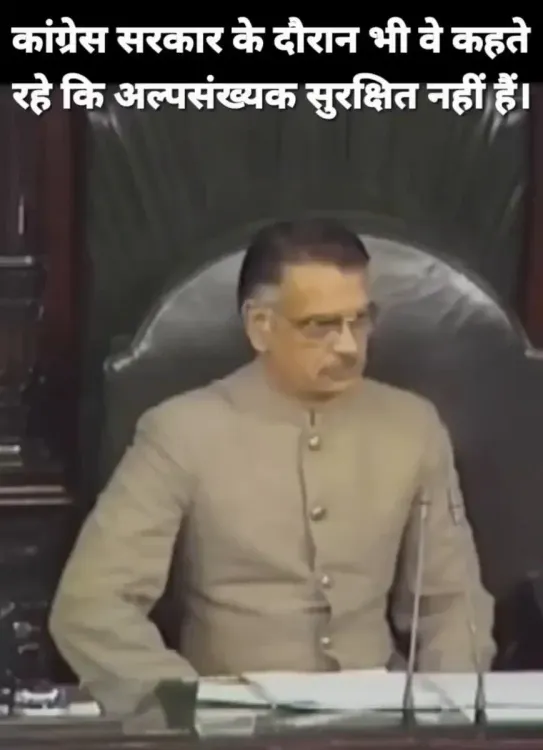
The post included a video, suggesting reference to archival statements or footage from the pre-2014 period.
The Sachar Committee , set up in 2005 under the Congress-led UPA , documented Muslim socio-economic backwardness — an indicator that minority welfare was contested even then.
Rijiju serves as both Minister of Parliamentary Affairs and Minister of Minority Affairs , making him the government's primary political voice on minority issues.
The statement is expected to draw responses from the Congress party and could foreshadow sharper debate in the next parliamentary session.
Religious minorities constitute roughly 20 per cent of India's population and remain a significant electoral and policy constituency for all major parties.
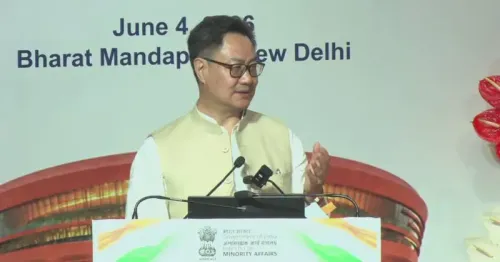
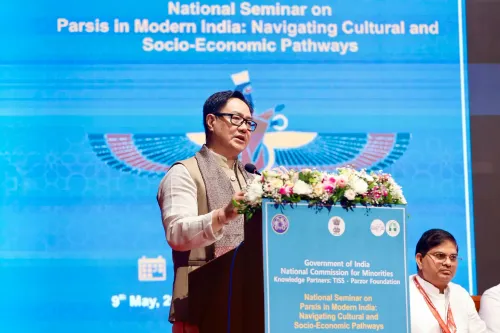
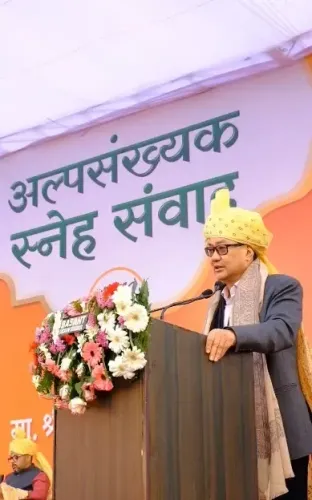
Union Parliamentary Affairs and Minority Affairs Minister Kiren Rijiju on Saturday, 13 June 2026, posted on X to argue that accusations of minorities being unsafe in India are not new — pointing directly at the Congress era as proof that the same narrative existed long before the current government came to power.
Context
Rijiju's post reads: 'During the Congress regime also, the same people said that Minorities are not safe in India!!' The remark is a pointed counter-narrative aimed at critics who raise minority safety concerns under the BJP-led government. By invoking the Congress period, Rijiju frames the allegation as a recurring, politically motivated charge rather than a factual assessment of ground conditions.
The post was accompanied by a video, suggesting the minister may be referencing specific archival statements or news footage from the pre-2014 period, though the precise content of the video has not been independently verified.
Policy Backdrop
The debate over minority welfare in India has deep institutional roots. The Sachar Committee, constituted in 2005 under the Congress-led UPA government, submitted its landmark report in 2006 documenting the socio-economic backwardness of the Muslim community — an implicit acknowledgement that minority welfare remained an unresolved challenge even under a government that positioned itself as a secular protector of minority rights.
Critics of both major parties have long argued that minority communities — including Muslims, Christians, Sikhs, Buddhists, and Jains — have been used as electoral constituencies rather than treated as consistent policy priorities. The BJP, in power since 2014, has introduced its own minority welfare schemes while simultaneously facing international and domestic scrutiny over communal incidents. Rijiju, as the sitting Minister of Minority Affairs, is the political face of the government's outreach to these communities.
Stakeholders and Impact
The statement is directed at multiple audiences simultaneously: opposition parties, civil society organisations, and international observers who periodically raise concerns about the safety and rights of religious minorities in India. By drawing a historical parallel, Rijiju attempts to neutralise the critique by demonstrating its bipartisan vintage.
For religious minorities themselves — who constitute roughly 20 per cent of India's population — the exchange underscores that their welfare remains a live political flashpoint. The Congress party is likely to respond, given that Rijiju's post directly implicates its governance record. Opposition voices may argue that citing a predecessor's failures does not address present-day concerns.
What's Next
With the next parliamentary session on the horizon, Rijiju's post could be a precursor to a sharper floor debate on minority welfare schemes, legislative proposals, or government data on communal incidents. Opposition members are expected to push back both on social media and in Parliament. The broader contest over India's secular credentials and the government's minority outreach record will likely intensify as electoral cycles approach. Whether this exchange translates into substantive policy discussion or remains a rhetorical skirmish will depend on the responses it draws in the coming days.
Point of View
He attempts to strip it of its partisan sting and reframe it as a perennial, bad-faith allegation. The move is strategically significant because Rijiju holds the Minority Affairs portfolio, meaning any credibility gap on minority welfare attaches directly to him. The broader arc here is a long-running contest between the BJP and Congress over which party can more convincingly claim the secular, pro-minority mantle — a battle that shapes coalition arithmetic in states with significant minority populations.
NationPress
20 Sept 2026
Frequently Asked Questions
What did Kiren Rijiju say about minorities in India?
Rijiju posted on X on 13 June 2026 saying that even during the Congress regime, the same people claimed minorities were not safe in India, arguing the allegation is a politically recycled narrative and not a new critique of the BJP government.
Who is Kiren Rijiju?
Kiren Rijiju is a senior BJP leader from Arunachal Pradesh who currently serves as Union Minister of Parliamentary Affairs and Minister of Minority Affairs in the central government.
What is the Sachar Committee and why is it relevant?
The Sachar Committee was constituted in 2005 by the Congress-led UPA government and submitted its report in 2006 documenting the socio-economic backwardness of Muslims in India, indicating that minority welfare challenges existed and were officially acknowledged even under Congress rule.
Why does the BJP say minority safety concerns are politically motivated?
The BJP argues that the same accusations of minorities being unsafe were levelled against the Congress government before 2014, suggesting the charge is a standard opposition tactic rather than an evidence-based assessment of any particular government's record.
What could follow from Rijiju's statement in Parliament?
With a parliamentary session approaching, Rijiju's post could signal a sharper floor debate on minority welfare schemes and communal safety data, with opposition members expected to challenge the government's record and push back on the historical comparison.