Rijiju on 'regime change' row: 'Never forgive traitors', targets Prashant Bhushan
Synopsis
Kiren Rijiju's 'never forgive traitors' post on X — directed at senior advocate Prashant Bhushan for openly demanding regime change — marks a sharp escalation in the BJP's framing of the protest movement. With Rajnath Singh invoking Bangladesh from Lucknow, the ruling party is betting that the 'regime change' phrase can recast civil society dissent as a threat to constitutional order.
Key Takeaways
Kiren Rijiju posted on X on 16 October 2026 , urging 'patriotic Indians' to never forgive 'traitors,' targeting advocates of 'regime change.' Senior advocate Prashant Bhushan had stated at a press conference: 'Yes, we want regime change.' Rijiju also circulated Bhushan's 2011 remarks on Kashmir in which Bhushan said Kashmiris should be allowed to separate if they wish.
Defence Minister Rajnath Singh in Lucknow alleged the opposition sought to 'capture power by creating anarchy,' invoking Bangladesh as a cautionary example.
Rijiju posted that the contest is between 'Dimagi Naxals' and 'Patriotic Indians,' between constitutionalists and 'anarchists.'
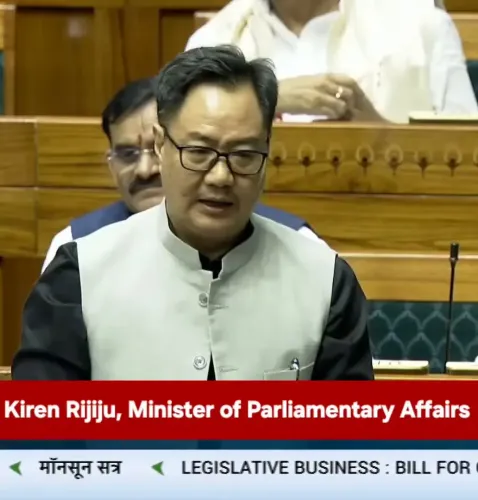
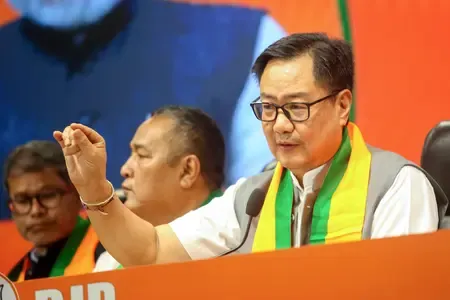
Union Parliamentary Affairs Minister Kiren Rijiju on Friday, 16 October 2026, launched a sharp political attack on those calling for 'regime change' in India, posting on X that 'patriotic Indians' should never forgive 'traitors.' The remarks came amid a deepening political controversy triggered by senior advocate Prashant Bhushan's public acknowledgement that he and his associates want a change of government.
Rijiju's Posts on X
In a direct post on X, Rijiju wrote: 'Dear Patriotic Indians… Remember: 'Forgive your Enemies once, Friends twice, but never Traitors'.' The minister had moments earlier shared a video from Bhushan's press conference on Thursday, in which the senior advocate stated plainly, 'Yes, we want regime change.' Rijiju also circulated a video of Bhushan's 2011 remarks on Kashmir, in which Bhushan was heard saying, 'If Kashmiri people want to separate, let them be separated.'
In a separate post, Rijiju sharpened the ideological framing, writing: 'The battle line has been drawn. It is Dimagi Naxals Vs Patriotic Indians. Between those who believe in the Constitution of India Vs Anarchists.' The posts drew immediate attention, with ruling party leaders amplifying the messages across platforms.
Rajnath Singh Weighs In
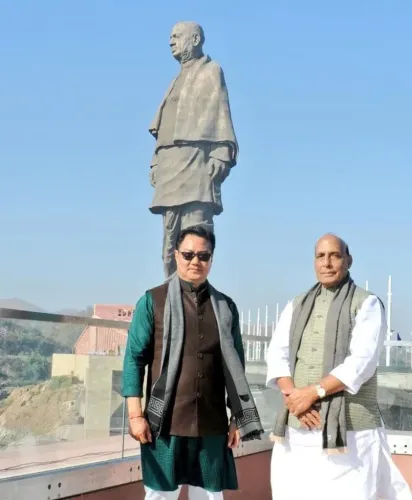
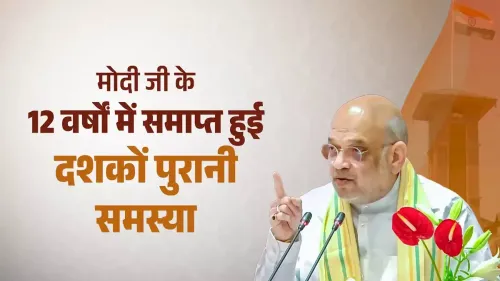
Defence Minister Rajnath Singh also entered the fray on Friday, addressing a press conference in Lucknow. Singh alleged that the use of the term 'regime change' exposed the protesters' true objective — to capture power by engineering anarchy rather than through democratic means. He maintained that the opposition's mobilisation was not genuinely about the Election Commission or Chief Election Commissioner Gyanesh Kumar, but was aimed solely at seizing power by creating disorder.
Invoking the example of Bangladesh, Singh accused those advocating regime change of seeking to destabilise India's democratic institutions. He asserted that democracy cannot be used as a licence for anarchy and called on political leaders to respect the people's mandate.
The Prashant Bhushan Controversy
The row centres on remarks made by Prashant Bhushan at a press conference on Thursday, where the senior advocate openly voiced support for a change of government. Critics within the ruling establishment have argued that such a demand — made outside the electoral process — amounts to an attempt to destabilise the constitutional order. Bhushan has been a vocal critic of the current government on multiple issues, including judicial independence and electoral oversight.
Notably, this is not the first time Bhushan's past statements have re-entered the political arena. His 2011 remarks on Kashmir — now recirculated by Rijiju — had previously drawn controversy and legal proceedings. The BJP's decision to revive that clip signals a broader effort to frame the current protest movement through the lens of earlier, more polarising positions.
What This Signals Politically
The coordinated response from both Rijiju and Singh — a cabinet minister and a senior cabinet minister, respectively — suggests the ruling Bharatiya Janata Party (BJP) is moving to centralise its messaging around the 'regime change' phrase, casting opposition-linked activists as a threat to constitutional democracy. The developments have set the stage for a prolonged political exchange over the boundaries of dissent, the role of civil society in electoral politics, and what constitutes legitimate protest in a democracy.
How the opposition responds to the 'traitor' framing — and whether Bhushan or allied groups clarify or double down on the 'regime change' terminology — will shape the next phase of this controversy.
Point of View
Not a slip. By tying the 'regime change' phrase to Bhushan's decade-old Kashmir remarks, the ruling party is attempting to conflate civil society protest with anti-national sentiment, a tactic with a well-worn precedent. What mainstream coverage is underplaying is the structural asymmetry here: a Union minister using state visibility to label private citizens as traitors carries institutional weight that a senior advocate's press conference simply does not. The Bangladesh reference from Rajnath Singh is equally calculated — it plants the idea of externally assisted destabilisation without requiring proof. Whether this rhetoric consolidates the ruling coalition's base or alienates swing voters who may sympathise with the protest's stated electoral grievances is the real political question this episode raises.
NationPress
16 Oct 2026
Frequently Asked Questions
What did Kiren Rijiju post on X about regime change?
Rijiju posted on X urging 'patriotic Indians' to 'never forgive Traitors,' in a direct reference to those calling for regime change. He also shared videos of Prashant Bhushan's recent press conference and his 2011 remarks on Kashmir.
What did Prashant Bhushan say about regime change?
At a press conference on Thursday, senior advocate Prashant Bhushan stated openly, 'Yes, we want regime change,' acknowledging that he and others are calling for a change of government in India.
What did Rajnath Singh say about the regime change controversy?
Defence Minister Rajnath Singh, speaking in Lucknow on Friday, alleged that the demand for regime change showed that protesters aimed to capture power through anarchy rather than democratic means. He invoked the example of Bangladesh to warn against destabilising democratic institutions.
Why did Rijiju share Prashant Bhushan's 2011 Kashmir remarks?
Rijiju circulated the 2011 clip — in which Bhushan said Kashmiris should be free to separate if they choose — to reinforce his characterisation of Bhushan as someone whose positions are at odds with national integrity, amplifying the BJP's broader narrative against the protest movement.
What is the political significance of the 'Dimagi Naxals' remark?
By posting that the contest is between 'Dimagi Naxals' and 'Patriotic Indians,' Rijiju drew a sharp ideological line, casting opposition-linked activists as intellectually driven subversives rather than legitimate dissenters. The phrase signals the BJP intends to frame the protest debate in constitutional rather than electoral terms.