Rijiju Hails Amit Shah for Shifting Voters to Development
Synopsis
Union Parliamentary Affairs Minister Kiren Rijiju publicly credited Amit Shah on June 11, 2026, for steering Indian voters away from caste, religion, and dynastic politics toward development aspirations — reinforcing the BJP's decade-long political repositioning narrative.
Key Takeaways
Minister Kiren Rijiju posted on X on June 11, 2026 , attributing a transformation in voter consciousness to Amit Shah's leadership.
The statement claims Indian voters have moved away from caste, religion, and dynastic parties toward development aspirations.
The post invokes the BJP's core political narrative established since the 2014 general election and the 'Sabka Saath, Sabka Vikas' slogan.
Amit Shah is identified as Union Home and Cooperation Minister and the chief organisational force behind BJP's electoral expansion.
The critique of parivaarvaadi (dynastic) parties is a sustained BJP attack line against family-led opposition formations.
Opposition reactions in the next parliamentary session are expected to contest the claim that identity politics has receded.
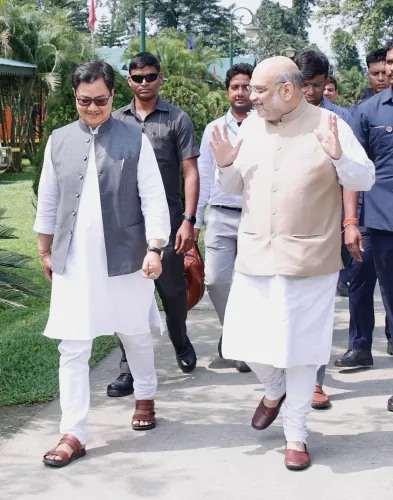
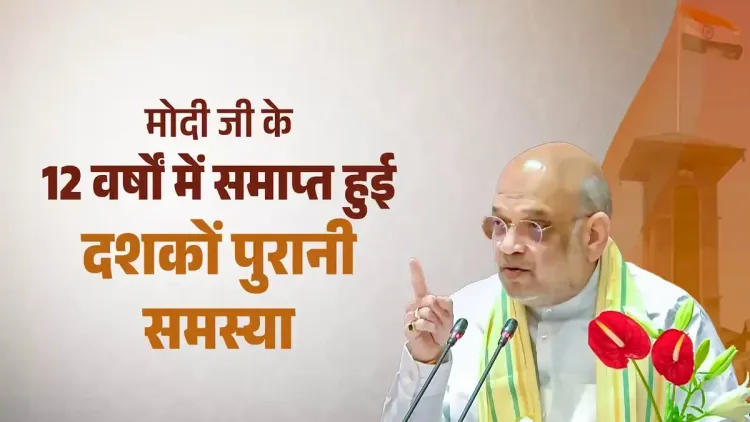
Union Parliamentary Affairs Minister Kiren Rijiju on Thursday, June 11, 2026, publicly credited Union Home and Cooperation Minister Amit Shah with leading a fundamental shift in Indian voter consciousness — away from caste, religion, and dynastic politics toward development aspirations.
Posting on X, Rijiju quoted what he attributed to Shah, writing: 'जनता जाति, धर्म और परिवारवादी पार्टियों से मुक्त होकर आज विकास की आकांक्षी बनी है, यह आपके ही नेतृत्व का परिणाम है' — translated: 'The public, freed from caste, religion, and dynastic parties, has today become aspirational for development — this is the result of your leadership alone.' The post was addressed directly to Shah, referring to him with the honorific Mananiya (Honourable).
Context
The statement fits within the Bharatiya Janata Party's long-running political narrative that frames its governance model as a break from identity-based mobilisation. Since 2014, the party has consistently argued that it replaced caste arithmetic and dynastic succession with welfare delivery and economic aspiration as the primary currency of Indian electoral politics.
Rijiju's post appears to be a tribute to Shah's organisational role in sustaining and expanding this political positioning across successive national and state election cycles.
Policy Backdrop
The ideological thread Rijiju invokes traces back to Prime Minister Narendra Modi's 2014 campaign slogan 'Sabka Saath, Sabka Vikas' (Together with all, Development for all), which was designed to signal inclusive governance beyond traditional social cleavages. Amit Shah, as the party's chief organisational strategist during that period and subsequently as Home Minister, is widely credited within BJP circles with translating that messaging into electoral mobilisation across states.
The critique of parivaarvaadi (dynastic) parties is a recurring BJP attack line directed at family-led regional formations and the opposition Indian National Congress, which the ruling party frames as prioritising lineage over merit and governance.
Stakeholders and Impact
Indian voters, particularly those in states where caste and community identities have historically dominated electoral outcomes, are the implied audience of this messaging. By asserting that voters have 'freed themselves' from such identities, the BJP signals confidence that its development-first platform has achieved a durable realignment.
Opposition parties — including regional formations and dynastic political houses — are implicitly targeted by the framing. Their responses, particularly in the run-up to any upcoming state elections or the next parliamentary session, are likely to sharpen the debate around what constitutes genuine inclusive governance versus political branding.
What's Next
With Parliament's next session expected to bring renewed scrutiny of the government's welfare delivery record, statements like Rijiju's are likely to set the tone for the ruling party's floor strategy and public communication. The BJP's framing of development versus dynasty is expected to remain central to its electoral and legislative messaging. Opposition benches are likely to contest the claim that caste and religious considerations have receded from Indian political life, making this a live fault line in parliamentary debate.
Point of View
Rijiju also elevates Shah's stature within the party hierarchy at a moment when internal rankings matter. The 'dynastic parties' framing is a well-worn but effective contrast device that keeps the opposition on the defensive without requiring specific policy debate. Whether voter behaviour has actually decoupled from caste and community identity remains empirically contested, and opposition parties are unlikely to let this assertion pass unchallenged in Parliament.
NationPress
26 Oct 2026
Frequently Asked Questions
What did Kiren Rijiju say about Amit Shah?
Rijiju credited Amit Shah with leading a shift in Indian voter consciousness away from caste, religion, and dynastic politics toward development aspirations, posting a tribute on X on June 11, 2026.
What is the BJP's 'Sabka Saath Sabka Vikas' slogan?
'Sabka Saath, Sabka Vikas' means 'Together with all, Development for all' and was launched by the BJP in 2014 to signal inclusive governance beyond caste and religious identity lines.
Who is Kiren Rijiju?
Kiren Rijiju is the Union Minister of Parliamentary Affairs and Minority Affairs, a senior BJP leader from Arunachal Pradesh .
What does 'parivaarvaadi party' mean in Indian politics?
'Parivaarvaadi' translates to dynastic, referring to political parties controlled by a single family across generations. The BJP uses the term to criticise opposition formations like certain regional parties and the Congress.
Why does the BJP contrast development with caste and dynasty?
The BJP has used this contrast since 2014 to differentiate its governance model from identity-based and family-led political formations, arguing that welfare delivery and economic aspiration have replaced caste arithmetic as the dominant voter motivation.