Amit Shah pays tribute to Vasudev Balwant Phadke on birth anniversary
Synopsis
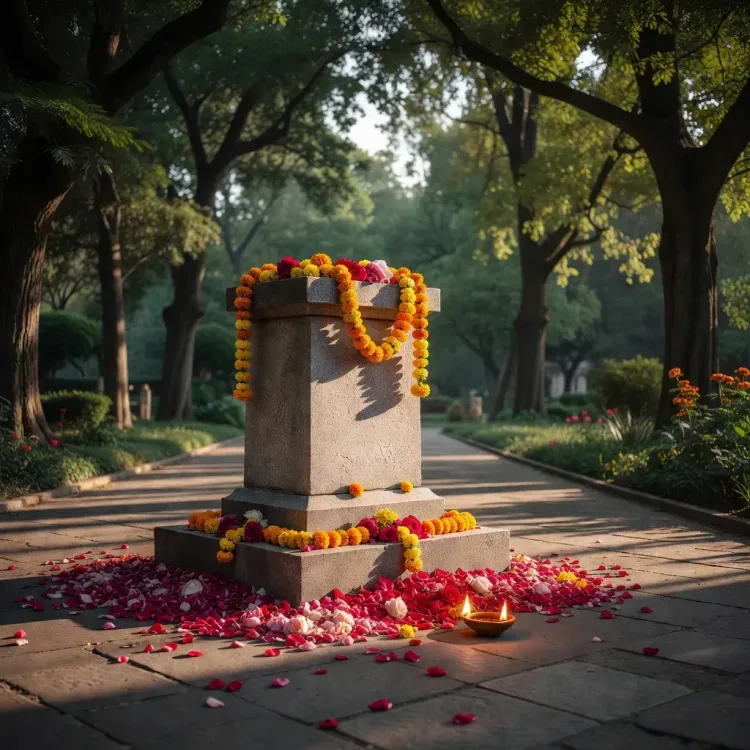
Union Home Minister Amit Shah on November 4, 2026, honoured Vasudev Balwant Phadke — deemed the father of India's armed revolution — on his birth anniversary, citing his cross community youth mobilisation, famine relief work and founding of the Aikya Vardhini Sabha as timeless expressions of 'Nation First'.
Key Takeaways
Amit Shah posted a birth anniversary tribute to Vasudev Balwant Phadke on November 4, 2026 .
Phadke is described as the 'father of Indian armed revolution' and a source of inspiration for countless revolutionaries.
Shah highlighted Phadke's famine relief work and his founding of the Aikya Vardhini Sabha to educate and unite youth across communities.
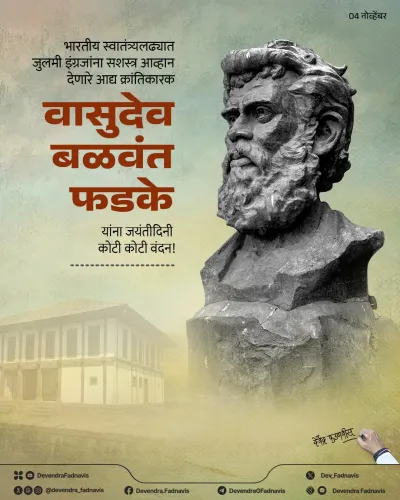
The post was written in both Hindi and Marathi , reflecting Phadke's Maharashtra roots and broadening its national reach.
The tribute is part of a consistent BJP practice of commemorating pre 1900 revolutionaries to foreground the armed strand of India's freedom movement.
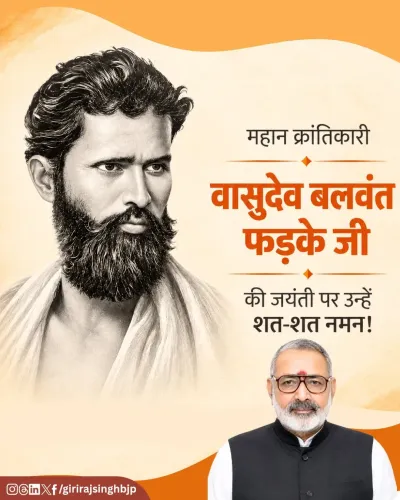
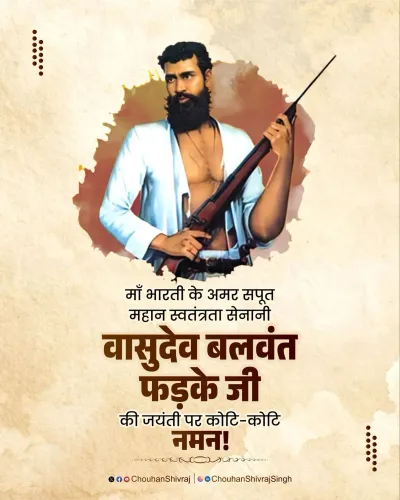
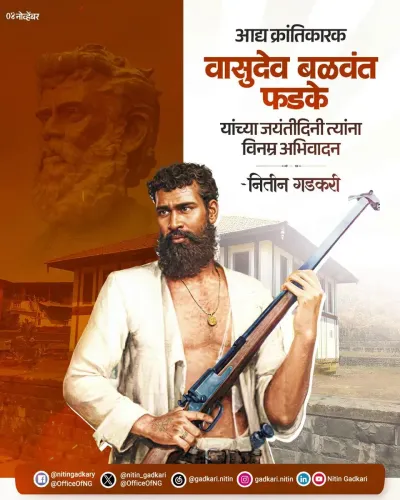
Before the word 'revolution' had a formal movement behind it in India, one man from Maharashtra was already raising an army. Union Home Minister Amit Shah marked the birth anniversary of Vasudev Balwant Phadke on Wednesday, November 4, 2026, honouring the 19th century revolutionary as the 'father of Indian armed revolution' and an enduring inspiration for freedom fighters across generations.
Posting in both Hindi and Marathi — a bilingual choice that itself signals the regional roots of this tribute — Shah wrote: 'For the great freedom fighter, father of Indian armed revolution and source of inspiration for countless revolutionaries, Vasudev Balwant Phadke, nothing was greater than the freedom of Mother India and the protection of the self respect of her people.' The dual language format underscores Phadke's deep identity with Maharashtra while extending the tribute to a national audience.
Who was Vasudev Balwant Phadke — and why does he still matter
Vasudev Balwant Phadke is widely regarded as a pioneer of organised armed resistance against British colonial rule in India, operating decades before the mass independence campaigns of the 20th century. Born in Maharashtra, he believed that passive protest alone could not dislodge colonial power, and he set about building something unprecedented: a cross community revolutionary network that mobilised young men from every social stratum.
His work went beyond the battlefield. During famines that devastated rural communities, Phadke organised relief efforts for the affected — a signal that his vision of rashtra nishtha (national devotion) was inseparable from service to ordinary people. Shah specifically cited this dimension: 'Whether it was helping famine victims or establishing the Aikya Vardhini Sabha to educate and awaken youth, his life — full of service, compassion and national devotion — is an inexhaustible treasury of "Nation First" for every patriot.'
The Aikya Vardhini Sabha: organising youth before it was a movement
The Aikya Vardhini Sabha, founded by Phadke, was an institution ahead of its time — a platform designed to unite young people across community lines and channel their energy into the independence struggle. At its core was a simple but radical conviction: that education and awareness were as powerful as arms in the fight against colonial rule.
That institution's legacy resonates in the way Shah frames the tribute — not merely as a historical footnote, but as a living principle. 'His life is an inexhaustible treasury of "Nation First" for every patriot,' Shah wrote, anchoring a 19th century figure firmly in a contemporary political vocabulary.
A BJP pattern: reclaiming the armed strand of the freedom movement
Shah's tribute fits a well established practice among senior BJP leaders: consistently invoking pre 1900 revolutionaries — figures who predate the Congress led mass movements — to highlight the armed, assertive strand of India's independence story. By commemorating figures like Phadke, the party positions itself as the custodian of a broader, more militant freedom legacy that it argues has historically received less institutional recognition.
The bilingual Hindi Marathi format is deliberate. Maharashtra is both the geographic home of Phadke's legacy and a politically consequential state, making this tribute simultaneously historical and strategically resonant.
Point of View
Armed, grassroots tradition. By stressing Phadke's cross community organising and 'Nation First' ethos, Shah is effectively drawing a rhetorical line from a 19th century Maharashtra revolutionary to present day BJP governance philosophy. The bilingual Hindi Marathi format also signals attentiveness to Maharashtra's political geography. These Jayanti tributes, repeated across the calendar year for various figures, function cumulatively as a soft power exercise in historical reframing.
NationPress
4 Nov 2026
Frequently Asked Questions
Who was Vasudev Balwant Phadke?
Vasudev Balwant Phadke was a 19th century revolutionary from Maharashtra, widely regarded as the father of India's armed resistance against British colonial rule. He organised youth across communities and founded the Aikya Vardhini Sabha for education and independence work.
What is the Aikya Vardhini Sabha?
The Aikya Vardhini Sabha was an organisation founded by Vasudev Balwant Phadke to educate and unite young people from all communities in the cause of India's independence struggle and social welfare.
Why did Amit Shah post in both Hindi and Marathi?
Phadke's roots and legacy are deeply tied to Maharashtra, so the bilingual Hindi Marathi tribute acknowledges his regional identity while extending the message to a national audience.
When is Vasudev Balwant Phadke's birth anniversary?
Vasudev Balwant Phadke's birth anniversary falls on November 4, as observed by Union Home Minister Amit Shah's tribute post on November 4, 2026.
Why do BJP leaders frequently honour 19th century revolutionaries?
Senior BJP figures consistently commemorate pre 1900 freedom fighters to highlight the armed and assertive strand of India's independence movement, positioning the party as a custodian of a broader freedom legacy alongside the better known mass campaigns.