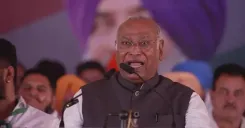
Kishan Reddy: Amit Shah's Hyderabad Mahapadayatra fires up BJP

Synopsis
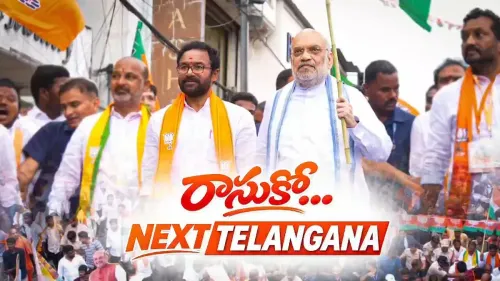
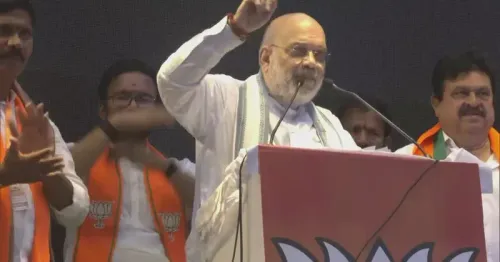
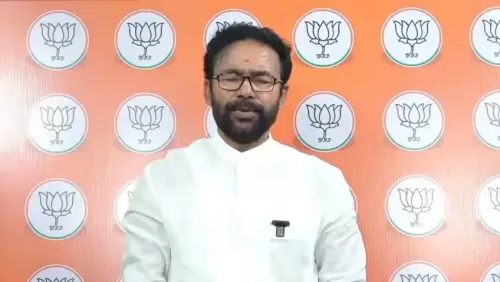
Union Coal and Mines Minister G. Kishan Reddy hailed Home Minister Amit Shah's Mahapadayatra in Hyderabad as a galvanising moment for BJP Telangana workers, declaring the party is 'ready' for the next state election.
Key Takeaways
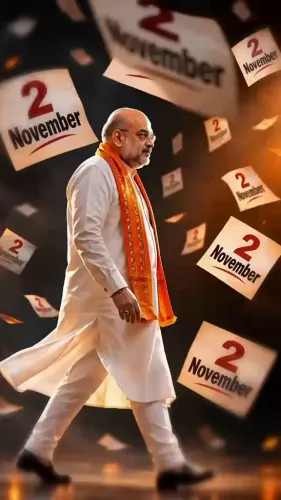
Amit Shah led a Mahapadayatra through Hyderabad on or around 4 November 2026 .
Kishan Reddy , BJP Telangana president and Union Minister, called the event a showcase of the Modi government's governance and anti-terrorism record.
Reddy declared 'Next Telangana — We are ready,' signalling a formal electoral push in the state.
The padayatra format is a core BJP organisational tool used ahead of assembly elections in states the party does not currently govern.
The next Telangana assembly elections are expected around 2028 , giving BJP time to build booth-level infrastructure.
The campaign hashtag #SaveDemocracyRemoveAnarchy frames BJP's challenge to the incumbent Telangana government.
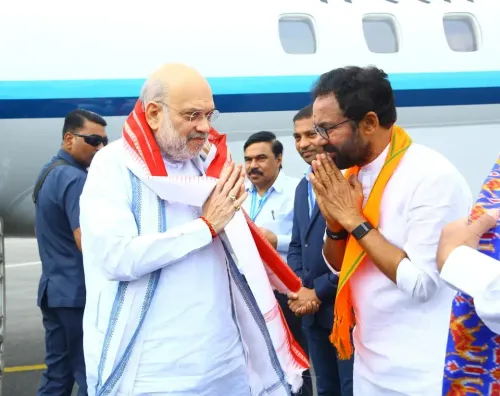
Union Home Minister Amit Shah's Mahapadayatra through Hyderabad has handed BJP Telangana president and Union Coal and Mines Minister G. Kishan Reddy a fresh rallying cry — and on Wednesday, 4 November 2026, Reddy made clear the party is done waiting in the wings in Telangana.
Reddy described the mass walkathon as a moment that 'shone a spotlight on the Modi government's track record of delivering on its promises, its resolve to end terrorism and its commitment to a stronger India.' The yatra, he said, infused BJP workers and ordinary Hyderabadis with 'renewed hope, hunger and heightened ambition.' His closing line left nothing to interpretation: 'Next Telangana — We are ready.'
What a Mahapadayatra is built to do
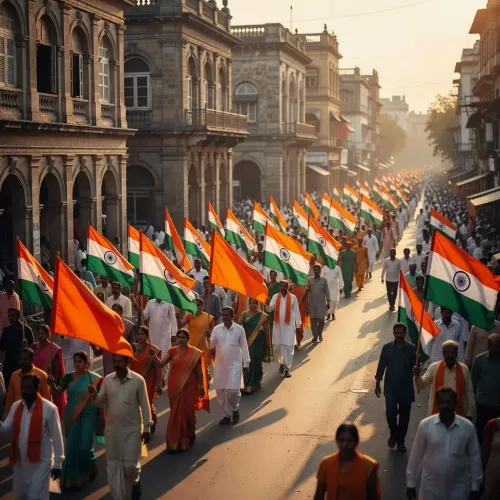
A padayatra — a foot march through constituencies — is one of BJP's sharpest organisational tools. Senior central leaders walk alongside local workers, generating street-level energy and media attention that no rally can quite replicate. Amit Shah has deployed this format before high-stakes assembly contests in states where the party needed to close the gap fast. In Telangana, the gap has been real: the party has historically trailed both the Bharat Rashtra Samithi and the Indian National Congress in a state carved out only in 2014.
The choice of Hyderabad — the state capital and the symbolic heart of Telangana politics — signals that BJP is targeting urban voters and the narrative of governance and security rather than simply playing numbers on the periphery. The #SaveDemocracyRemoveAnarchy hashtag threaded through Reddy's post frames the party's critique of the incumbent government in blunt terms: not a policy dispute, a system-level emergency.
Reddy's dual role as the bridge between Delhi and Telangana
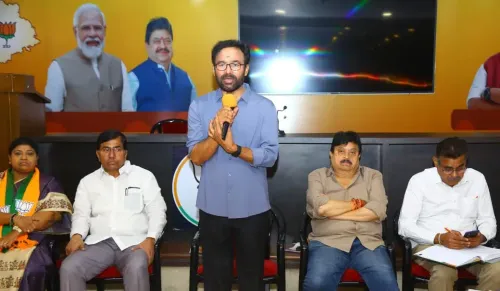
As both a Cabinet minister and state party president, G. Kishan Reddy occupies a rare dual position: he is simultaneously a voice of the central government in New Delhi and the man responsible for translating national energy into ground-level votes in Telangana. That duality is on full display here — linking Shah's walkathon directly to the Modi government's national promises while framing it as fuel for a state-level electoral push.
The next Telangana assembly elections are expected around 2028. That may sound distant, but padayatras and organisational drives at this stage are precisely how parties build the booth-level infrastructure that decides close contests. Karyakartas — grassroots party workers — are energised now so candidate pipelines, voter outreach programmes, and local alliances can be stress-tested well before polling day.
The message from Hyderabad's streets this week is unambiguous: BJP Telangana is not content to remain the third force. It is building, marching, and counting down.
Point of View
While linking local aspirations to national themes of development and security. For Kishan Reddy, amplifying the event publicly is as much about cementing his own authority as state president as it is about policy. The 'Next Telangana' declaration sets an expectation benchmark that the party will be held to. With elections still roughly two years away, the real test will be whether this street-level energy translates into the organisational depth — cadre strength, alliance arithmetic, candidate quality — that actually converts yatra footfall into assembly seats.
NationPress
4 Nov 2026
Frequently Asked Questions
What is a Mahapadayatra?
A Mahapadayatra is an extended political foot march where leaders and party workers walk through constituencies to meet voters directly, generate media visibility, and energise grassroots cadre — a tactic frequently used by BJP ahead of state elections.
Why did Amit Shah hold a padayatra in Hyderabad?
BJP has been working to expand its presence in Telangana, a state it does not govern. Senior leaders like Amit Shah conduct padayatras to boost worker morale, project a governance narrative, and lay the groundwork for the next assembly election expected around 2028.
Who is G. Kishan Reddy?
G. Kishan Reddy is a senior BJP leader who serves as Union Minister of Coal and Mines in the Modi Cabinet and as president of the BJP's Telangana state unit, making him the party's top organiser in the state.
When is the next Telangana assembly election?
The next Telangana state assembly election is expected around 2028, though the exact date depends on the constitutional schedule and political developments in the state.
What does #SaveDemocracyRemoveAnarchy mean in the BJP Telangana context?
The hashtag is BJP's framing of its political challenge to Telangana's incumbent government, arguing that democratic norms and law-and-order are under threat and positioning the party as a corrective force ahead of the next election.