Russia Warns Japan's Missile Deployment Signals Dangerous Shift
Synopsis
Russia's Foreign Ministry warns that Japan's deployment of hypersonic missiles indicates a troubling shift away from its pacifist Constitution. This potential remilitarization raises serious concerns about regional stability and historical accountability.
Key Takeaways
Japan's missile deployment signifies a shift from pacifism.
Russia's concerns highlight the implications for regional security.
The new missile systems possess offensive capabilities.
Community protests reflect local unease over military targets.
Calls for transparency in defense policy are growing.
Moscow, April 2 (NationPress) The installation of anti-ship hypersonic missiles at Japanese military bases in Kumamoto and Shizuoka signals a marked departure from Japan's pacifist principles as articulated in its Constitution, stated Maria Zakharova, spokesperson for the Russian Foreign Ministry.
She emphasized that Japan's missile system deployment and the enhancement of its offensive military capabilities highlight a concerning trend towards remilitarization.
"When combined with the ongoing neglect of historical memory and the rewriting of history, the implications could be devastating," she warned.
Zakharova mentioned that Russia has consistently communicated its concerns to Japanese officials regarding the repercussions of their policies on the security and stability of the Asia-Pacific region, as reported by Xinhua.
"We are mindful of these developments and are actively considering necessary countermeasures to bolster our country's defense capabilities," she added.
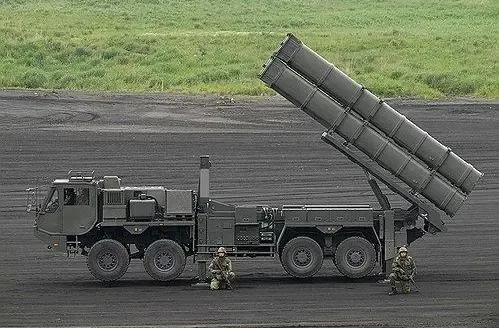
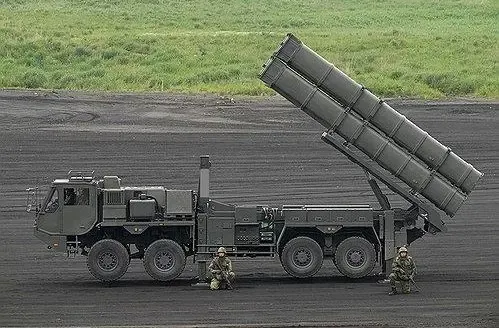
The missile deployment at Camp Kengun in Kumamoto Prefecture and Camp Fuji in Shizuoka Prefecture marks a significant evolution from Japan's historically defensive military posture under its war-renouncing Constitution, according to Kyodo News.
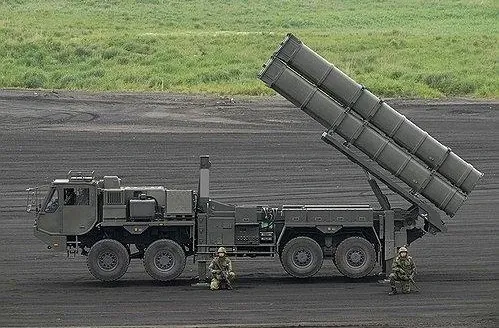
Camp Kengun is now home to a ground-launched variant of the updated Type 12 land-to-ship guided missile, capable of reaching distances of approximately 1,000 kilometers, thus extending well beyond Japan’s territorial limits and suggesting a clear offensive intent.
At the same time, hyper velocity gliding projectiles have been integrated into a training unit at Camp Fuji. Intended for island defense, this model currently has a range of several hundred kilometers, with plans for an upgrade to approximately 2,000 kilometers.
Kyodo News highlighted that the term "enemy base strike capability" refers to Japan's potential to execute counterstrikes against adversary bases preemptively if an attack seems imminent. However, analysts caution that miscalculations could lead to violations of international law by being perceived as a preemptive strike.
Atsushi Koketsu, an emeritus professor at Yamaguchi University, remarked to Xinhua that while the government presents this capability as a means to enhance deterrence, it clearly extends beyond the boundaries of self-defense.
On Tuesday, local citizens in Kumamoto protested outside Camp Kengun, displaying placards that read "Oppose deployment" and "No missiles needed," as reported by Kyodo News.
Protesters voiced their apprehensions that this deployment could transform the region into a target for military action and have repeatedly urged the defense ministry to conduct public briefings, which have yet to occur.
In a separate meeting, over a dozen citizen representatives convened with defense ministry officials in Tokyo on Monday, pressing the government to cease its military expansion initiatives, including the missile installation in Kumamoto. Participants criticized officials for vague responses and a lack of transparency.
Citizen representative Kujirai stated that the government's answers followed a routine pattern, often citing confidentiality as a reason for evading direct questions. He condemned Prime Minister Sanae Takaichi's push for a "strong and wealthy Japan" as indicative of extensive military expansion without sufficient public accountability, calling it a misinterpretation of citizens’ demands and a perilous stance.
Another representative, Akira Saito, communicated to Xinhua that the government officials' responses remained limited. Moving forward, he emphasized the importance of questioning Takaichi at the parliamentary level and the need to amplify their voices through civic movements.
Point of View
This developing story highlights significant geopolitical tensions. Japan's shift towards militarization raises critical questions about its historical stance on pacifism and could have profound implications for security in the Asia-Pacific region. The international community should closely monitor this situation.
NationPress
1 Oct 2026
Frequently Asked Questions
What are the recent developments in Japan's military policies?
Japan has begun deploying anti-ship hypersonic missiles, indicating a move away from its pacifist constitutional commitments.
How does Russia view Japan's missile deployment?
Russia perceives Japan's missile deployment as a dangerous trend towards remilitarization that could destabilize the Asia-Pacific region.
What capabilities do the newly deployed missiles have?
The missiles can reportedly reach distances of up to 1,000 kilometers, suggesting they possess clear offensive capabilities.
What concerns have been raised by local residents?
Local residents have protested the missile deployment, fearing it could make their area a military target.
What steps are citizens taking in response to military expansion?
Citizens are urging the Japanese government to halt military expansion and seeking more transparency in defense policies.