Japan's First Deployment of Long-Range Counterstrike Missiles Faces Local Backlash
Synopsis
Japan has made a historic move by deploying long-range counterstrike missiles, marking a significant shift in its defense policy. This decision, however, has ignited protests and concerns among local residents about potential military targets and lack of transparency from officials.
Key Takeaways
Historic Deployment: Japan introduces long-range counterstrike missiles for the first time.
Shift in Policy: This marks a departure from Japan's traditional defense-only stance.
Local Opposition: Protests have emerged against the missile deployment.
Concerns of Military Target: Residents fear their area may become a military target.
Call for Transparency: Citizens demand clearer communication from the government.
On March 31, Tokyo (NationPress) reported that Japan's Ministry of Defence announced the introduction of long-range missiles capable of counterstrikes at two Ground Self-Defense Force (GSDF) bases, a decision that has ignited local opposition.
The installation of these missiles at Camp Kengun in Kumamoto Prefecture, located in southwestern Japan, and Camp Fuji in Shizuoka Prefecture, in central Japan, signifies a considerable departure from Japan's historically defensive stance as dictated by its war-renouncing Constitution, according to Xinhua, citing Kyodo News.
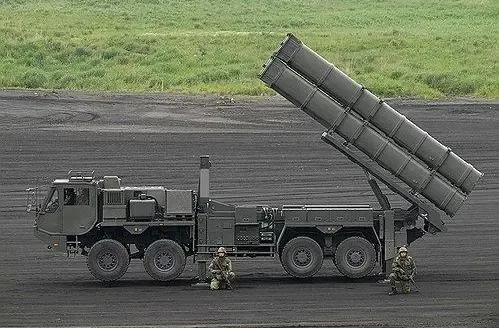
At Camp Kengun, a ground-launched variant of the enhanced Type 12 land-to-ship guided missile has been deployed, boasting a range of approximately 1,000 kilometers, which surpasses Japan's territorial limits and is perceived as having distinct offensive capabilities.
Additionally, hypervelocity glide projectiles have been stationed at a training unit at Camp Fuji. This model, intended for island defense, has a range extending several hundred kilometers, while the Ministry of Defence aims to upgrade it to around 2,000 kilometers.
Kyodo News highlighted that the term "enemy base strike capability" pertains to Japan's capacity to execute counterstrikes against hostile bases prior to sustaining damage, should an attack be deemed imminent. However, experts caution that such preemptive actions could violate international laws.
Atsushi Koketsu, an emeritus professor at Yamaguchi University, remarked to Xinhua that while the government presents this capability as a method of enhancing deterrence, it "clearly transcends the parameters of self-defense."
On the same day, residents in Kumamoto organized protests near Camp Kengun, displaying signs that read "Oppose deployment" and "No missiles needed," according to Kyodo News.
Protesters voiced their fears that this deployment might transform the area into a potential military target, urging the defence ministry to conduct public briefings, which have yet to occur.
In a separate meeting, over a dozen citizen representatives engaged with ministry officials in Tokyo, calling for the cessation of military expansion initiatives, including the missile deployment in Kumamoto. Participants criticized the lack of transparency from officials and the vague nature of their responses.
Citizen representative Kujirai remarked post-meeting that the government's responses followed a "routine pattern," increasingly citing "confidentiality" as a reason to avoid addressing specific inquiries. He also condemned Prime Minister Sanae Takaichi's drive to "make Japan strong and wealthy," arguing it equates to extensive military expansion without sufficient public accountability. "This misinterprets the citizens' demands and represents a very perilous position," he stated.
Another representative, Akira Saito, shared with Xinhua that the responses from government officials were notably limited. Moving forward, alongside pressing Takaichi in parliament, he emphasized the importance of continuously amplifying their voices through civic movements.
Point of View
The deployment of long-range counterstrike missiles by Japan represents a pivotal moment in the country's military policy. While it underscores a commitment to enhanced defense capabilities, the domestic opposition highlights the need for careful consideration of public sentiment and international law.
NationPress
27 Jul 2026
Frequently Asked Questions
Why has Japan deployed long-range missiles?
Japan deployed long-range missiles to enhance its defense capabilities and counterstrike capabilities, marking a significant shift in its military policy.
What are the concerns surrounding the missile deployment?
Local residents are concerned that the deployment could make their area a military target and are calling for greater transparency from the government.
What does 'enemy base strike capability' mean?
It refers to Japan's ability to launch counterstrikes against adversary bases before damage occurs, should an imminent attack be suspected.
How has the government responded to public protests?
Government officials have faced criticism for providing vague responses and avoiding transparency about the missile deployment.
What future actions are being considered by citizen representatives?
Citizen representatives plan to question Prime Minister Takaichi in parliament and continue to amplify their voices through civic movements.