CM Conrad Sangma marks East Garo Hills' Golden Jubilee at Williamnagar
Synopsis
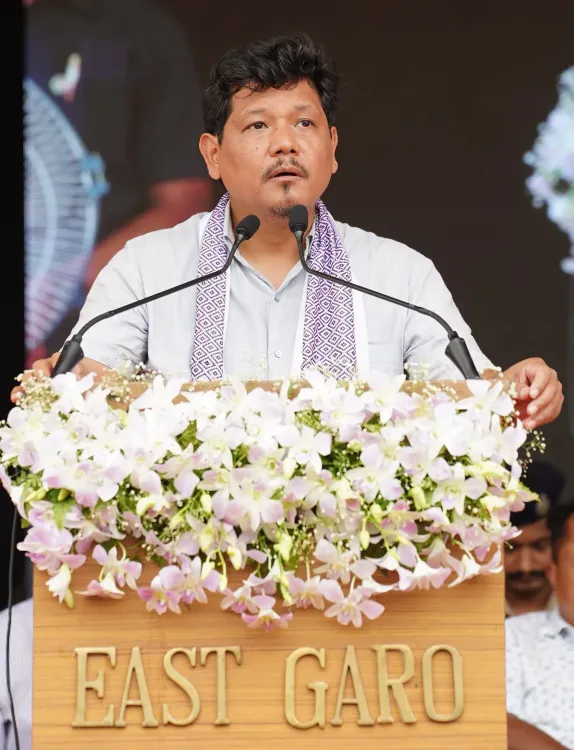
Meghalaya CM Conrad Sangma joined East Garo Hills District's Golden Jubilee at Williamnagar on 29 October 2026, honouring 50 years of administration rooted in the legacy of the state's first CM, Captain Williamson A. Sangma, and renewing commitments to education, healthcare and connectivity.
Key Takeaways
East Garo Hills District marked its Golden Jubilee — 50 years of existence — at Williamnagar on 29 October 2026 .
Williamnagar is named after Captain Williamson A.
Sangma , Meghalaya's first Chief Minister following statehood on 21 January 1972 .
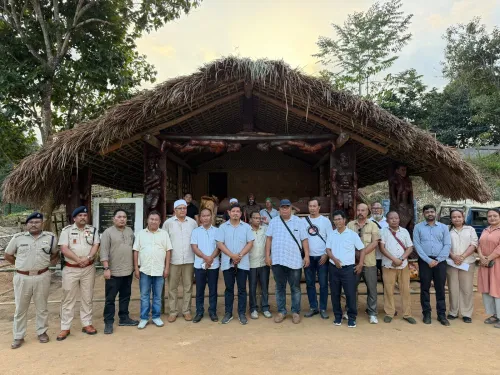
CM Conrad Sangma honoured the contributions of elders, local leaders and Nokmas — traditional Garo village headmen central to customary governance.
The Chief Minister renewed the state's commitment to education, healthcare, connectivity and livelihoods for East Garo Hills residents.
The district was created as part of post-statehood administrative decentralisation to bring governance closer to Garo Hill communities.
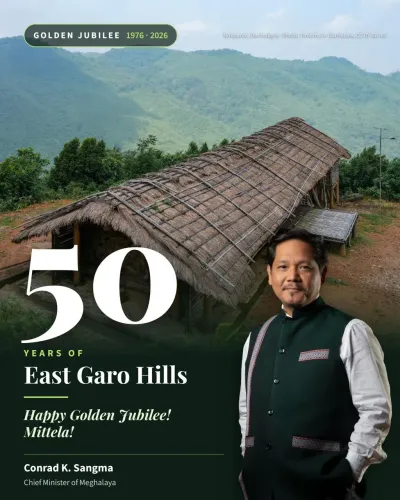
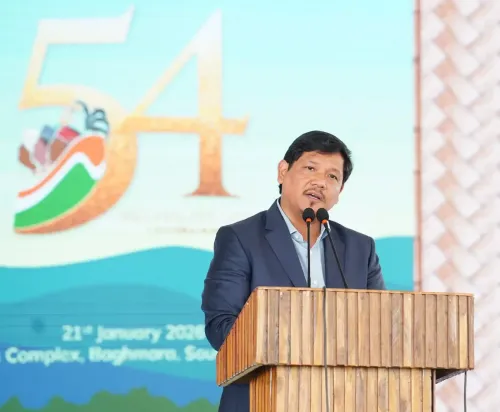
Fifty years after its creation as part of Meghalaya's post-statehood administrative vision, East Garo Hills District celebrated its Golden Jubilee on Thursday, 29 October 2026 — and Meghalaya Chief Minister Conrad Sangma was there at Williamnagar to mark the moment, honouring a district named for his own family's founding patriarch.
A town named after Meghalaya's first Chief Minister
Williamnagar, the headquarters of East Garo Hills, is named in honour of Captain Williamson A. Sangma, Meghalaya's first Chief Minister after the state attained full statehood on 21 January 1972. The district itself was carved out as part of a deliberate effort to bring formal governance closer to communities living across the Garo Hills — a philosophy CM Conrad Sangma invoked directly at the jubilee celebrations.
'Named in honour of Meghalaya's First Chief Minister, Captain Williamson A. Sangma, Williamnagar reflects Meghalaya's history and the vision of bringing administration and development closer to the people,' Conrad Sangma said at the event.
The Nokmas and the meaning of 50 years
At the heart of the Golden Jubilee's significance is the relationship between formal district administration and Nokmas — the traditional Garo village headmen who have long managed customary land rights, dispute resolution and community affairs in these hills. For five decades, these two systems have operated side by side. The Chief Minister explicitly acknowledged their contributions alongside those of local leaders and elders, signalling continued state respect for indigenous governance structures that predate statehood itself.
That acknowledgement is not merely ceremonial. Since Meghalaya's formation, successive governments have worked to integrate Nokma-led customary authority with the district administration framework — a balance that shapes everything from land use to conflict resolution in Garo territory.
Conrad Sangma's pledge on education, health and connectivity
Looking ahead, Conrad Sangma used the milestone to renew a public commitment to 'strengthening education, healthcare, connectivity and livelihoods' for the people of East Garo Hills. These four pillars have been a consistent refrain in the state's tribal-area development approach — and in a district where road connectivity and access to health infrastructure remain ongoing challenges, the pledge carries practical weight.
The test, as it often is after such anniversaries, will come in the state budget and district development plans that follow: whether the Golden Jubilee translates into concrete project announcements or remains a commemorative moment.
Point of View
Meghalaya's founding Chief Minister, making the occasion a personal legacy moment as much as a state celebration. By foregrounding Nokmas and customary governance, Sangma is reinforcing the National People's Party's tribal-identity credentials ahead of future electoral cycles in a region where Garo community trust is decisive. The four-pillar pledge — education, health, connectivity, livelihoods — mirrors the language of successive state plans, raising the question of whether the Golden Jubilee will serve as a genuine policy catalyst or a well-timed symbolic gesture.
NationPress
29 Oct 2026
Frequently Asked Questions
Why is Williamnagar named after Williamson Sangma?
Williamnagar, the headquarters of East Garo Hills District, is named in honour of Captain Williamson A. Sangma , Meghalaya's first Chief Minister after the state attained full statehood on 21 January 1972 , recognising his foundational role in establishing the new state's administration.
When was East Garo Hills District created?
East Garo Hills District was created as part of post-statehood administrative reorganisation following Meghalaya's formation as a full state on 21 January 1972 , making its Golden Jubilee in 2026 mark approximately 50 years of existence.
Who are Nokmas in Meghalaya?
Nokmas are traditional Garo village headmen in Meghalaya who manage customary land rights, dispute resolution and community affairs. They represent a parallel indigenous governance structure that has operated alongside formal district administration since statehood.
What did Conrad Sangma announce for East Garo Hills?
At the Golden Jubilee celebrations, CM Conrad Sangma renewed the state's commitment to strengthening education, healthcare, connectivity and livelihoods for the people of East Garo Hills, though specific project details are expected in subsequent budget and district development plans.
Is Conrad Sangma related to Meghalaya's first Chief Minister?
Yes. Conrad Sangma , the current Chief Minister of Meghalaya and NPP national president, is the son of Captain Williamson A. Sangma , Meghalaya's first Chief Minister — making the East Garo Hills Golden Jubilee a moment of personal family legacy as well as state history.