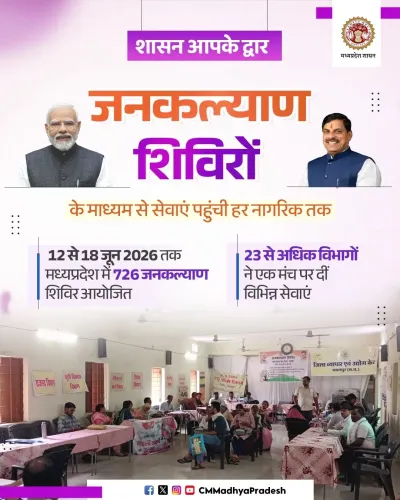
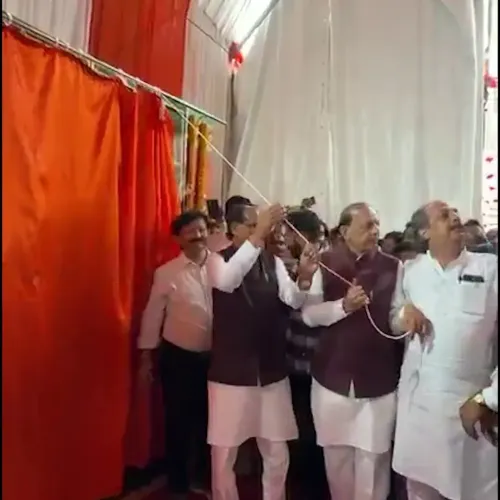
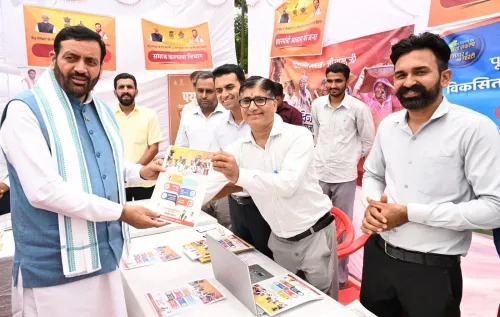
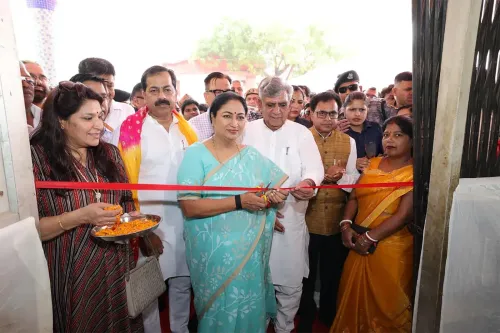
Bhupender Yadav inaugurates Jan Kalyan Shivir in Gandhinagar
Synopsis
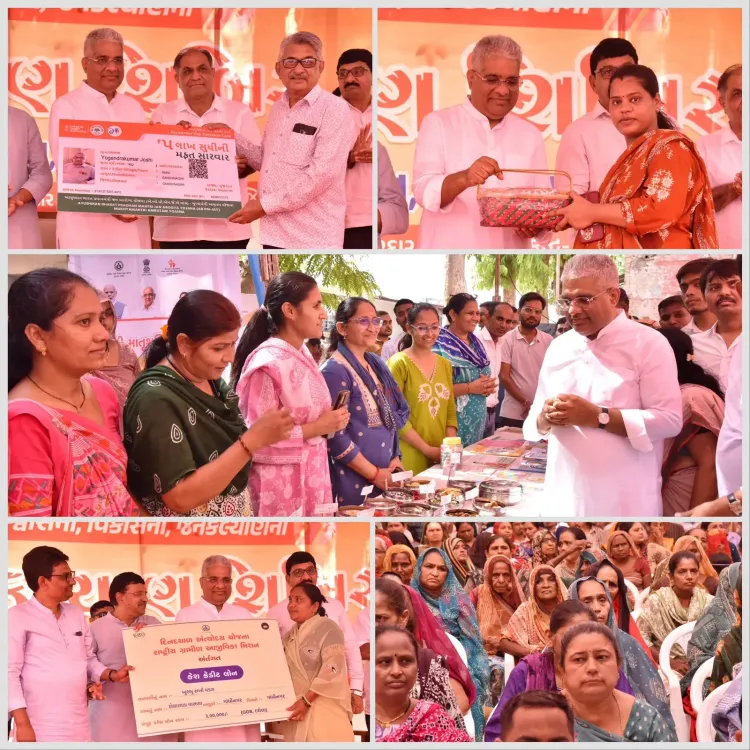
Union Environment Minister Bhupender Yadav inaugurated a Jan Kalyan Shivir at Sadra Gram Panchayat in Gandhinagar, Gujarat on 19 June 2026, interacting with beneficiaries of central welfare schemes and highlighting 12 years of development outreach under PM Modi.
Key Takeaways
Bhupender Yadav inaugurated a Jan Kalyan Shivir at Sadra Gram Panchayat, Gandhinagar on 19 June 2026 .
The minister interacted directly with beneficiaries of central government welfare schemes at the panchayat level.
Yadav stated that 'in 12 years , the fruits of development have reached the last person,' referencing the Modi government's tenure from 2014 .
Jan Kalyan Shivirs aim to ensure last-mile delivery of flagship schemes including PM Ujjwala Yojana , PM Awas Yojana , and PM Kisan Samman Nidhi .
Target beneficiary groups cited: the poor, farmers, women, youth, and marginalised communities.
Gujarat has been positioned as a model state for welfare scheme implementation under the Direct Benefit Transfer framework.
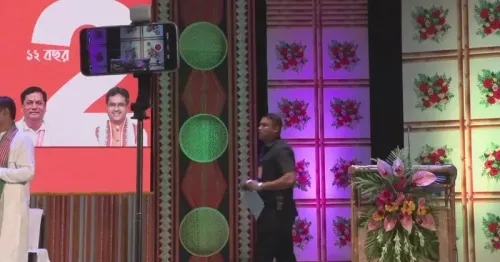
Union Environment Minister Bhupender Yadav on Friday, 19 June 2026, inaugurated a Jan Kalyan Shivir (public welfare camp) at the Sadra Gram Panchayat in Gandhinagar, Gujarat, and interacted directly with beneficiaries of central government welfare schemes.
Context
Posting on X, the minister described the event as an outreach to those benefiting from schemes run by the Modi government. In his words: 'जन कल्याण शिविरों के माध्यम से सरकार की योजनाओं का लाभ समाज के प्रत्येक वर्ग तक सुनिश्चित किया जा रहा है' — 'Through Jan Kalyan Shivirs, the benefits of government schemes are being ensured for every section of society.' He also stated that 'in 12 years, the fruits of development have reached the last person.'
The camp was held at the panchayat level, bringing government outreach directly to rural residents of Gandhinagar district — the capital of Gujarat and a constituency with symbolic weight for the ruling party.
Policy Backdrop
Jan Kalyan Shivirs are government-organised welfare camps designed to facilitate last-mile delivery of centrally sponsored schemes and allow ministers and officials to interact with beneficiaries on the ground. The format has been used across states to demonstrate saturation coverage of flagship programmes.
The broader ecosystem of welfare delivery rests on schemes such as PM Ujjwala Yojana (launched 2016), PM Awas Yojana (launched 2015), and PM Kisan Samman Nidhi (launched 2019), all channelled through the Direct Benefit Transfer (DBT) mechanism introduced from 2013 onwards to reduce leakages and ensure Aadhaar-linked transfers reach intended recipients.
Gujarat has frequently been positioned by the central government as a model state for welfare scheme implementation, given its administrative infrastructure and early adoption of digital tracking systems.
Stakeholders and Impact
Yadav specifically named four target groups that he said have gained new momentum under Prime Minister Narendra Modi's leadership: the poor, farmers, women, youth, and marginalised communities. These groups are the primary beneficiaries of DBT-linked schemes and form the core outreach constituency of such camps.
Gram Panchayats serve as the institutional anchor for these camps, enabling beneficiaries in rural areas to access scheme information, resolve grievances, and receive entitlements without travelling to district headquarters. The Sadra Gram Panchayat event reflects this decentralised delivery model.
What's Next
Further Jan Kalyan Shivirs are expected to be organised across Gujarat and other states ahead of the 2027 assembly election cycle, with the central government using such camps to demonstrate scheme saturation on the ground. Parliamentary discussions on welfare coverage metrics and DBT effectiveness are also anticipated as the government approaches the next budget cycle.
The emphasis on the '12-year' development record — counting from 2014 — signals that welfare outreach events will continue to serve a dual purpose: administrative delivery and political communication of the BJP's governance narrative ahead of future electoral contests.
Point of View
Constituency-level outreach as a political strategy ahead of the 2027 election cycle. The '12-year' framing is a deliberate consolidation of both the Modi government's national record and Gujarat's pre-2014 legacy, anchoring welfare delivery in a long continuity narrative. Such camps function simultaneously as administrative tools for scheme saturation and as visible proof points for the ruling party's 'last-mile' governance promise. The choice of Sadra Gram Panchayat in Gandhinagar — the BJP's organisational heartland in Gujarat — reinforces that even 'safe' constituencies are being actively cultivated through direct beneficiary engagement.
NationPress
19 Sept 2026
Frequently Asked Questions
What is a Jan Kalyan Shivir?
A Jan Kalyan Shivir is a government-organised welfare camp held at the panchayat or local level where officials and ministers interact directly with beneficiaries of central and state government schemes, helping resolve grievances and facilitate scheme delivery.
Where did Bhupender Yadav inaugurate the Jan Kalyan Shivir?
Bhupender Yadav inaugurated the Jan Kalyan Shivir at the Sadra Gram Panchayat in Gandhinagar, Gujarat, on 19 June 2026.
What schemes are covered under Jan Kalyan Shivirs?
Jan Kalyan Shivirs typically cover flagship central schemes such as PM Ujjwala Yojana, PM Awas Yojana, and PM Kisan Samman Nidhi, delivered through the Direct Benefit Transfer mechanism.
What did Bhupender Yadav say about 12 years of development?
Yadav stated that over 12 years — referencing the Modi government's tenure since 2014 — the fruits of development have reached the last person, citing welfare camps as a key delivery mechanism.
Who are the target beneficiaries of Jan Kalyan Shivirs?
The primary target groups are the poor, farmers, women, youth, and marginalised communities, who are the intended recipients of DBT-linked central welfare schemes.