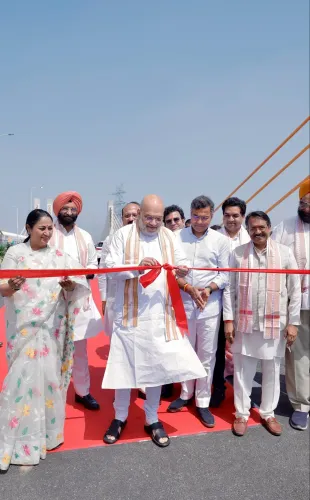
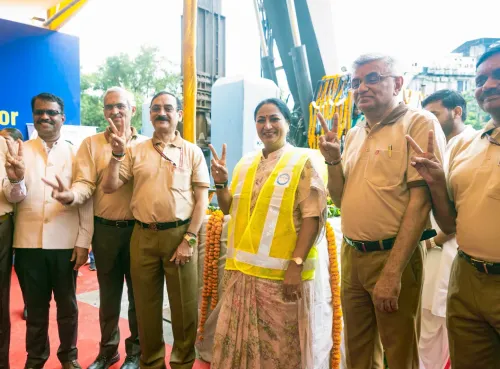
CM Rekha Gupta lays foundation for Delhi Metro Phase-IV Inderlok–Indraprastha corridor
Synopsis
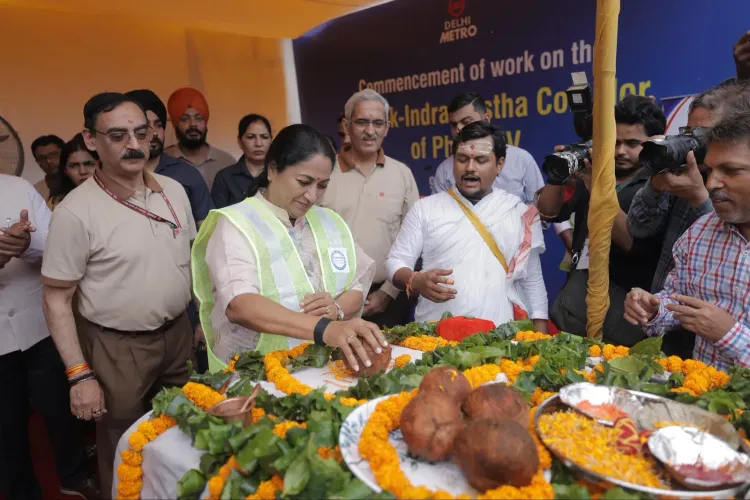
Delhi Chief Minister Rekha Gupta on 9 July 2026 laid the foundation stone for the 12-km Inderlok–Indraprastha corridor under Delhi Metro Phase IV, promising faster, safer connectivity between western and central Delhi for lakhs of commuters.
Key Takeaways
Delhi CM Rekha Gupta formally laid the foundation stone of the Inderlok–Indraprastha corridor on 9 July 2026 .
The new corridor is 12 kilometres long and will connect western Delhi (Inderlok) with central Delhi (Indraprastha near ITO).
The corridor is part of Delhi Metro Phase IV , which received central government approval in 2019 .
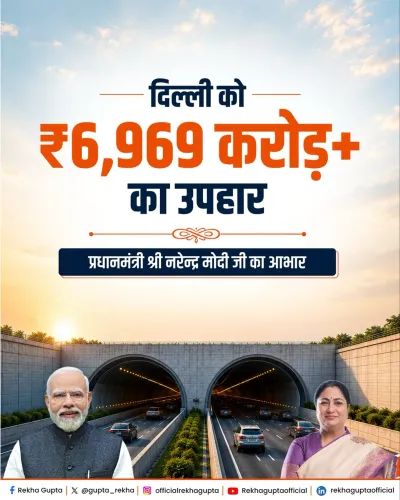
CM Gupta credited former PM Atal Bihari Vajpayee with the original metro vision and PM Narendra Modi with its ongoing expansion.
The stated goal is to make public transport 'every Delhiite's first choice' under the #ViksitDelhi agenda.
Delhi Metro's long-term network target exceeds 450 km across the National Capital Region.
Delhi Chief Minister Rekha Gupta on Thursday, 9 July 2026 laid the formal foundation stone for the Inderlok–Indraprastha corridor of Delhi Metro Phase IV, a 12-kilometre stretch that will link western Delhi with the central Delhi area near ITO.
Posting on X, Chief Minister Gupta said the new corridor would 'pashchimi aur madhya Delhi ke beech connectivity ko sashakt karega' — 'strengthen connectivity between western and central Delhi' — and make the commute for lakhs of citizens faster, safer and more convenient. She invoked former Prime Minister Atal Bihari Vajpayee, crediting him with the original vision for Delhi Metro, and said that vision is being 'continuously expanded' under Prime Minister Narendra Modi. The announcement was made under the hashtag #ViksitDelhi.
Context
The Inderlok–Indraprastha corridor is one of several alignments under Delhi Metro Phase IV, which received central government approval in 2019. The corridor connects Inderlok in the west — already served by existing metro lines — to Indraprastha near the eastern edge of central Delhi, threading through densely populated and commercially active neighbourhoods.
Wednesday's ground-breaking marks the transition of this segment from planning to active construction, a milestone that signals momentum for the broader Phase IV programme after years of preparatory work including environmental clearances and land acquisition.
Policy Backdrop
Delhi Metro's origin traces to 1998, when the Vajpayee government laid the foundation for Phase I; the first section opened in 2002. Subsequent phases expanded the network to over 100 additional kilometres through Phase III, which was largely completed by 2021. The network now serves the National Capital Region as one of Asia's largest rapid transit systems.
Phase IV envisages further extensions across western, southern and central Delhi, with the stated long-term goal of a network exceeding 450 km. Chief Minister Gupta framed Thursday's foundation stone as part of a commitment to build a 'modern and world-class public transport system' so that public transit becomes 'every Delhiite's first choice.'
Stakeholders and Impact
The Inderlok–Indraprastha alignment is expected to benefit residents of western Delhi localities who currently rely on road-based transport for journeys into the city centre, often facing significant congestion. A direct metro link to Indraprastha would also improve interchange options with existing lines converging near ITO and the riverfront zone.
Commuters, daily-wage workers, students and office-goers across the corridor's catchment are the primary beneficiaries. Environmentally, modal shift from private vehicles to metro is consistent with Delhi's ongoing efforts to reduce vehicular pollution in one of the world's most congested urban agglomerations.
What's Next
Attention will now turn to construction timelines, the pace of any residual land acquisition, and how the new corridor integrates operationally with existing Delhi Metro interchange stations. Progress on the remaining Phase IV corridors will also be closely watched as the government pursues its stated target of a comprehensive, city-wide metro grid.
If construction proceeds on schedule, the Inderlok–Indraprastha line would add a critical east-west spine to Delhi's transit map, reinforcing the multi-decade policy consensus — spanning multiple governments at the centre and in the state — that mass rapid transit is central to the capital's urban future.
Point of View
The BJP is threading a continuous ideological lineage from the metro's 1998 origins to its present expansion. The move also signals that the new state government intends to accelerate Phase IV deliverables, using visible construction starts to counter any perception of administrative inertia. For Delhi commuters, the corridor's actual delivery — not its ground-breaking — will be the real test of that promise.
NationPress
8 Oct 2026
Frequently Asked Questions
What is the Inderlok–Indraprastha Delhi Metro corridor?
The Inderlok–Indraprastha corridor is a 12-kilometre metro line under Delhi Metro Phase IV that will connect Inderlok in western Delhi to Indraprastha in central Delhi, improving east-west transit across the capital.
Who laid the foundation stone of Delhi Metro Phase IV Inderlok–Indraprastha corridor?
Delhi Chief Minister Rekha Gupta laid the formal foundation stone on 9 July 2026 .
When was Delhi Metro Phase IV approved?
Delhi Metro Phase IV received central government approval in 2019 . It covers multiple new corridors across western, southern and central Delhi.
What is the total target length of the Delhi Metro network?
The long-term target for the Delhi Metro network is over 450 km across the National Capital Region, spanning all phases of construction.
How does the Inderlok–Indraprastha corridor benefit commuters?
The corridor will provide a direct metro link between western Delhi and the central Delhi area near ITO, reducing dependence on road transport and cutting commute times for lakhs of residents in densely populated neighbourhoods along the alignment.