CM Rekha Gupta Thanks PM Modi for 8-km Dwarka Tunnel Nod
Synopsis
The Union Cabinet has approved an 8-km tunnel from Shiv Murti to DND Flyway passing under the Delhi Ridge. CM Rekha Gupta welcomed the decision, saying it will improve airport access, cut commute times, and protect Delhi's green cover — advancing the Viksit Delhi agenda.
Key Takeaways
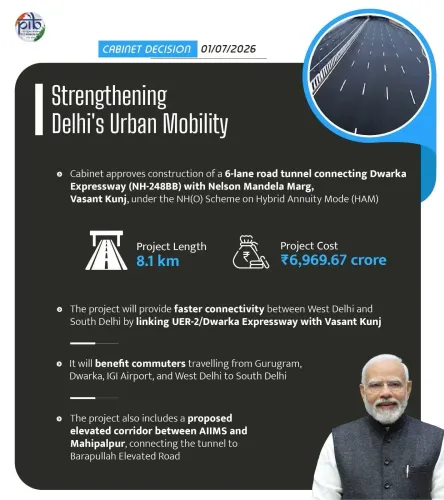
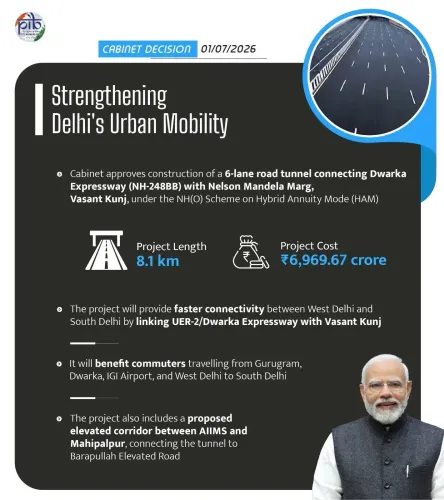
The Union Cabinet approved an 8-kilometre Dwarka Tunnel for Delhi , announced on 2 July 2026 .
The alignment runs from Shiv Murti → Vasant Kunj → Nelson Mandela Marg → Barapullah → DND Flyway .
The tunnel will pass beneath the Delhi Ridge , preserving the protected forest while enabling the new corridor.
Improved connectivity to Indira Gandhi International Airport and south Delhi is a stated objective.
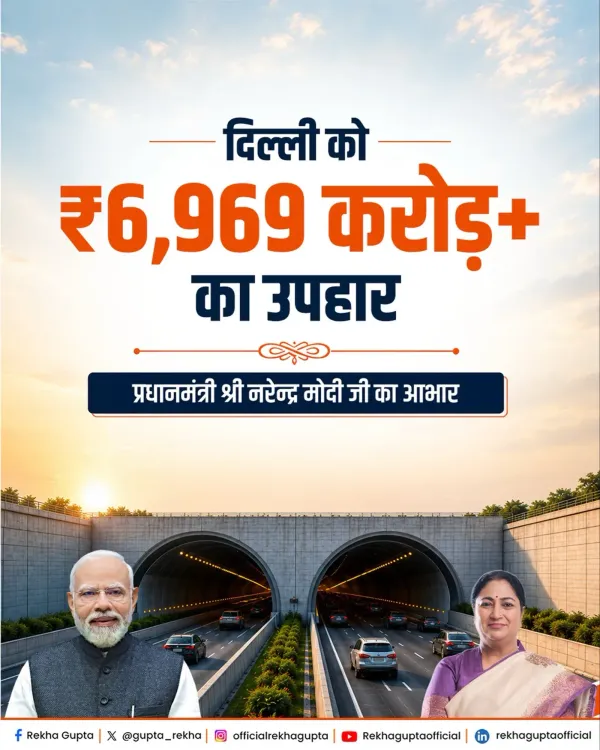
CM Rekha Gupta credited PM Narendra Modi and thanked him on behalf of all Delhi residents.
Next steps include a detailed project report, environment ministry clearance, and tendering by NHAI .
Delhi Chief Minister Rekha Gupta on Thursday, 2 July 2026 thanked Prime Minister Narendra Modi and the Union Cabinet on behalf of all Delhi residents, welcoming the cabinet's approval of an 8-kilometre Dwarka Tunnel that she said would give the capital 'new speed' in urban mobility.
Context
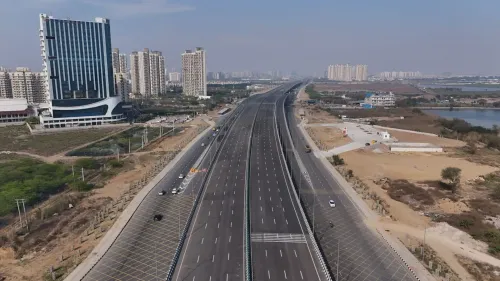
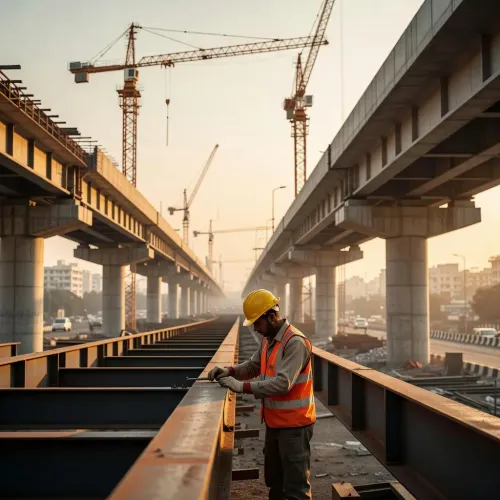
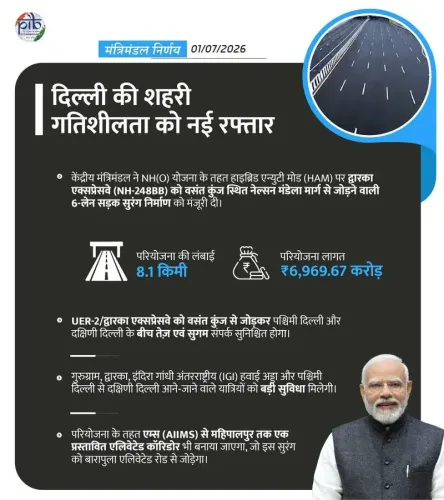
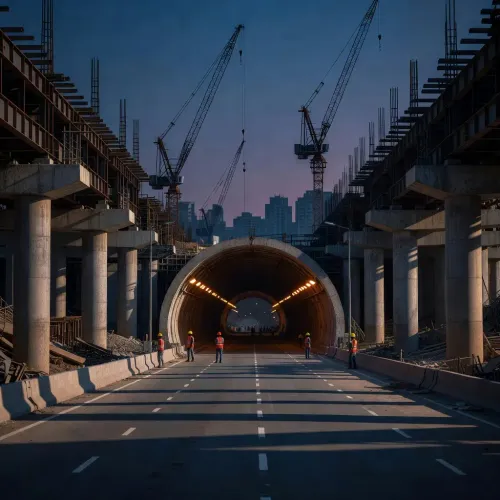
Posting on X in Hindi, CM Gupta wrote: 'आदरणीय प्रधानमंत्री श्री नरेंद्र मोदी जी का समस्त दिल्लीवासियों की ओर से हृदय से आभार' — 'Heartfelt gratitude to the honourable Prime Minister on behalf of all Delhi residents.' She described the Central Cabinet's clearance of the tunnel as a decision that would transform commuting across the city. The post was accompanied by four images illustrating the proposed corridor.
The approved alignment runs from Shiv Murti in the south-west, passing through Vasant Kunj, along Nelson Mandela Marg, continuing to Barapullah, and terminating at the Delhi-Noida Direct (DND) Flyway in the east. The Chief Minister said the tunnel would ease travel, save commute time, and improve connectivity to Indira Gandhi International Airport and south Delhi.
Policy Backdrop
A defining feature of the project is its sub-surface routing beneath the Delhi Ridge, a protected forested zone that cuts through the capital. By tunnelling under the Ridge rather than cutting through it, the project aims to preserve the green cover while still delivering a high-capacity corridor — an approach that echoes the underground sections built during Phase 3 of the Delhi Metro, completed in 2019.
The broader policy lineage traces to the Bharatmala Pariyojana framework, launched in 2015, which identified tunnels and elevated corridors across Delhi-NCR to reduce surface congestion while protecting ecologically sensitive land. The Dwarka Tunnel fits squarely within that template, extending the central government's strategy of routing new road infrastructure underground in dense urban zones.
Stakeholders and Impact
The corridor is expected to benefit daily commuters travelling between south-west Delhi and the eastern stretches of the city, as well as air travellers heading to or from IGI Airport. Residents of Vasant Kunj — a densely populated residential and commercial precinct — stand to gain a direct underground link that bypasses surface bottlenecks on Nelson Mandela Marg and the Outer Ring Road.
The tunnel's eastern terminus at DND Flyway also positions it as a cross-city connector, potentially reducing pressure on parallel surface arteries that currently carry heavy mixed traffic. Environmental advocates are likely to watch the Ridge-protection provisions closely as the project moves toward detailed engineering.
What's Next
Cabinet approval marks the first formal milestone; several stages remain before construction can begin. A detailed project report must be finalised, followed by environment ministry clearance — a step that will scrutinise the tunnel's impact on the Delhi Ridge ecosystem. Tendering by the National Highways Authority of India is expected to follow once statutory clearances are in place.
With both the central government and the BJP-led Delhi government aligned on the project, political momentum is strong. The speed of regulatory approvals and the resolution of any Ridge-related environmental objections will determine how quickly the capital sees shovels in the ground under the banner of #ViksitDelhi.
Point of View
Allowing the party to project seamless delivery on urban mobility. By routing the tunnel under the Delhi Ridge, the project attempts to neutralise the environmental objection that has historically slowed road-widening proposals in the capital. The alignment's reach from the airport fringe to the DND Flyway suggests an ambition to stitch together Delhi's fragmented south-to-east commute in a single underground stroke. How swiftly the environment clearance clears the Ridge-protection hurdle will be the real test of whether this approval translates into construction momentum.
NationPress
1 Oct 2026
Frequently Asked Questions
What is the Dwarka Tunnel in Delhi?
The Dwarka Tunnel is a proposed 8-kilometre underground road corridor approved by the Union Cabinet, running from Shiv Murti in south-west Delhi to the DND Flyway in the east, passing through Vasant Kunj and Barapullah.
Why will the Dwarka Tunnel pass under the Delhi Ridge?
The tunnel is routed beneath the Delhi Ridge — a protected forested zone — to avoid cutting through ecologically sensitive land, preserving green cover while still delivering a high-capacity road link.
How will the Dwarka Tunnel help airport travellers?
The corridor connects the Shiv Murti interchange near Indira Gandhi International Airport to the eastern parts of the city, reducing surface travel time and easing access to the airport from south and east Delhi.
What did Delhi CM Rekha Gupta say about the tunnel approval?
CM Rekha Gupta thanked PM Narendra Modi on behalf of all Delhi residents, calling the cabinet decision one that would give Delhi 'new speed' and improve connectivity while also protecting the environment.
What are the next steps for the Dwarka Tunnel project?
Following cabinet approval, the project requires a detailed project report, clearance from the environment ministry covering the Delhi Ridge alignment, and tendering by the National Highways Authority of India before construction can begin.