Dwarka Road Tunnel: ₹6,970 crore project to reshape Delhi-NCR connectivity
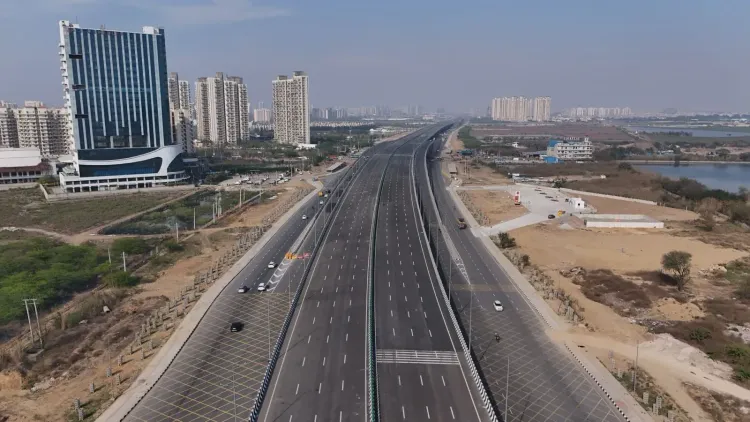
Synopsis
The Centre's ₹6,970 crore Dwarka Road Tunnel — featuring a 3.14-km twin-tube bore beneath Delhi's ecologically sensitive Southern Ridge — promises to untangle one of the capital's most congested corridors and stitch West Delhi, Gurugram, and IGI Airport into a single high-speed route. It is one of the most ambitious urban road projects approved for Delhi in recent years.
Key Takeaways
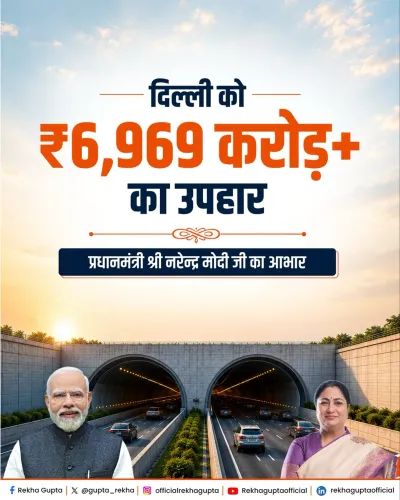
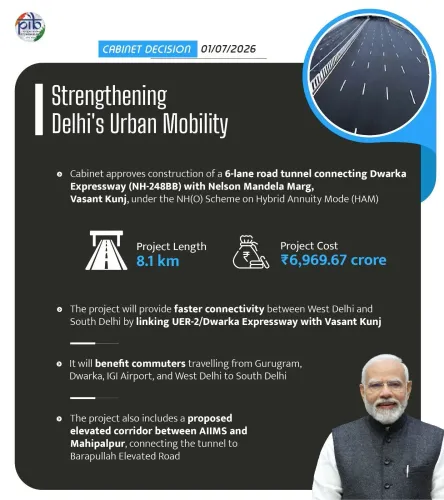
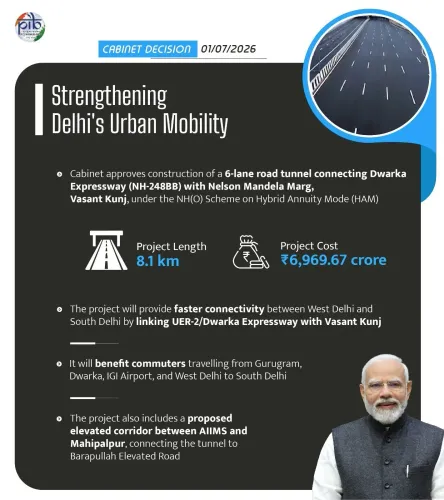
The Cabinet Committee on Economic Affairs (CCEA) approved the ₹6,969.67 crore Dwarka Road Tunnel Corridor in July 2025 .
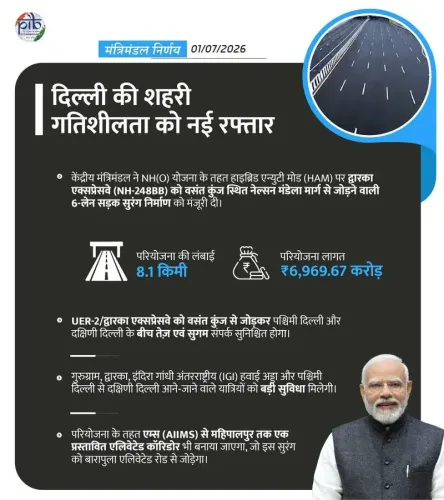
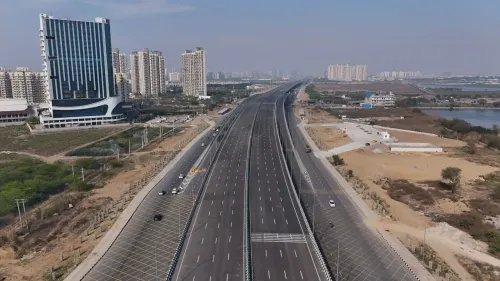
The 8.1-km, six-lane access-controlled corridor will connect Shiv Murti Interchange (NH-248BB) with Nelson Mandela Marg, Vasant Kunj .
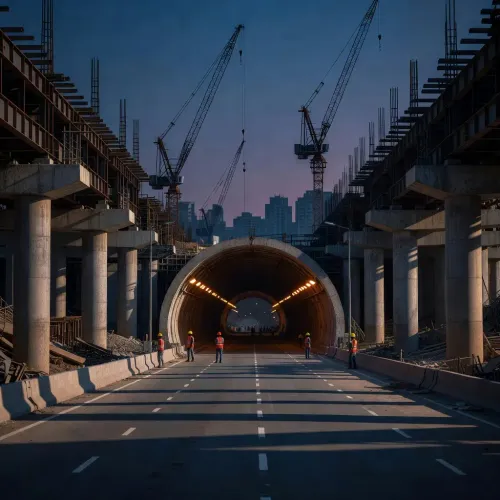
A 3.14-km twin-tube tunnel , including 1.98 km beneath the Southern Ridge , is the project's centrepiece.
The corridor will ease congestion on Dhaula Kuan–IGI Airport–Mahipalpur , Chhatarpur–Mahipalpur , and Rangpuri routes.
It will integrate with the proposed AIIMS–Mahipalpur Elevated Corridor and Barapullah Elevated Road for east-west connectivity.
The project will be built by NHAI under the Hybrid Annuity Mode (HAM) .
The Centre has approved the ₹6,969.67 crore Dwarka Road Tunnel Corridor, a major infrastructure push set to overhaul urban mobility across the National Capital Region (NCR) by cutting travel times, easing chronic congestion, and forging a high-speed link between West Delhi and South Delhi. The approval was confirmed in an official statement on Saturday, 25 July.
What the Project Covers
The 8.1-km, six-lane access-controlled corridor will connect the Shiv Murti Interchange on the Dwarka Expressway (NH-248BB) with Nelson Mandela Marg in Vasant Kunj. Its centrepiece is a 3.14-km twin-tube tunnel, of which 1.98 km runs beneath the Southern Ridge — one of Delhi's most ecologically sensitive green zones.
The project will be developed by the National Highways Authority of India (NHAI) under the Ministry of Road Transport and Highways on the Hybrid Annuity Mode (HAM), following approval by the Cabinet Committee on Economic Affairs (CCEA) earlier this month.
Who Benefits and How
Commuters travelling from Gurugram, Dwarka, Indira Gandhi International Airport, and West Delhi stand to gain the most. The corridor is expected to significantly reduce dependence on heavily congested stretches including Dhaula Kuan–IGI Airport–Mahipalpur, Chhatarpur–Mahipalpur, and Rangpuri, delivering faster and more reliable travel for daily commuters, airport passengers, and commercial vehicles alike.
According to the government, the tunnel will also complement NHAI's proposed AIIMS–Mahipalpur Elevated Corridor, which will link it to the Barapullah Elevated Road — creating seamless east-west connectivity and improving access to East Delhi, Ghaziabad, and Noida.
Tourism and MICE Ecosystem
Beyond daily commuters, the project is designed to enhance the experience of domestic and international visitors by improving airport connectivity to key tourist destinations, including Qutub Minar, Mehrauli Archaeological Park, Hauz Khas Heritage Complex, Humayun's Tomb, Lodhi Garden, and Chhatarpur Temple. It will also facilitate smoother access to Bharat Mandapam and India Gate, venues that regularly host international conferences, exhibitions, and cultural events — strengthening Delhi's meetings, incentives, conferences, and exhibitions (MICE) ecosystem.
Environmental Design
The decision to route 1.98 km of the tunnel beneath the Southern Ridge reflects a deliberate environmental calculus. By keeping the most ecologically sensitive stretch underground, the project aims to minimise surface disruption and preserve the capital's green cover — a notable departure from earlier urban highway projects that drew criticism for tree felling and ridge encroachment.
Strategic Significance
The government has described the Dwarka Tunnel Corridor as a 'strategic investment in future-ready transport infrastructure' that will support economic activity and strengthen connectivity across the NCR. Notably, this project forms part of a broader push to integrate Delhi's fragmented road network — connecting expressways, elevated roads, and arterial corridors into a more coherent urban mobility grid. With construction timelines yet to be officially announced, all eyes will be on NHAI's project execution record as the corridor moves from approval to ground-breaking.
Point of View
But for what it signals about how Delhi's infrastructure planners are finally reconciling road expansion with ecological constraints — routing the tunnel under the Southern Ridge rather than through it is a meaningful design choice. The harder question is execution: NHAI's urban project record in Delhi has been uneven, with the Dwarka Expressway itself taking over a decade from conception to completion. The corridor's true value will depend on whether the AIIMS–Mahipalpur link and Barapullah integration materialise on schedule, since the tunnel in isolation solves only part of the west-to-east bottleneck. Approvals are the easy part; the ground-level coordination between NHAI, Delhi government agencies, and environmental clearances is where such projects have historically stalled.
NationPress
24 Oct 2026
Frequently Asked Questions
What is the Dwarka Road Tunnel project approved by the Centre?
It is an 8.1-km, six-lane access-controlled corridor costing ₹6,969.67 crore , connecting the Shiv Murti Interchange on Dwarka Expressway with Nelson Mandela Marg in Vasant Kunj . Its key feature is a 3.14-km twin-tube tunnel , partly running beneath the Southern Ridge, designed to ease congestion and improve airport connectivity in Delhi-NCR.
Which congested routes will the Dwarka Tunnel help bypass?
The corridor is expected to reduce traffic on the Dhaula Kuan–IGI Airport–Mahipalpur , Chhatarpur–Mahipalpur , and Rangpuri stretches — among Delhi's most congested arterial routes. Commuters from Gurugram, Dwarka, and the airport area are expected to benefit most.
How will the tunnel protect Delhi's Southern Ridge?
The project routes 1.98 km of the twin-tube tunnel underground, directly beneath the Southern Ridge , to minimise surface disruption and preserve green cover. This approach avoids the surface-level tree felling and ridge encroachment that have dogged earlier Delhi road projects.
Who will build the Dwarka Road Tunnel and under what model?
The National Highways Authority of India (NHAI) , under the Ministry of Road Transport and Highways , will develop the project on the Hybrid Annuity Mode (HAM) , following CCEA approval earlier in July 2025.
How does the Dwarka Tunnel fit into Delhi's broader road network?
According to the government, the tunnel will connect with NHAI's proposed AIIMS–Mahipalpur Elevated Corridor , which in turn links to the Barapullah Elevated Road . Together, these projects are intended to create seamless east-west connectivity across Delhi, improving access to East Delhi , Ghaziabad , and Noida .