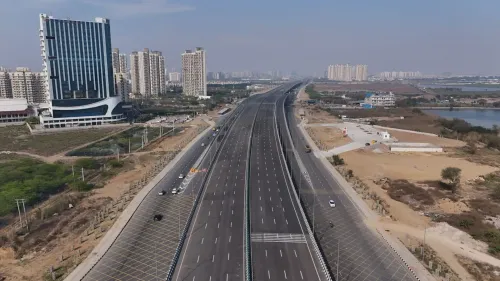
Cabinet clears ₹6,969 crore 6-lane tunnel to link Dwarka Expressway with Nelson Mandela Marg
Synopsis
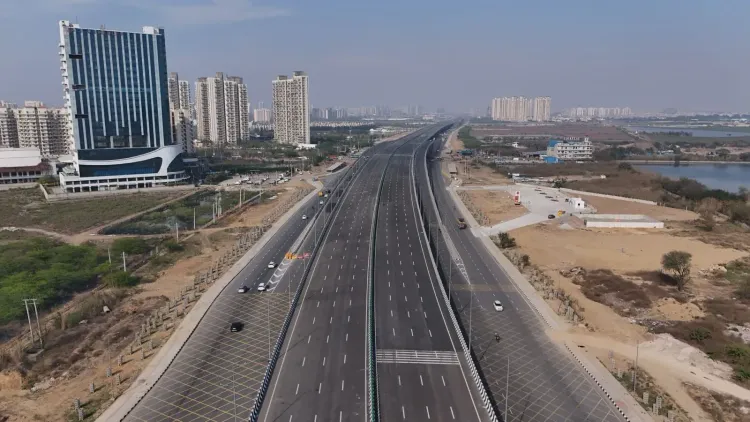
The Centre has greenlit a ₹6,969.67 crore underground twin-tube tunnel that will bore beneath Delhi's ecologically sensitive Southern Ridge Forest to stitch together Dwarka Expressway, IGI Airport, and Vasant Kunj — and, via a proposed AIIMS-Mahipalpur elevated link, eventually connect west Delhi with Noida and Ghaziabad. It is one of the most complex urban road tunnels sanctioned for the capital.
Key Takeaways
The CCEA , chaired by PM Narendra Modi , approved the project on 1 July 2025 at a cost of ₹6,969.67 crore .
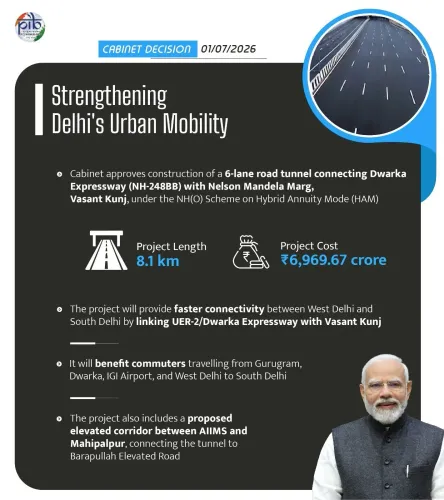
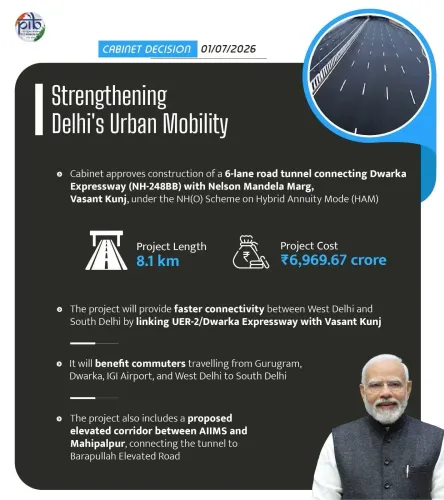
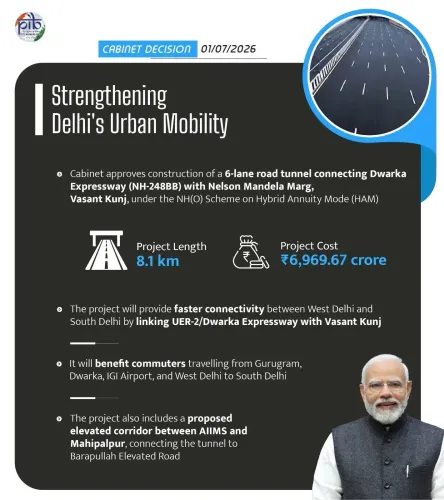
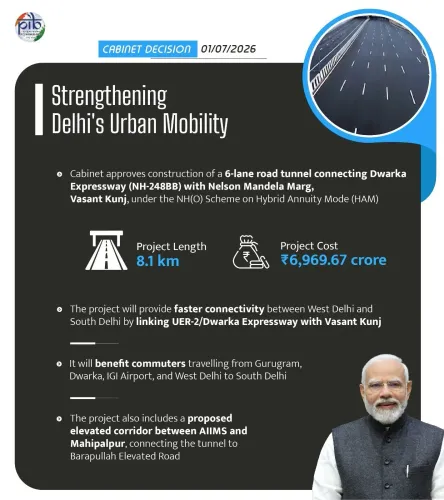
The 6-lane NH-148AE tunnel will connect Dwarka Expressway with Nelson Mandela Marg, Vasant Kunj over a total length of 8.1 km .
A 1.98 km stretch of the twin-tube tunnel passes beneath the Southern Ridge Forest , built via Tunnel Boring Machine (TBM) .
Ancillary works include a 1.8 km elevated road on Nelson Mandela Marg, an additional flyover, and an elevated U-turn near Mahipalpur-Chhatarpur Road .
The project is projected to generate 7.54 lakh person-days of direct and 9.80 lakh person-days of indirect employment.
An NHAI -proposed elevated corridor between AIIMS and Mahipalpur will eventually link the tunnel to east Delhi, Ghaziabad , and Noida .
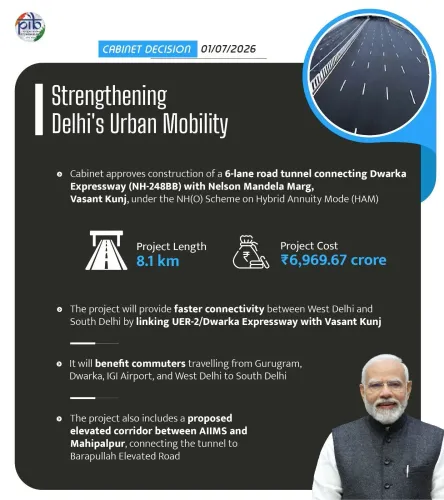
The Cabinet Committee on Economic Affairs (CCEA), chaired by Prime Minister Narendra Modi, on Wednesday, 1 July approved a ₹6,969.67 crore project to construct a 6-lane road tunnel for NH-148AE, connecting the Dwarka Expressway with Nelson Mandela Marg, Vasant Kunj, in New Delhi. The project spans a total length of 8.1 km and will be executed under the Hybrid Annuity Mode (HAM), with the National Highways Authority of India (NHAI) as the implementing agency.
What the Project Covers
The corridor is designed as an underground twin-tube tunnel to be bored using a Tunnel Boring Machine (TBM). The tunnel originates at the Shivmurti Interchange and terminates just before the intersection of Nelson Mandela Marg and Mahipalpur-Chhatarpur Road. The 3.14 km tunnel section — including a 1.98 km stretch beneath the Southern Ridge Forest — is designed to pass entirely underground, preserving the ecologically sensitive Rangpuri Ridge in southern Delhi.
The total 8.1 km project length breaks down as follows: 3.14 km of tunnel, 0.98 km of tunnel approach ramp, 0.554 km of approach with RE Wall, 2.556 km of elevated portion, and 0.870 km of at-grade road. The main carriageway measures 6.3 km.
Ancillary Infrastructure
Beyond the tunnel itself, the project includes a 1.8 km elevated road along Nelson Mandela Marg to ease congestion at the Mahipalpur-Chhatarpur intersection. An additional flyover from Chhatarpur towards Mahipalpur — parallel to the existing flyover — and an elevated U-turn to facilitate right-turning traffic towards Chhatarpur are also part of the plan.
Separately, NHAI is proposing an elevated corridor between AIIMS and Mahipalpur that would link the tunnel to the Barapullah elevated road, extending seamless connectivity from west and south Delhi all the way to east Delhi, Ghaziabad, and Noida.
Connectivity and Commuter Impact
The approved corridor will deliver faster surface-free movement between west Delhi and south Delhi, with direct benefits for daily traffic flowing from Gurugram, Dwarka, Indira Gandhi International (IGI) Airport, and west Delhi towards Vasant Kunj and beyond. The twin-tube design minimises surface disruption — a critical consideration given the density of residential and commercial zones along the alignment.
This comes amid sustained Centre-level investment in Delhi's road infrastructure, with multiple elevated and underground projects under various stages of planning and execution across the capital.
Employment and Economic Impact
According to the cabinet communiqué, each lane-kilometre of National Highway development generates an average of 264 person-days per day of direct employment and 55 person-days per day of indirect employment. On that basis, the project is estimated to generate approximately 7.54 lakh person-days of direct employment and 9.80 lakh person-days of indirect employment. Additional jobs are expected to emerge from increased economic activity along the new high-speed corridor.
With Cabinet clearance now secured, the project moves toward tendering and award, with construction timelines to be confirmed by NHAI in the coming weeks.
Point of View
969 crore underground tunnel is a significant bet on Delhi's capacity to execute complex urban infrastructure — and the Southern Ridge alignment will face environmental scrutiny. The HAM model spreads fiscal risk, but NHAI's track record on urban tunnels is thinner than on highway corridors, and TBM-based urban projects in India have a history of cost and time overruns. The proposed AIIMS-Mahipalpur elevated link, still at proposal stage, is the real multiplier for this project's connectivity promise — without it, the tunnel solves a west-south problem without fully closing the east Delhi loop. Cabinet clearance is the easy part; land acquisition and utility shifting in dense south Delhi will be the real test.
NationPress
30 Sept 2026
Frequently Asked Questions
What is the ₹6,969.67 crore Delhi tunnel project approved by the Cabinet?
It is a 6-lane underground road tunnel for NH-148AE, approved by the Cabinet Committee on Economic Affairs on 1 July 2025, connecting the Dwarka Expressway with Nelson Mandela Marg, Vasant Kunj, in New Delhi. The project spans 8.1 km in total length and will be built under the Hybrid Annuity Mode (HAM) by NHAI.
How will the Delhi NH-148AE tunnel benefit commuters?
The tunnel will provide faster, signal-free connectivity between west Delhi and south Delhi, directly benefiting traffic from Gurugram, Dwarka, IGI Airport, and west Delhi heading towards Vasant Kunj. A future elevated link between AIIMS and Mahipalpur is also proposed to extend the corridor to east Delhi, Ghaziabad, and Noida.
Why is the tunnel being built underground through the Southern Ridge?
The 1.98 km section beneath the Southern Ridge Forest is designed as a twin-tube underground tunnel to preserve the ecologically sensitive Rangpuri Ridge in southern Delhi and minimise surface disruption. The tunnel will be bored using a Tunnel Boring Machine (TBM).
What is the Hybrid Annuity Mode (HAM) under which this project is approved?
HAM is a public-private partnership model where the government pays a portion of the project cost during construction and the rest through annuity payments after completion, sharing financial risk between the Centre and the private developer. It is widely used by NHAI for large highway and tunnel projects.
How many jobs will the Delhi tunnel project create?
According to the cabinet communiqué, the project is estimated to generate approximately 7.54 lakh person-days of direct employment and 9.80 lakh person-days of indirect employment, based on standard National Highway employment benchmarks of 264 direct and 55 indirect person-days per lane-kilometre per day.