Delhi Metro Phase-V: CM Rekha Gupta unveils 7 new corridors, 97 km network
Synopsis
On DMRC's 32nd Foundation Day, Delhi CM Rekha Gupta unveiled seven new metro corridors under Phase-V (B) — spanning 97.158 km, adding 65 stations, and costing ₹48,204.56 crore. Four corridors are on a fast-track target for 2029 completion, connecting Delhi's rapidly growing periphery to the core metro network for the first time.
Key Takeaways
Delhi CM Rekha Gupta announced seven new metro corridors under Metro Phase-V (B) on DMRC's 32nd Foundation Day .
The corridors will span a combined 97.158 km and add 65 new stations across Delhi.
Total estimated cost of the expansion is ₹48,204.56 crore .
Four corridors have been designated as priority projects, with a target completion date of 2029 .
The remaining three corridors will be developed in phases after the priority corridors are complete.
DMRC has been directed to prepare revised Detailed Project Reports (DPRs) for both priority and non-priority corridors separately.
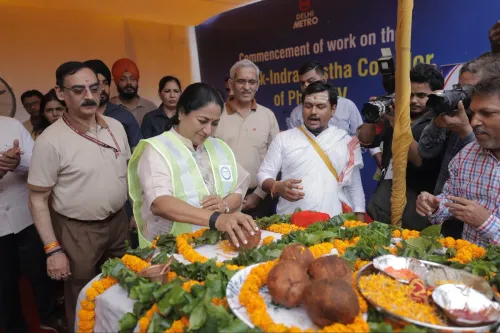
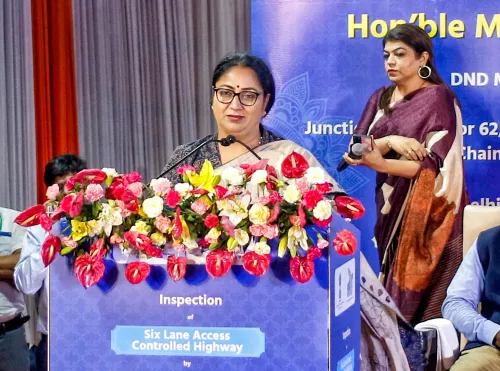
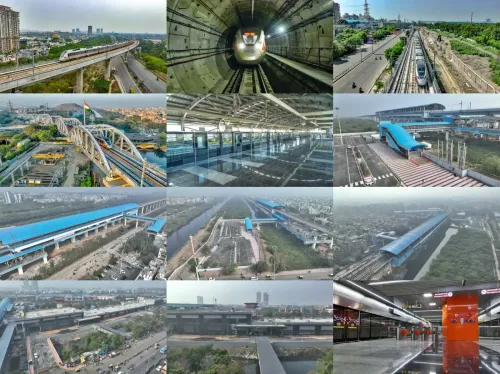
Delhi Chief Minister Rekha Gupta on Sunday, 4 May 2025, announced seven new metro corridors to be built under Metro Phase-V (B), on the occasion of the Delhi Metro Rail Corporation's (DMRC) 32nd Foundation Day. The seven corridors will together span 97.158 kilometres, add 65 new stations, and carry an estimated cost of ₹48,204.56 crore.
Overview of the Phase-V (B) Expansion
Chief Minister Gupta said the corridors are designed to connect Delhi's outlying and rapidly developing areas to the existing metro network, offering residents faster, safer, and more convenient travel. Four corridors have been designated as priority projects and are targeted for completion by 2029, while the remaining three will be developed in phases thereafter. She directed the DMRC to prepare and submit revised Detailed Project Reports (DPRs) separately for the priority and non-priority corridors.
The Seven Corridors at a Glance
Corridor 1 — Dhansa Bus Stand (Najafgarh) to Nangloi: A fully elevated, independent corridor stretching 11.859 km with nine stations. It will connect Naresh Park Extension, Ranhola, Bakkarwala, Baprola, Dichaon Kalan, and Najafgarh Extension. Interchange facilities will be available at Nangloi (Green Line) and Dhansa Bus Stand (Grey Line).
Corridor 2 — Central Secretariat to Kishangarh: Spanning 15.969 km with 10 stations — nine underground and one elevated — this corridor will be predominantly underground (13.721 km underground, 2.248 km elevated). It will serve New Moti Bagh GPRA colonies, RK Puram Sectors 1 and 7, Jawaharlal Nehru University, and the Prime Ministers' Museum. Interchanges will be available at Central Secretariat (Violet, Yellow, and Magenta lines), Moti Bagh (Pink Line), RK Puram (Magenta Line), and Kishangarh (Golden Line).
Corridor 3 — Samaypur Badli to Narela DDA Sports Complex: An extension of the existing Line-2, this fully elevated corridor covers 12.89 km with eight stations. It will link Siraspur, Khera Kalan, Holambi Kalan, Alipur, Shahpur Garhi, and DSIIDC Narela. Interchanges at Siraspur (Yellow Line) and Narela DDA Sports Complex (Red Line).
Corridor 4 — Kirti Nagar to Palam (Line-5 Extension): Covering 9.967 km with six stations (five underground, one elevated), this corridor has 8.397 km underground and 1.57 km elevated. It will serve Saraswati Garden, Mayapuri Industrial Area Phase III, IITM Janakpuri, and Sagarpur. Interchange points at Mayapuri (Pink Line) and Palam (Magenta Line).
Corridor 5 — Jor Bagh to Mithapur: An independent line of 16.991 km with 12 stations (seven underground, five elevated). It will connect Lodhi Colony, Old Ishwar Nagar, Ali Village, Jaitpur, Moladband, and Mithapur. Interchanges at Jor Bagh (Yellow Line), Lajpat Nagar (Violet and Pink lines), NSIC Okhla (Magenta Line), Jasola Apollo (Violet Line), and Madanpur Khadar (Golden Line extension).
Corridor 6 — Shastri Park to Mayur Vihar Phase III: An independent corridor of 13.197 km with eight stations, comprising 8.99 km underground and 4.207 km elevated. It will cover Mayur Vihar Phase III, New Kondli, Patparganj (Mother Dairy), Geeta Colony, Gandhi Nagar market, and Kailash Nagar. Interchanges at Shastri Park (Red Line), Nirman Vihar (Blue Line), and Trilokpuri (Pink Line).
Corridor 7 — Keshavpuram to Rohini Sector 34: A fully elevated corridor of 16.285 km with 12 stations. It will link West Shalimar Bagh, East Pitampura, Rohini Sector 16, Delhi Technological University, and Rohini Sector 29. Interchanges at Keshavpuram (Red Line), North Pitampura (Pink Line), and Rohini Sector 34 (Red Line).
Why This Expansion Matters
The Phase-V (B) announcement comes as Delhi's urban periphery — areas such as Najafgarh, Narela, and Rohini's outer sectors — continues to grow rapidly but remains underserved by mass transit. The addition of 65 stations across 97.158 km would represent one of the largest single-phase expansions in DMRC's history. Notably, several corridors are designed to provide multi-line interchange points, which could significantly reduce congestion on existing high-density lines such as the Yellow and Magenta lines.
This is also the first major metro expansion announcement under Chief Minister Rekha Gupta's administration, signalling an infrastructure-first agenda for the ruling Bharatiya Janata Party (BJP) in Delhi.
Timelines and Next Steps
The four priority corridors are targeted for completion by 2029, though DMRC will need to submit revised DPRs before construction can formally begin. The remaining three corridors will follow in subsequent phases. With land acquisition, tendering, and regulatory clearances still ahead, the 2029 deadline for priority corridors will be closely watched by urban planners and commuters alike.
Point of View
And the 2029 deadline for priority corridors aligns conveniently with the next Delhi assembly election cycle. The harder question is execution: DMRC still needs revised DPRs, land acquisition, and central government approvals before a single pillar goes up. Delhi's metro expansions have historically run over schedule and budget, and at ₹48,204.56 crore, this is a significant fiscal commitment for a city government still navigating its finances. Whether the peripheral connectivity promise translates into ridership — or remains a map on a press release — will depend on last-mile infrastructure that no corridor announcement addresses.
NationPress
21 Oct 2026
Frequently Asked Questions
What is Delhi Metro Phase-V (B)?
Delhi Metro Phase-V (B) is the latest planned expansion of the Delhi Metro network, announced by Chief Minister Rekha Gupta on DMRC's 32nd Foundation Day. It comprises seven new corridors covering 97.158 km and 65 stations at an estimated cost of ₹48,204.56 crore.
Which seven corridors were announced under Metro Phase-V (B)?
The seven corridors are: Dhansa Bus Stand to Nangloi (11.859 km), Central Secretariat to Kishangarh (15.969 km), Samaypur Badli to Narela DDA Sports Complex (12.89 km), Kirti Nagar to Palam (9.967 km), Jor Bagh to Mithapur (16.991 km), Shastri Park to Mayur Vihar Phase III (13.197 km), and Keshavpuram to Rohini Sector 34 (16.285 km).
When will the Delhi Metro Phase-V (B) corridors be completed?
Four corridors have been designated as priority projects with a targeted completion date of 2029. The remaining three corridors will be developed in subsequent phases. DMRC has been asked to submit revised Detailed Project Reports (DPRs) before construction begins.
How much will Delhi Metro Phase-V (B) cost?
The total estimated cost for all seven corridors under Metro Phase-V (B) is approximately ₹48,204.56 crore, according to the announcement made by Chief Minister Rekha Gupta.
Which areas will benefit from the new Delhi Metro corridors?
The new corridors will connect several underserved and rapidly developing areas including Najafgarh, Narela, Rohini's outer sectors, Jawaharlal Nehru University, Delhi Technological University, Mayur Vihar Phase III, and key south Delhi localities such as Lodhi Colony and Jor Bagh.