NITI Aayog council meet: Delhi CM Rekha Gupta presents Viksit Delhi model
Synopsis
At NITI Aayog's 11th Governing Council meeting, Delhi CM Rekha Gupta put the spotlight on a ₹1 lakh crore road infrastructure push, a 500-km Metro network, and cross-state Yamuna restoration — framing Delhi not just as India's capital, but as a model state for Viksit Bharat@2047.
Key Takeaways
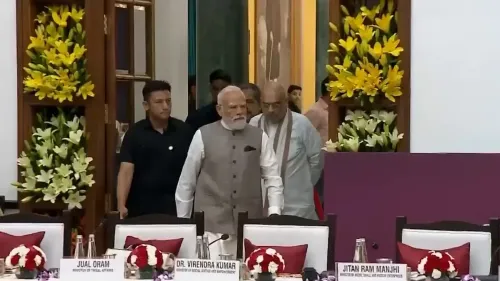
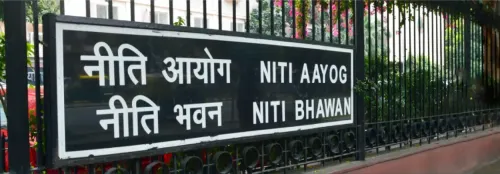
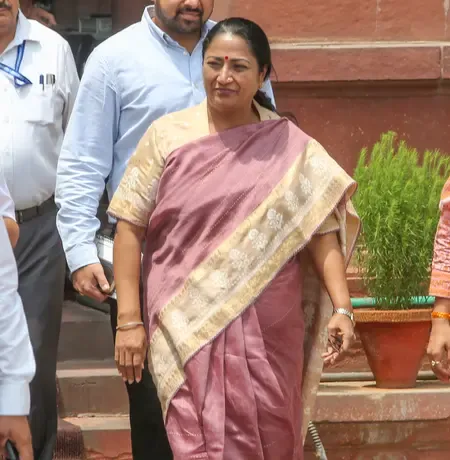
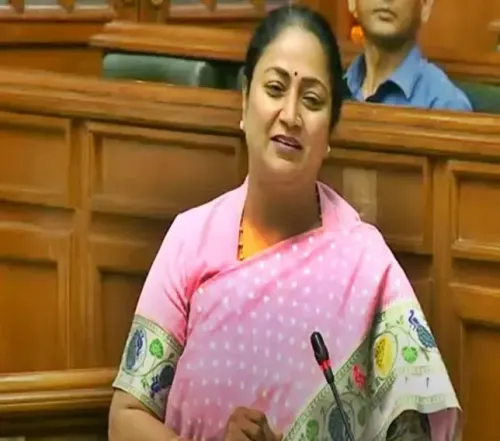
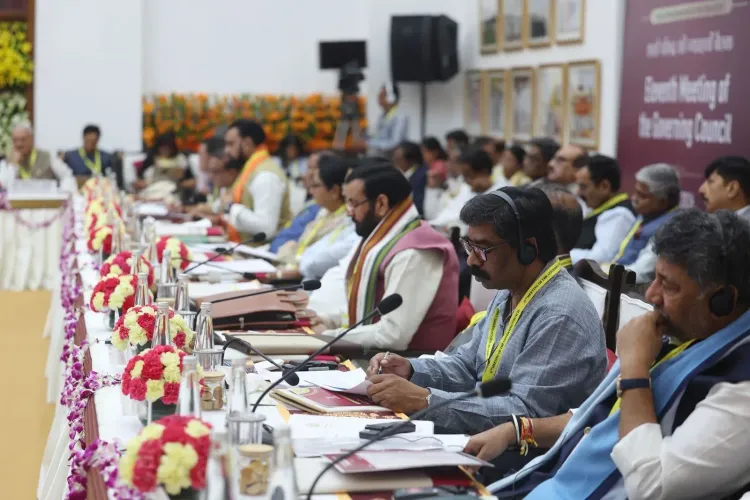
Delhi CM Rekha Gupta presented the capital's development model at the 11th NITI Aayog Governing Council meeting on 11 June , chaired by PM Narendra Modi .
Road infrastructure worth nearly ₹1 lakh crore is being developed in Delhi with Central government assistance.
Delhi's Metro network has reached nearly 500 kilometres , surpassing the combined metro coverage of all other Indian states.
A special inter-state coordination team has been formed to restore the Yamuna river's flow and address pollution.
New welfare schemes include free bicycles for girl students in Class 9, the 'Samarth' Anganwadi transformation initiative, and Mahila Haat Outlets (Rani Haat) for women entrepreneurs.
Full digitalisation via e-file systems and new Control and Command Centres have been implemented across Delhi's administration.
Delhi Chief Minister Rekha Gupta on Thursday, 11 June presented the national capital's development blueprint and its contribution to Viksit Bharat@2047 at the 11th Governing Council meeting of NITI Aayog, chaired by Prime Minister Narendra Modi. The Chief Minister laid out a sector-by-sector account of schemes spanning education, healthcare, infrastructure, and social welfare, positioning Delhi as a key driver of India's transformation agenda.
Delhi's Role in Viksit Bharat
Chief Minister Gupta argued that national development cannot be measured by economic and technological metrics alone — the capability and productivity of citizens are equally defining. She described Delhi as a 'strong engine' powering the country's broader transformation, and said her government is making sustained efforts to build a 'Viksit Delhi' in alignment with the Centre's 2047 vision.
She also conveyed greetings on behalf of Delhi's residents on the completion of PM Modi's 12-year tenure, acknowledging that the Central government has, in her words, consistently supported Delhi's development regardless of the prevailing political climate.
Infrastructure and Transport Highlights
A headline figure from the presentation: road infrastructure worth nearly ₹1 lakh crore is being developed in Delhi with Central assistance. The Chief Minister also noted that Delhi's Metro network has expanded to nearly 500 kilometres, making it larger than the combined metro networks of all other Indian states.
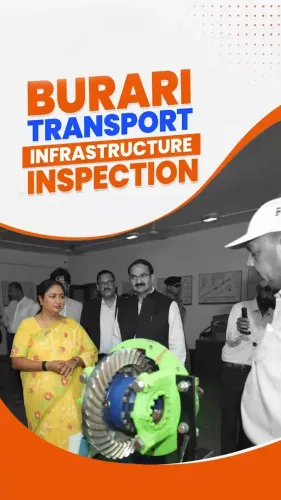
On transport safety, three new automated testing stations are being developed for fitness testing of commercial vehicles — part of a broader push to modernise the sector.
Yamuna Restoration and Inter-State Coordination
Chief Minister Gupta shared that under PM Modi's guidance, a special coordination team has been constituted with neighbouring states to address the Yamuna river's uninterrupted flow and tackle its severe pollution problem. The team, she said, has already begun working in a structured manner, transcending political differences — a notable development given the historically contentious water-sharing disputes in the region.
Social Welfare and Women's Empowerment Initiatives
Among the welfare schemes highlighted, the Delhi government has launched a programme to provide free bicycles to girl students in government schools, aimed at reducing the dropout rate at the Class 9 level. A new initiative called 'Samarth' has been launched for the transformation of Anganwadi centres, built on six pillars: Creche, Nutrition, Education, Family Participation, and women's socio-economic empowerment.
The government also announced plans to launch Mahila Haat Outlets (Rani Haat) — permanent marketing platforms for products made by women from shelter homes and self-help groups — to improve market access for women-led enterprises.
Administrative Reforms and Digital Governance
On the governance front, the Chief Minister said e-file systems and complete digitalisation have been rolled out across the Delhi government. New Control and Command Centres have been established, and officials are being trained under the Mission Karmayogi framework. These reforms, she indicated, are intended to improve service delivery and administrative efficiency across departments.
The NITI Aayog Governing Council meeting serves as the apex body for cooperative federalism, bringing together all Chief Ministers and Lt. Governors to align state and Central development priorities — making Delhi's presentation a signal of the BJP-led government's intent to showcase the capital as a model for other states.
Point of View
It framed the BJP-governed Delhi as a cooperative federalism success story, in sharp contrast to the adversarial Centre-Delhi dynamic of recent years. The ₹1 lakh crore road figure and 500-km Metro milestone are real, but the credit-sharing question — how much is Central spend versus state — was left unaddressed. The Yamuna coordination team is a welcome structural development, but the river's rehabilitation has been promised repeatedly across administrations; timelines and accountability mechanisms remain unspecified. Whether 'Viksit Delhi' becomes a replicable model or remains a conference-room narrative will depend on measurable outcomes, not milestone listings.
NationPress
26 Sept 2026
Frequently Asked Questions
What did Delhi CM Rekha Gupta present at the NITI Aayog meeting?
Chief Minister Rekha Gupta presented Delhi's development model at the 11th NITI Aayog Governing Council meeting on 11 June, covering schemes in education, healthcare, infrastructure, and social welfare. She highlighted key achievements including a ₹1 lakh crore road infrastructure push and a 500-km Metro network.
What is the 'Samarth' initiative announced by the Delhi government?
'Samarth' is a Delhi government initiative for the transformation of Anganwadi centres, built on six pillars: Creche, Nutrition, Education, Family Participation, and women's socio-economic empowerment. It aims to improve services for children and mothers through a structured, multi-dimensional model.
What is the Yamuna coordination team and what does it do?
A special inter-state coordination team has been formed under PM Modi's guidance, bringing together Delhi and neighbouring states to restore the Yamuna river's uninterrupted flow and address its pollution crisis. The team has reportedly already begun working in a planned manner, transcending political differences between states.
What are Mahila Haat Outlets (Rani Haat)?
Mahila Haat Outlets, also called Rani Haat, are permanent marketing platforms being launched by the Delhi government to provide market access for products made by women from shelter homes and self-help groups. The initiative is aimed at boosting women's economic participation and income.
How large is Delhi's Metro network currently?
Delhi's Metro network has expanded to nearly 500 kilometres, according to Chief Minister Gupta's presentation at the NITI Aayog meeting. She noted this makes it larger than the combined metro networks of all other states in India.