Dr. Jitendra Singh marks 12 years of Vikas Bhi Virasat Bhi

Synopsis
Union Minister Dr. Jitendra Singh marked 12 years of the Modi government on 18 June 2026, invoking India's civilizational identity and the Vikas Bhi, Virasat Bhi philosophy that frames development and heritage revival as complementary pillars of governance.
Key Takeaways
Jitendra Singh posted on 18 June 2026 to mark 12 years of the Narendra Modi -led government.
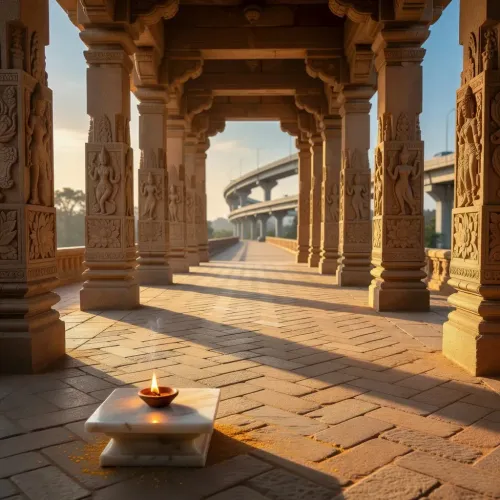
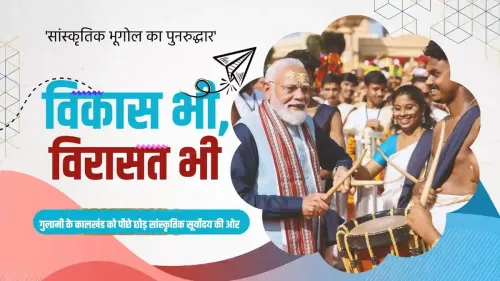
The post frames India as a 'timeless civilization' and highlights the dual pursuit of development and heritage under Vikas Bhi, Virasat Bhi .
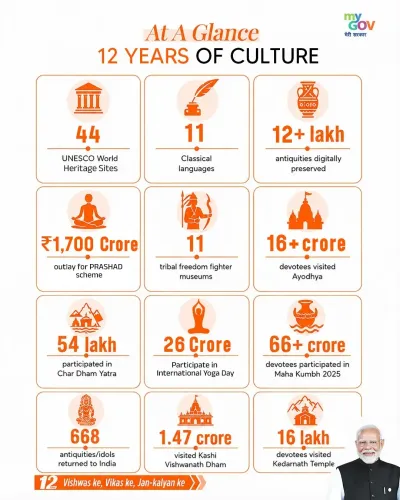
The PRASAD and Swadesh Darshan schemes, launched from 2014-15 , linked pilgrimage sites to modern infrastructure as part of this philosophy.
The 2023 inauguration of the new Parliament building with traditional motifs and the Sengol was a landmark expression of the heritage-development blend.
The hashtag #12YearsOfVikasBhiVirasatBhi signals a coordinated government-wide anniversary communication effort.
Future policy focus may include new heritage-linked infrastructure projects and legislation on cultural property protection.
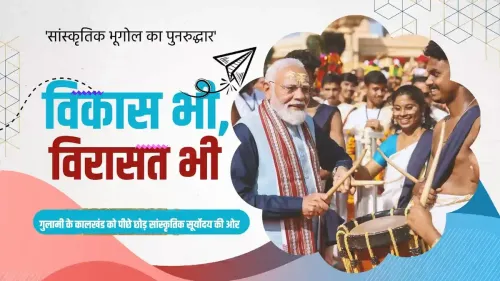
Union Science and Technology Minister Dr. Jitendra Singh on Thursday, 18 June 2026 invoked India's civilizational identity to mark 12 years of the Narendra Modi-led government, framing the period as one in which development and heritage have advanced together under the philosophy of Vikas Bhi, Virasat Bhi (Development as well as Heritage).
Context
Posting under the hashtag #12YearsOfVikasBhiVirasatBhi, Dr. Jitendra Singh wrote: 'India is more than a country, it is a timeless civilization… In the last 12 years, the nation has gained new momentum in development while rediscovering and honoring its glorious heritage.' The post, which carried a video, marks the twelfth anniversary of the BJP-led National Democratic Alliance government that came to power in May 2014.
The phrase Vikas Bhi, Virasat Bhi has been a recurring governance slogan of the ruling Bharatiya Janata Party, asserting that economic modernisation and cultural revival are not competing priorities but complementary ones. Dr. Singh's framing of India as a 'timeless civilization' rather than merely a post-colonial nation-state is consistent with that broader ideological positioning.
Policy Backdrop
The 12-year arc referenced by the minister spans a wide range of policy actions that blended infrastructure investment with cultural symbolism. Early in the government's tenure, schemes such as PRASAD (Pilgrimage Rejuvenation and Spiritual Augmentation Drive) and Swadesh Darshan were launched to develop pilgrimage and heritage tourism circuits, linking religious sites to modern connectivity.
A landmark moment came in 2023 with the inauguration of the new Parliament building, which incorporated traditional Indian architectural motifs and the installation of the Sengol — a historical sceptre — as a symbol of the transfer of power rooted in pre-colonial Indian tradition. These actions form part of a sustained effort to embed cultural markers into flagship state projects.
Alongside symbolic moves, the government pursued large-scale digital and physical infrastructure programmes, positioning the dual track of modernity and heritage as the defining character of its governance model.
Stakeholders and Impact
The heritage tourism sector has been among the most direct beneficiaries of this dual-track approach, with pilgrimage circuits receiving infrastructure upgrades and increased central funding over the 12-year period. Cultural institutions, archaeological bodies, and artisan communities have also been drawn into the policy orbit through various revival and promotion initiatives.
For ordinary citizens, the narrative of civilizational pride alongside visible development — roads, digital services, urban amenities — has been a central theme of the ruling party's political communication. Dr. Singh's post on the anniversary is part of a coordinated government-wide messaging effort marking the milestone.
What's Next
Observers will watch whether the anniversary messaging translates into fresh policy announcements, particularly around heritage-linked infrastructure, antiquities protection legislation, or new cultural tourism circuits. State governments aligned with the ruling party at the Centre are also likely to amplify the Vikas Bhi, Virasat Bhi theme through their own programmes.
As India approaches upcoming electoral cycles, the government's ability to sustain and demonstrate this harmony of progress and tradition will remain a key plank of its political narrative and a benchmark by which its record is assessed.
Point of View
Coordinated anniversary campaign by the BJP-led government to consolidate its 12-year record under the ideologically resonant 'Vikas Bhi, Virasat Bhi' frame. By invoking civilizational continuity rather than just electoral metrics, the messaging seeks to elevate routine governance anniversaries into a statement of national identity. This approach has proven durable across two terms, allowing the government to absorb criticism of specific policy shortfalls by anchoring its legitimacy in a longer civilizational arc. As the political cycle advances, the intensity of such messaging will likely increase, testing whether the heritage-development narrative retains its mobilising power with a younger, economically aspirational electorate.
NationPress
17 Sept 2026
Frequently Asked Questions
What is Vikas Bhi Virasat Bhi?
'Vikas Bhi, Virasat Bhi' is a governance philosophy promoted by the BJP-led government since 2014, asserting that economic development and the revival of India's cultural and civilizational heritage are complementary goals, not competing ones.
Why is the Modi government marking 12 years in June 2026?
The Narendra Modi-led NDA government first came to power in May 2014, making June 2026 the occasion for marking approximately 12 years of continuous governance at the Centre.
What are the PRASAD and Swadesh Darshan schemes?
PRASAD (Pilgrimage Rejuvenation and Spiritual Augmentation Drive) and Swadesh Darshan are central government schemes launched from 2014-15 to develop pilgrimage and heritage tourism circuits across India, connecting religious and cultural sites to modern infrastructure.
What is the significance of the Sengol in the new Parliament building?
The Sengol, a historical sceptre rooted in South Indian tradition symbolising the transfer of power, was installed in the new Parliament building inaugurated in 2023 as a representation of India's pre-colonial governance heritage.
Who is Dr. Jitendra Singh?
Dr. Jitendra Singh is the Union Minister of State (Independent Charge) for Science and Technology and Earth Sciences, and also a Minister of State in the Prime Minister's Office and for Personnel, representing the BJP.