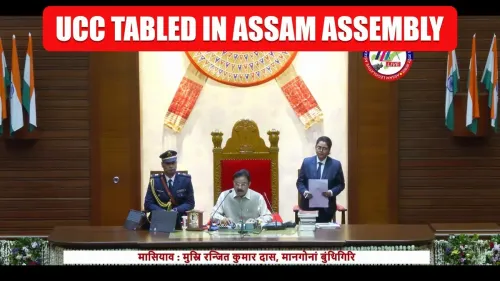
CM Himanta Tables UCC 2026 Bill in Assam Assembly
Synopsis
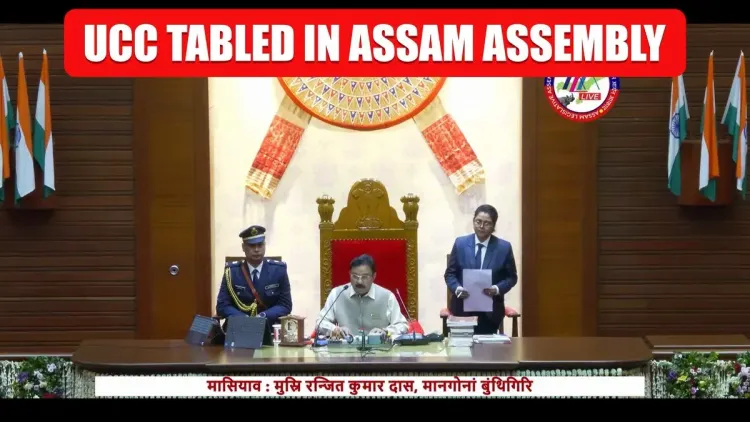
Assam Chief Minister Himanta Biswa Sarma introduced the Uniform Civil Code 2026 Bill in the Assam Vidhan Sabha on 25 May 2026, framing it as fulfilment of a constitutional directive and opening formal legislative debate on replacing religion-based personal laws with a common civil framework.
Key Takeaways
The Uniform Civil Code 2026 Bill was introduced in the Assam Vidhan Sabha on 25 May 2026 by Chief Minister Himanta Biswa Sarma .
Article 44 of the Indian Constitution has directed the State to endeavour for a uniform civil code since 1950 .
Uttarakhand passed India's first state-level UCC law in February 2024 , providing a legislative template for Assam.
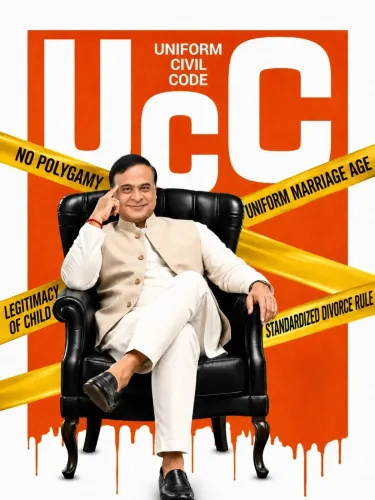
The bill covers civil matters including marriage, divorce, inheritance and adoption currently governed by separate religion-based personal laws.
Key stakeholders include women's groups, religious minorities and tribal councils with constitutionally protected customary practices.
If enacted, Assam would become the second Indian state to have a Uniform Civil Code law.
Assam Chief Minister Himanta Biswa Sarma on Monday, 25 May 2026 announced the introduction of the Uniform Civil Code 2026 Bill in the Assam Vidhan Sabha, framing the move as an opportunity for on-record legislative debate on why a common civil code is necessary for the state and how it fulfils a constitutional vision laid down by India's founding fathers.
Context
In his post on X, CM Sarma wrote that the bill's introduction 'paves the way for an on record discussion on why #UCCAssam is the need of the hour and how it will help realise the path laid down by our founding fathers.' The statement positions the legislative tabling not merely as a policy move but as the opening of a formal, documented public and parliamentary discourse on uniform civil laws in Assam.
The Uniform Civil Code seeks to replace religion-based personal laws — governing marriage, divorce, inheritance and adoption — with a single set of civil rules applicable to all citizens regardless of faith. The idea has a direct constitutional grounding in Article 44 of the Indian Constitution (1950), which lists UCC as a Directive Principle of State Policy, directing the State to 'endeavour to secure for citizens a uniform civil code throughout the territory of India.'
Policy Backdrop
Uttarakhand became the first Indian state to pass a UCC law in February 2024, creating a legislative template that BJP-governed states, including Assam, have since referenced. Goa has functioned as a de facto model since it retained the Portuguese Civil Code of 1867 after its integration into India in 1961. The BJP included UCC implementation in its national election manifestos of both 2014 and 2019, making it a long-standing party commitment.
CM Sarma, who also serves as convenor of the North-East Democratic Alliance (NEDA), has been among the most vocal BJP chief ministers on social reform legislation. The introduction of the bill in the Assam Vidhan Sabha marks the formal entry of the state's legislature into a debate that has moved from manifesto promise to enacted law in at least one other state.
Stakeholders and Impact
The bill's passage through the assembly is expected to draw responses from a wide range of stakeholders — including women's rights groups, religious minority communities and Assam's constitutionally protected tribal councils. Proponents argue that a uniform code advances gender justice by removing discriminatory provisions embedded in various personal laws. Critics, particularly from tribal organisations, have historically raised concerns about the protection of customary land and inheritance practices that fall outside mainstream personal law frameworks.
Assam's demographic diversity — encompassing communities governed by Hindu, Muslim and tribal customary laws — makes the legislative debate particularly consequential. The bill's introduction ensures that the positions of all sides are placed on the assembly record.
What's Next
With the bill now formally introduced, the Assam Vidhan Sabha is expected to schedule committee review and floor debate in coming sessions. Legal challenges from community organisations or tribal councils remain a possibility, as has been the pattern in other states where personal law reform has been attempted. The trajectory of the Uttarakhand UCC law — which faced judicial scrutiny after passage — offers a reference point for how the process may unfold in Assam.
If passed, Assam would become the second Indian state to enact a state-level Uniform Civil Code, adding momentum to the broader national conversation about whether a central UCC legislation should follow.
Point of View
Following the Uttarakhand precedent. By framing the bill as a fulfilment of the founding fathers' vision — a direct invocation of Article 44 — CM Sarma anchors a politically charged reform in constitutional legitimacy rather than party ideology alone. The move also sets up Assam as a second data point in what appears to be a deliberate, state-by-state strategy to build momentum for eventual central UCC legislation. The real test will come in committee hearings and floor debate, where tribal community concerns and minority rights arguments are likely to shape both the bill's final form and its political optics.
NationPress
19 Sept 2026
Frequently Asked Questions
What is the Uniform Civil Code 2026 Bill in Assam?
The Uniform Civil Code 2026 Bill introduced in the Assam Vidhan Sabha proposes a single set of civil laws on marriage, divorce, inheritance and adoption to replace the separate religion-based personal laws currently in force in the state.
Which Indian state first passed a Uniform Civil Code law?
Uttarakhand was the first Indian state to pass a Uniform Civil Code law, doing so in February 2024 under its BJP government.
What does Article 44 of the Indian Constitution say about UCC?
Article 44 is a Directive Principle of State Policy that directs the State to endeavour to secure a uniform civil code for all citizens throughout the territory of India. It has been part of the Constitution since 1950.
How will the UCC affect tribal communities in Assam?
Tribal communities in Assam have constitutionally protected customary laws governing land rights and inheritance. Their councils are expected to raise concerns during the legislative debate about whether the UCC would override or coexist with these protections.
What happens after the UCC Bill is introduced in the Assam assembly?
After introduction, the bill is typically referred to a select or standing committee for review before returning for a full floor debate and vote. Legal challenges from affected communities can also follow if the bill is passed.