CR Paatil Hails ₹25,000 Cr Elevated Corridor Plan for Varanasi
Synopsis
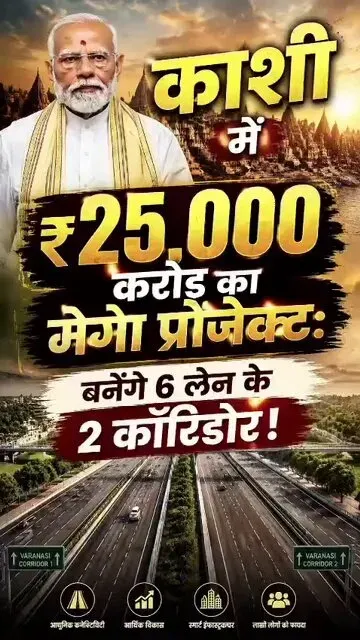
Union Jal Shakti Minister C. R. Paatil announced on 12 July 2026 that Varanasi is set to get two six-lane elevated corridors worth approximately ₹25,000 crore under PM Modi's leadership, promising to end the city's chronic traffic congestion and boost tourism.
Key Takeaways
Union Jal Shakti Minister C.
Paatil announced a proposed ₹25,000 crore elevated corridor project for Varanasi on 12 July 2026 .
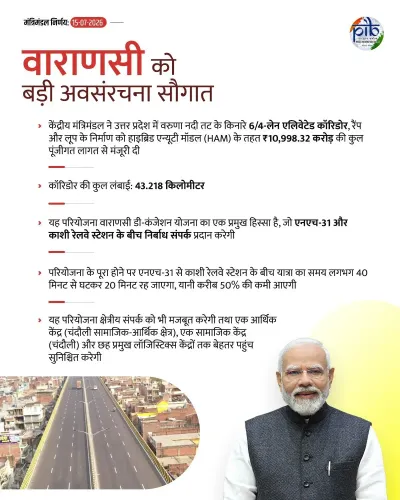
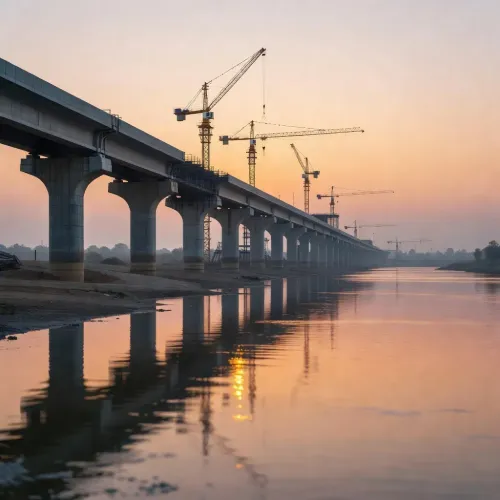
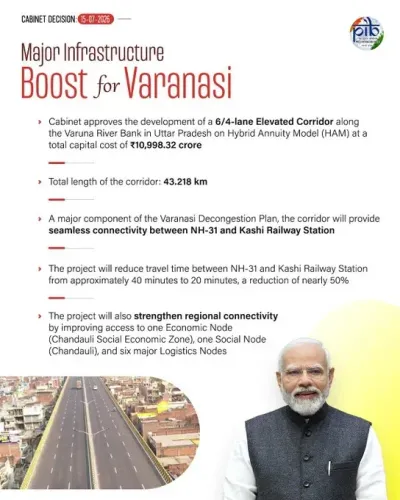
The plan envisages two six-lane elevated corridors connecting the Varuna River with key parts of the city.
Paatil said the project would allow commuters to cross the city in minutes without ground-level traffic delays.
Varanasi is PM Narendra Modi's Lok Sabha constituency and has received sustained central infrastructure investment since 2014 , including the Kashi Vishwanath Corridor and Smart Cities Mission projects.
Execution would fall under highway and urban transport ministries separate from Paatil's Jal Shakti portfolio; detailed project reports and clearances are pending.
The ₹25,000 crore figure and alignment details have not yet been confirmed through official government project documents.
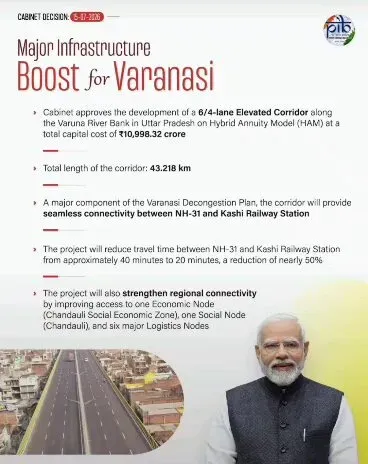
Union Jal Shakti Minister C. R. Paatil on Sunday, 12 July 2026, announced that Varanasi is set to receive a mega elevated corridor project worth approximately ₹25,000 crore, describing it as a historic gift to the ancient city under the leadership of Prime Minister Narendra Modi. The minister said two new six-lane elevated corridors will be built connecting the Varuna River and key parts of the city, promising to transform urban mobility in one of India's most congested pilgrimage destinations.
Context
Paatil posted in Hindi, asking residents rhetorically — 'Kya aapko lagta hai ki Banaras mein traffic ki samasya kabhi khatam nahi hogi?' ('Do you think the traffic problem in Banaras will never end?') — before announcing what he called a 'bahut badi khushkhabri' ('very big piece of good news'). He stated that Kashi is about to receive the 'historic gift' of a mega elevated corridor under PM Modi's leadership, adding the Hindu invocation 'Har Har Mahadev' at the close of his post.
The proposed project envisions two six-lane elevated corridors running through Varanasi, linking the Varuna River with significant parts of the city. Paatil said commuters would be able to cross the entire city in minutes without being stuck in ground-level traffic.
Policy Backdrop
Varanasi, which is also Prime Minister Modi's Lok Sabha constituency, has been at the centre of sustained central government infrastructure investment since 2014. The city was selected under the Smart Cities Mission in 2015 to improve urban mobility, and the landmark Kashi Vishwanath Corridor was inaugurated in 2021 to redevelop temple precincts and ease pilgrim movement.
The Namami Gange programme, launched in 2014, has included components targeting pollution control and riverfront infrastructure along the Ganga and its tributaries, including the Varuna. Elevated corridors represent an extension of grade-separated transport solutions already implemented in other major Indian cities under programmes such as Bharatmala and various urban mobility initiatives.
Stakeholders and Impact
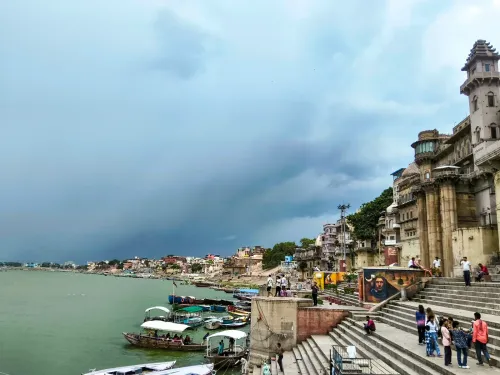
If built as described, the corridors would most directly benefit Varanasi's residents, who contend daily with some of the country's most acute urban congestion, particularly around the ghats and the old city. The city draws millions of domestic and international tourists annually, and chronic traffic bottlenecks have long been cited as a constraint on the visitor experience.
Paatil said the mega project would take Kashi's tourism and infrastructure to a world-class level. Local businesses, hoteliers, and transport operators stand to gain if travel times within the city are significantly reduced. The Varuna River corridor alignment also carries implications for riverfront communities and any environmental assessments that would need to accompany construction near the waterway.
What's Next
The immediate milestones to watch will be the release of a detailed project report, tendering by the relevant highway or urban development authority, and environmental clearances for corridors crossing the Varuna. It is also worth noting that Minister Paatil's portfolio covers Jal Shakti, not national highways or urban transport — meaning execution would fall under separate central ministries and the Uttar Pradesh state government.
Observers will look to upcoming Union Budget allocations and parliamentary disclosures for confirmation of the ₹25,000 crore outlay and a formal project timeline. The announcement continues a pattern of high-profile infrastructure commitments to the Prime Minister's home constituency, with the scale and specifics of this proposal yet to be confirmed through official government channels.
Point of View
The Prime Minister's constituency, where projects from the Kashi Vishwanath Corridor to Smart Cities investments have served both developmental and political signalling purposes. That a Jal Shakti minister — rather than a road transport or urban development counterpart — is amplifying the news underscores how BJP leaders across portfolios treat Varanasi development as a collective party showcase. The sheer scale cited, ₹25,000 crore for two corridors, would rank among the largest single urban road investments in Uttar Pradesh's history, making independent verification of the project report and budget line a critical next step for accountability. Until formal tendering or a cabinet approval is on record, the announcement occupies the space between aspiration and commitment that often characterises pre-project infrastructure communication in India.
NationPress
11 Oct 2026
Frequently Asked Questions
What is the Varanasi elevated corridor project announced by CR Paatil?
Union Jal Shakti Minister C. R. Paatil announced on 12 July 2026 that Varanasi is set to receive two six-lane elevated corridors worth approximately ₹25,000 crore, connecting the Varuna River with key parts of the city to ease chronic traffic congestion.
How much will the Varanasi elevated corridor cost?
Minister Paatil cited an approximate cost of ₹25,000 crore for the mega elevated corridor project in Varanasi. This figure has not yet been confirmed through an official government project document or cabinet approval.
Where will the elevated corridors be built in Varanasi?
According to Paatil's post, the two six-lane elevated corridors will connect the Varuna River with significant parts of Varanasi city. Detailed alignment plans have not yet been made public.
How does this project relate to PM Modi and Varanasi?
Varanasi is Prime Minister Narendra Modi's Lok Sabha constituency and has been the focus of major central government infrastructure investment since 2014, including the Kashi Vishwanath Corridor and Smart Cities Mission projects.
What are the next steps for the Varanasi elevated corridor project?
Key milestones include release of a detailed project report, formal tendering by the relevant authority, and environmental clearances for construction near the Varuna River. Union Budget allocations and parliamentary disclosures will also be closely watched.