CR Paatil Hails Rs 880 Cr Wire Undergrounding in Varanasi
Synopsis
Union Jal Shakti Minister C. R. Paatil has praised a Rs 880 crore Smart Distribution Project undergrounding electric cables across Varanasi, calling it the biggest step toward making the ancient city a true smart city under PM Modi's leadership.
Key Takeaways
Union Jal Shakti Minister C.
Paatil highlighted the underground cabling drive in Varanasi on 17 June 2026 .
The project is described as a 'Smart Distribution Project' worth more than Rs 880 crore .
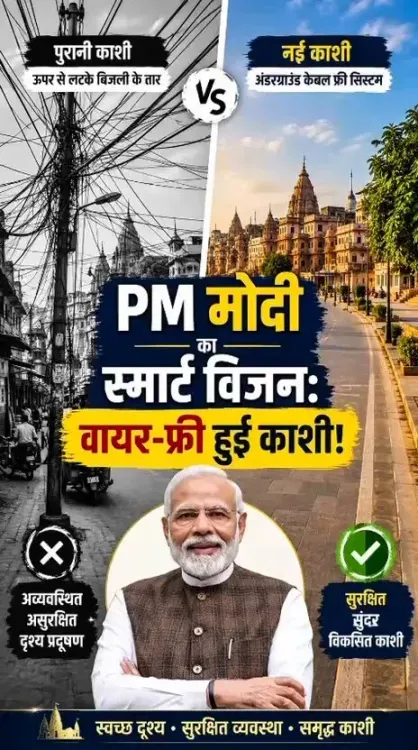
Overhead electric wires are being removed from Kashi's historic lanes, temples, and ghats and laid underground across the city.
Varanasi was among the first 20 cities selected under the Smart Cities Mission launched in 2015 .
The project improves safety from electrocution and fire hazards, and restores unobstructed heritage sightlines for pilgrims and tourists.
Successful completion could serve as a template for underground cabling in other heritage cities under national urban missions.
Union Jal Shakti Minister C. R. Paatil on Wednesday, 17 June 2026, highlighted the ongoing underground cabling project in Varanasi, crediting Prime Minister Narendra Modi's leadership for transforming the ancient city's skyline by eliminating the dense web of overhead electric wires that long marred its heritage ghats and lanes.
Context
Paatil's post, written in Hindi, recalled how old photographs of Kashi's narrow lanes and ghats were dominated by a 'dangerous tangle of electric wires hanging overhead' — ('सिर के ऊपर झूलते बिजली के तारों का खतरनाक जाल'). He declared that image has now 'completely changed.' The minister described the transformation as 'not just a project but the biggest step towards making Kashi a true smart city,' signing off with the invocation Har Har Mahadev.
Varanasi is the parliamentary constituency of Prime Minister Modi, who has personally championed its modernisation since first winning the seat in 2014. The city's dense historic core, with temples, ghats along the Ganga, and centuries-old lanes, has made infrastructure upgrades both symbolically significant and technically complex.
Policy Backdrop
The work Paatil refers to falls under what he describes as a 'Smart Distribution Project' worth more than Rs 880 crore, under which electric cables across the city are being laid underground. The project is positioned within the broader framework of the Smart Cities Mission, launched by the central government in 2015, which selected Varanasi among its first 20 cities for integrated urban renewal.
The Smart Cities Mission and the parallel AMRUT (Atal Mission for Rejuvenation and Urban Transformation) scheme have together channelled central funds into Varanasi for upgraded water networks, power distribution, and heritage streetscaping. Removal of overhead utility wires from dense historic cores has been a recurring priority in successive smart-city proposals, combining safety improvements with visual restoration of heritage precincts.
Underground cabling reduces fire hazards, eliminates the risk of electrocution during monsoon flooding — a perennial concern in low-lying ghat areas — and restores unobstructed sightlines to monuments and riverfront ghats that draw millions of pilgrims and tourists each year.
Stakeholders and Impact
Varanasi's residents, daily commuters through its medieval lanes, and the city's large pilgrim and tourist economy stand to benefit most directly. Uncluttered skylines above the ghats improve the experience for the estimated lakhs of visitors who arrive for religious ceremonies, particularly during major festivals such as Dev Deepawali and Kumbh-linked pilgrimages.
Local traders and temple trusts in areas such as Dashashwamedh and Assi Ghat have long complained that overhead wires obstructed photography, deterred upscale tourism, and posed safety risks during kite-flying seasons and high-wind events. Underground cabling addresses all three concerns simultaneously.
For the BJP, the project carries clear political salience: it is a visible, tangible upgrade in the Prime Minister's own constituency ahead of future electoral cycles, and ministers from outside Varanasi — such as Paatil, who is based in Gujarat — amplifying it signals the party's intent to keep the city's transformation in the national spotlight.
What's Next
Completion milestones and formal commissioning of the underground distribution network will be closely watched. If the Varanasi model is certified as successful, the central government is expected to consider replicating underground cabling schemes in other heritage cities currently covered under the Smart Cities Mission or successor urban programmes.
Broader power-sector distribution strengthening initiatives, including the Revamped Distribution Sector Scheme (RDSS) launched in 2021, provide a financial architecture under which similar projects in other dense urban cores could be scaled up. The Varanasi project may thus serve as a template for heritage-city infrastructure upgrades across India in the coming years.
Point of View
Paatil underscores the party's collective ownership of Varanasi's transformation. The underground cabling initiative fits a pattern of the central government using Smart Cities Mission funds to generate visible, photogenic change in heritage locations that carry strong symbolic and religious weight for a large voter base. If the project is completed on schedule, it will likely anchor BJP's Varanasi campaign narrative well into the next electoral cycle.
NationPress
16 Sept 2026
Frequently Asked Questions
What is the Varanasi underground cabling project about?
The project, referred to as the 'Smart Distribution Project,' involves laying electric cables underground across Varanasi, replacing the dense overhead wire networks that have long cluttered the city's historic ghats, temples, and lanes. It is valued at more than Rs 880 crore.
How much money is being spent on the Varanasi smart distribution project?
According to Union Minister C. R. Paatil's post, the project is worth more than Rs 880 crore. The exact sanctioned figure has not been independently confirmed from official public records.
What is the Smart Cities Mission and how does Varanasi fit in?
The Smart Cities Mission is a central government scheme launched in 2015 to develop technology-enabled urban infrastructure. Varanasi was selected among the first 20 cities and has since received funding for power distribution upgrades, heritage streetscaping, and other urban renewal works.
Why is removing overhead wires important for Varanasi?
Overhead wires in Varanasi's narrow lanes and ghat areas pose fire and electrocution hazards, particularly during monsoon flooding. Underground cabling also restores unobstructed views of heritage monuments and riverfront ghats, improving the experience for the millions of pilgrims and tourists who visit each year.
Will other cities get similar underground cabling projects?
Completion of the Varanasi project is expected to inform decisions on replicating underground utility schemes in other heritage cities. The central government's Revamped Distribution Sector Scheme (RDSS), launched in 2021, provides a financial framework that could support similar projects elsewhere.