Jal Shakti Minister Paatil backs Kashi EV charging push
Synopsis
Union Jal Shakti Minister C. R. Paatil has spotlighted the expansion of EV charging infrastructure in Varanasi, implemented by Kashi Smart City in partnership with Tata Power at major tourist sites and municipal premises, advancing PM Modi's sustainable India vision.
Key Takeaways
Kashi Smart City is expanding EV charging stations at Varanasi's major tourist sites, public parking areas, and municipal premises in partnership with Tata Power .
Union Jal Shakti Minister C.
Paatil framed the initiative as part of PM Narendra Modi 's 'Viksit Bharat' and sustainable India vision.
Varanasi was among the first 20 cities selected under the Smart Cities Mission launched in 2015 .
The FAME India scheme , introduced in 2015 and expanded in later phases, provides central policy support for EV charging infrastructure rollouts.
The push aims to promote pollution-free transport for both residents and the millions of pilgrims and tourists who visit Kashi annually.
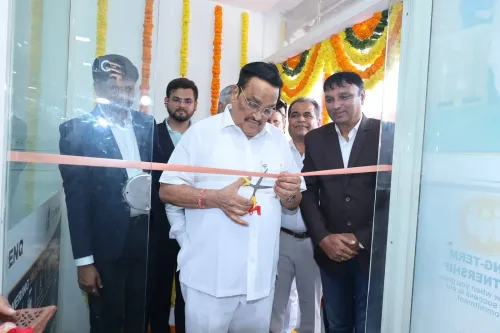
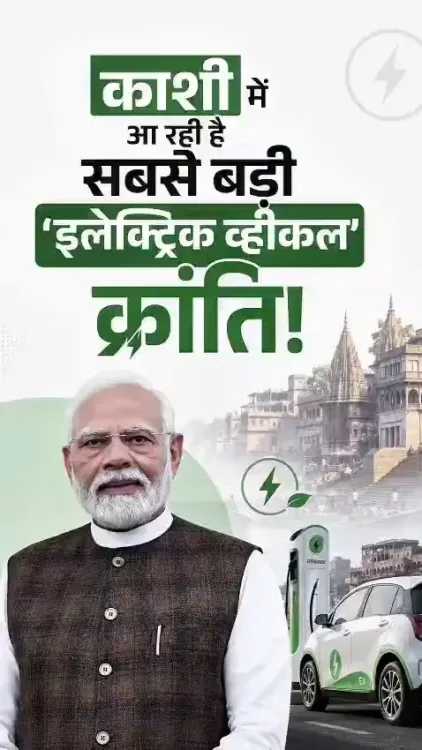
Ancient Varanasi is adding a new layer to its timeless identity — one measured in kilowatts. Union Jal Shakti Minister C. R. Paatil on Wednesday, 12 August 2026 highlighted the expansion of electric vehicle charging infrastructure across Kashi's major tourist sites, public parking areas, and municipal premises, framing it as a direct expression of Prime Minister Narendra Modi's vision of a developed and sustainable India.
Kashi Smart City and Tata Power drive the rollout
The initiative is being executed by Kashi Smart City — the special purpose vehicle overseeing projects under the national Smart Cities Mission — in partnership with Tata Power, a private sector player that has been expanding EV charging networks across Indian cities. Paatil noted that the collaboration targets locations where footfall is highest: pilgrimage and tourism corridors, civic parking lots, and municipal office complexes. The idea is simple — put the charger where the crowd already goes.
In Hindi, Paatil described Varanasi's trajectory as 'aastha aur adhyatm ki nagri ka aadhunik aur harit swaroop' — 'the modern and green avatar of the city of faith and spirituality' — underscoring that the transformation is meant to complement, not compete with, Kashi's cultural soul.
A heritage city inside a national green mobility push
Varanasi was among the first 20 cities selected under the Smart Cities Mission when it launched in 2015, and has since become a showcase for the government's argument that heritage preservation and technology-driven infrastructure are not in conflict. The FAME India scheme, also introduced in 2015 and expanded in subsequent phases, provided the central policy scaffolding for EV charging rollouts in cities like this one.
Paatil's post positions the Varanasi EV push as part of that longer arc — pollution-free transport in a city whose ghats and narrow lanes have long struggled with congestion and poor air quality. For the millions of pilgrims and tourists who pass through Kashi each year, a reliable charging network could meaningfully shift how they move through the city.
The deeper signal here is about replication: if a city as complex and historically layered as Varanasi can absorb EV infrastructure at scale, the template travels. Watch for commissioning timelines on the new charging stations and early data on local EV adoption rates — those numbers will determine whether Kashi becomes a model or a milestone.
Point of View
Kashi carries outsized symbolic weight as PM Modi's own constituency, making every visible upgrade a political as well as policy statement. Paatil's amplification of the initiative signals that the party intends to keep Varanasi's transformation in the national spotlight ahead of future electoral cycles. The real test will be whether EV adoption metrics in the city justify the infrastructure investment or whether the rollout remains primarily a messaging exercise.
NationPress
26 Sept 2026
Frequently Asked Questions
What is the Kashi Smart City EV charging project?
Kashi Smart City, the implementing body for Varanasi's Smart Cities Mission projects, is expanding electric vehicle charging stations at the city's major tourist sites, public parking areas, and municipal premises in collaboration with Tata Power.
Which company is partnering with Kashi Smart City for EV charging in Varanasi?
Tata Power is the private sector partner working with Kashi Smart City to install and expand EV charging infrastructure across Varanasi.
What is the Smart Cities Mission and when did Varanasi join it?
The Smart Cities Mission is a central government programme launched in 2015 to fund technology-enabled sustainable urban development across 100 Indian cities. Varanasi was among the first 20 cities selected under the scheme.
What did Union Minister C. R. Paatil say about Varanasi's EV infrastructure?
Paatil stated that the EV charging expansion in Kashi reflects PM Modi's commitment to pollution-free transport and environmental conservation, describing it as part of the resolve to build a developed and sustainable India.
How does the FAME India scheme support EV charging in cities like Varanasi?
The FAME India scheme, introduced in 2015 and expanded in subsequent phases, provides central government financial support for electric vehicle charging infrastructure, forming the policy backbone for rollouts in cities including Varanasi.