Jal Shakti Minister Paatil hails Varanasi Ring Road completion
Synopsis
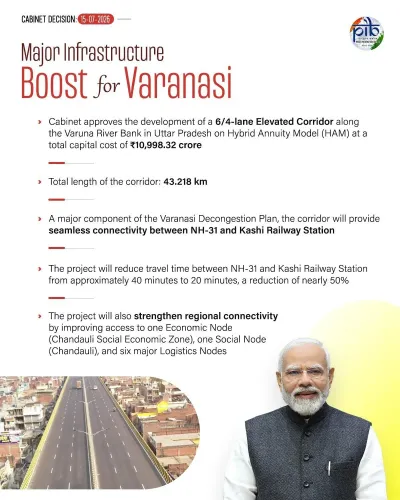
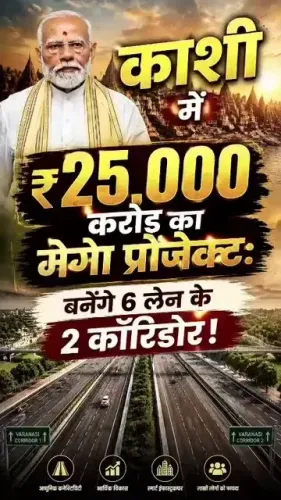
Union Jal Shakti Minister C. R. Paatil announced that the final phase of the Varanasi Ring Road is complete, forming a full 360-degree highway network around PM Modi's parliamentary constituency that will divert heavy vehicles away from the ancient city's core.
Key Takeaways
Union Jal Shakti Minister C.
Paatil announced the completion of the Varanasi Ring Road's final phase on September 24, 2026 .
The completed network forms a full 360-degree highway corridor around the city of Kashi (Varanasi) .
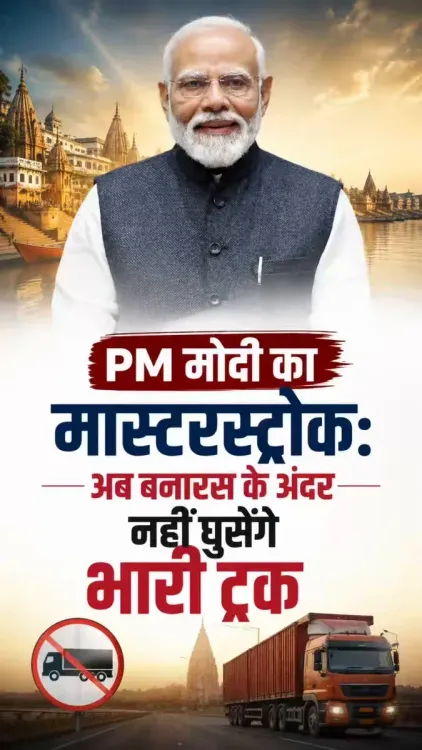
Heavy vehicles will now be routed outside city limits, reducing traffic congestion, pollution, and accidents on internal roads.
Varanasi is Prime Minister Narendra Modi's parliamentary constituency , adding political significance to the project's completion.
The project is part of the Bharatmala Pariyojana , launched in 2015 to build ring roads and bypasses around major Indian cities.
Traffic-impact assessments and an official inauguration event are expected as the next steps following the claimed completion.
A full circle around one of India's oldest cities — and one of its most congested — is now complete. Union Jal Shakti Minister C. R. Paatil announced on Thursday, September 24, 2026 that the final phase of the Varanasi Ring Road has been finished, giving Kashi a modern 360-degree highway network that reroutes heavy vehicles entirely outside the ancient city's core.
Posting in Hindi on X, Paatil credited the project to Prime Minister Narendra Modi's vision, writing: 'Kashi ke charon or aadhunik 360° highway network taiyaar hua hai' ('A modern 360-degree highway network has been readied around Kashi'). He added that heavy vehicle traffic will now move outside city limits, easing congestion and offering residents 'better, smoother, and safer' movement through the city. The post closed with a resonant 'Har Har Mahadev!'
Why a ring road matters for Kashi's crowded lanes
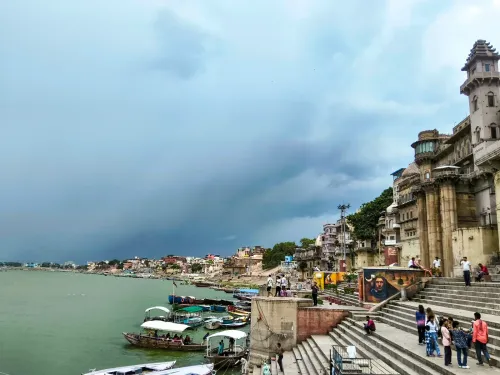
Varanasi — the ancient city on the Ganga — draws millions of pilgrims, tourists, and traders every year. Its narrow inner ghats and temple corridors were never designed for the weight of interstate freight traffic. Heavy trucks cutting through the city have long been a source of accidents, noise, air pollution, and gridlock that stretches from the riverfront all the way to the highway junctions on its outskirts.
A ring road solves this by creating a dedicated peripheral corridor that lets trucks and long-haul vehicles bypass the urban core entirely — a model used successfully around cities like Delhi, Hyderabad, and Pune. For Varanasi, which also carries the political weight of being Prime Minister Modi's own parliamentary constituency, the project carries both civic and symbolic importance.
Bharatmala roots and the 360-degree claim
The project traces its lineage to the Bharatmala Pariyojana, launched in 2015 as the central government's flagship programme to build ring roads, expressways, and bypasses around major Indian cities. Varanasi was among the priority centres — a congested religious and tourist hub that needed a modern bypass corridor to function as a liveable, competitive city.
Paatil's use of '360-degree network' signals that the ring is now geometrically complete — no remaining gap through which heavy traffic bleeds back into city roads. That distinction matters: a partial ring road can actually worsen congestion at the unclosed end, so full-loop completion is the infrastructure threshold that unlocks the real-world traffic dividend.
What residents and operators can expect next
For Varanasi's residents, the immediate promise is reduced pollution and quicker intra-city commutes as truck traffic shifts to the outer corridor. For logistics operators and traders, the ring road shortens travel time around the city and improves last-mile connectivity to surrounding districts in eastern Uttar Pradesh.
The practical gains will hinge on enforcement — whether heavy vehicles are actually directed onto the ring road and kept off internal routes. Official traffic-impact assessments and an inauguration event are the logical next steps the administration would now be expected to announce.
For a city that has hosted civilisation for three millennia, a modern bypass ring is a quiet but consequential upgrade — the kind that does not make headlines the way a bridge or a monument does, but changes daily life for every resident who commutes to work, to school, or to the ghats.
Point of View
And its claimed full-loop completion allows the party to draw a clean line from a 2015 policy promise to a 2026 on-ground outcome. The 360-degree framing is deliberate — it signals not just progress but finality, a project that cannot be called incomplete. Whether the traffic dividend materialises quickly will determine how much civic credit the government actually earns from this milestone.
NationPress
24 Sept 2026
Frequently Asked Questions
What is the Varanasi Ring Road and why is it important?
The Varanasi Ring Road is a peripheral highway corridor built to route heavy vehicles around the city of Kashi rather than through its congested inner lanes. It is important because Varanasi's ancient road network cannot safely or efficiently handle interstate freight traffic, and a full bypass ring reduces congestion, pollution, and accidents for residents.
Which scheme funded the Varanasi Ring Road project?
The project is part of the Bharatmala Pariyojana , the central government's flagship highway programme launched in 2015 to build ring roads, expressways, and bypasses around major Indian cities.
Why did C. R. Paatil post about a road project if he is the Jal Shakti Minister?
Senior cabinet ministers from the ruling party routinely amplify infrastructure milestones — especially those in the Prime Minister's own constituency — as a broader political communication of government development work, even when the project falls outside their specific portfolio.
What does a 360-degree highway network around Varanasi mean?
It means the ring road corridor is now geometrically complete — a closed loop with no gaps — so heavy vehicles can travel fully around Varanasi without needing to enter any internal city road at any point.
What happens after the Varanasi Ring Road final phase is complete?
The expected next steps are an official government inauguration event, enforcement of traffic diversion rules directing heavy vehicles onto the ring road, and traffic-impact assessments to measure the reduction in congestion on internal city roads.