Varanasi ₹14,447 crore elevated corridor to boost devotee inflow, jobs
Synopsis
The Centre has greenlit a ₹14,447.64 crore, 46 km six-lane elevated corridor for Varanasi — the most ambitious road infrastructure push the pilgrim city has seen. With a cable-stayed bridge, a public ropeway, and Ring Road connectivity, it builds on the Kashi Vishwanath corridor's momentum and could reshape how millions of devotees access India's holiest city.
Key Takeaways
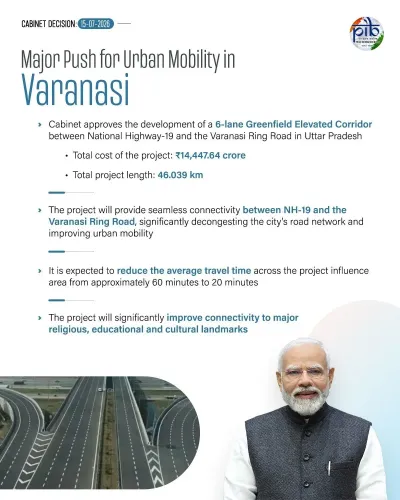
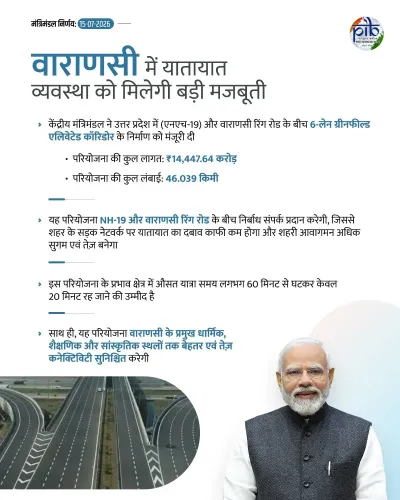
The Cabinet Committee on Economic Affairs approved a ₹14,447.64 crore corridor project for Varanasi on 15 July .
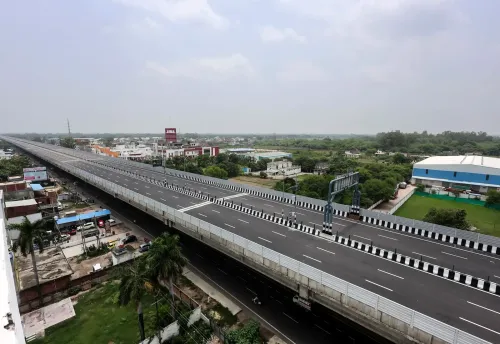
The 46.039 km project includes a six-lane elevated carriageway , a cable-stayed bridge, and an extradosed foot-over-bridge.
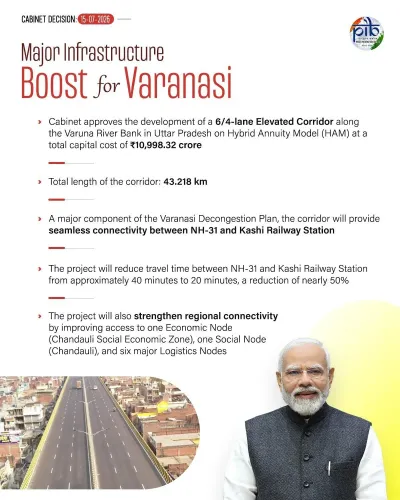
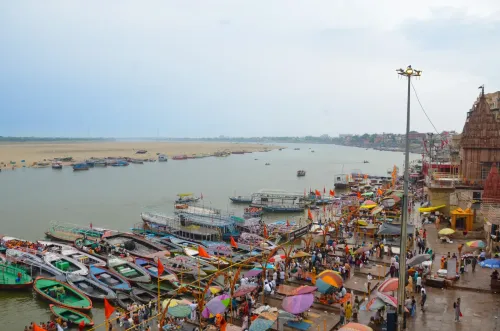
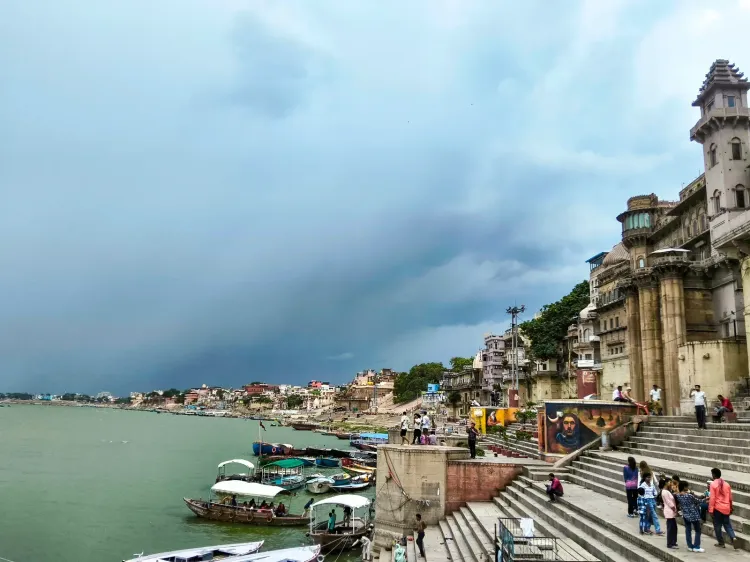
It will link NH-19 with the Varanasi Ring Road and provide riverbank connectivity along the River Ganga .
BJP MLA Saurabh Srivastava projected a 10 per cent rise in devotee arrivals once the corridor is operational.
The project will be implemented under the Hybrid Annuity Model (HAM) .
Locals say the corridor will expand guest house capacity and generate employment, building on gains since the Kashi Vishwanath corridor opened.
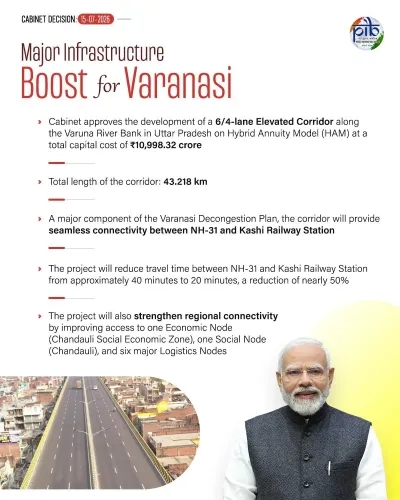
A ₹14,447.64 crore elevated corridor project approved for Varanasi on 15 July is being hailed by locals and Bharatiya Janata Party (BJP) leaders as a transformative infrastructure push that will increase pilgrim footfall to the holy city and unlock fresh employment. The Cabinet Committee on Economic Affairs, chaired by Prime Minister Narendra Modi, cleared the project to decongest Varanasi by linking National Highway-19 (NH-19) with the Varanasi Ring Road and providing riverbank connectivity along the River Ganga.
What the Project Entails
The 46.039 km corridor will feature a six-lane elevated main carriageway, an iconic cable-stayed bridge, an extradosed foot-over-bridge-cum-major bridge, loops, ramps, link roads, and service roads. According to the Cabinet communique, it will be executed under the Hybrid Annuity Model (HAM), a public-private partnership framework that spreads government outflow over the construction and operational phases.
What Local Leaders and Residents Said
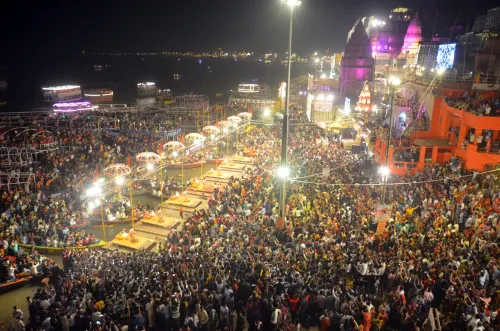
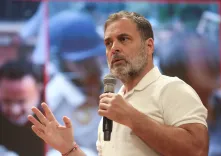
BJP MLA Saurabh Srivastava said the project, alongside ring roads and the city's first public transport ropeway, could drive roughly a 10 per cent increase in the number of devotees arriving to offer prayers at temples across the city. He added that per capita income in Varanasi would rise as a consequence, and that the number of paying guest houses in the area would grow, generating additional employment.
Varanasi Mayor Ashok Kumar Tiwari described the corridor as an 'unbelievable gift' that will connect the entire city. Nirmala Singh Patel, former member of the Uttar Pradesh State Commission for Protection of Child Rights, said people travelling from other states would be able to reach temples directly via the elevated route. She also noted that commercial activity in the city had expanded since the Kashi Vishwanath corridor became operational.
Residents echoed similar sentiments. Saurabh Chatterjee, a Varanasi local, said the project would ease transportation for large vehicles entering the city from outside, benefiting trade. Another resident, Rupshri Sengupta, said the corridor would be beneficial for traders and businesses once it becomes operational.
Context and Background
Varanasi, one of India's oldest continuously inhabited cities and a major Hindu pilgrimage destination, has faced chronic traffic congestion as pilgrim numbers have grown in recent years. The completion of the Kashi Vishwanath corridor in 2021 significantly raised the city's profile as a religious tourism destination, putting pressure on existing road and transport infrastructure. This new project is the latest in a series of large-scale infrastructure investments the Centre has channelled into the constituency, which Prime Minister Modi has represented in the Lok Sabha since 2014.
What Comes Next
With Cabinet approval now in place, the project will move toward tendering under the HAM framework. Once operational, the corridor is expected to ease movement for pilgrims, residents, and commercial vehicles alike, potentially reinforcing Varanasi's position as a top religious tourism hub in northern India.
Point of View
Framed as religious-cultural uplift. The 10 per cent devotee-increase projection cited by the local BJP MLA is an assertion, not a study-backed figure, and deserves scrutiny. What is verifiable is that the Kashi Vishwanath corridor did measurably increase footfall and commercial activity — so the logic is not without precedent. The harder question is whether HAM-model timelines and cost overruns, a persistent issue in highway projects nationally, will be managed better here given the political salience of the location.
NationPress
14 Oct 2026
Frequently Asked Questions
What is the Varanasi elevated corridor project approved by the Cabinet?
It is a ₹14,447.64 crore, 46.039 km infrastructure project approved on 15 July by the Cabinet Committee on Economic Affairs. The project includes a six-lane elevated carriageway, a cable-stayed bridge, an extradosed foot-over-bridge, loops, ramps, and service roads linking NH-19 to the Varanasi Ring Road with Ganga riverbank connectivity.
How will the corridor benefit pilgrims and devotees visiting Varanasi?
According to BJP MLA Saurabh Srivastava, the corridor — combined with ring roads and a public transport ropeway — is expected to increase the number of devotees visiting Varanasi's temples by around 10 per cent. Residents say pilgrims from other states will be able to reach temples more directly via the elevated route.
What model will be used to fund and build the corridor?
The project will be implemented under the Hybrid Annuity Model (HAM), a public-private partnership framework in which the government pays a portion of the project cost during construction and the rest in annuity instalments over the operational period.
How does this project connect to earlier Varanasi development work?
Varanasi has seen significant infrastructure investment since Prime Minister Modi began representing the constituency in 2014. The Kashi Vishwanath corridor, completed in 2021, is widely credited with boosting commercial activity and pilgrim numbers — a trend locals say the new elevated corridor is designed to sustain and amplify.
What employment benefits are expected from the Varanasi corridor?
Local BJP leaders and residents say the project will increase the number of paying guest houses in the area and ease transportation for commercial vehicles, both of which are expected to generate employment. No official job-creation estimate has been cited in the Cabinet approval.