Varanasi Ganga Elevated Corridor: Cabinet clears ₹14,447 crore 6-lane project
Synopsis
The Centre has cleared a ₹14,447 crore elevated expressway along the Ganga in Varanasi — a 46 km, 6-lane corridor with a 910-metre cable-stayed bridge that promises to cut city travel times by 67%. With 15 crore pilgrims visiting annually, this is as much an economic intervention as an infrastructure one, and among the largest urban road investments in Uttar Pradesh's history.
Key Takeaways
The CCEA , chaired by PM Narendra Modi , approved the ₹14,447.64 crore Varanasi Ganga Elevated Corridor on 15 July 2025 .
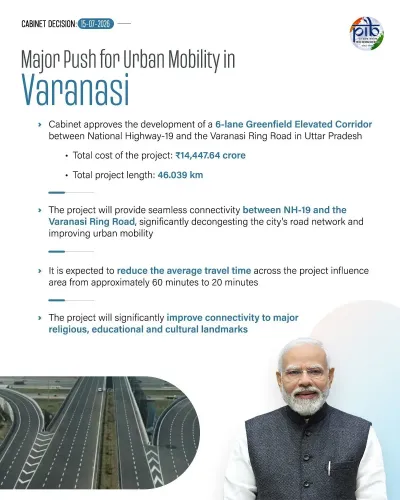
The 46.039 km six-lane corridor links NH-19 with the Varanasi Ring Road along the River Ganga .
A landmark 910-metre cable-stayed bridge across the Ganga is the project's centrepiece engineering feature.
Average travel time across the project area will fall from 60 minutes to 20 minutes — a 67% reduction.
The project integrates 6 logistics nodes including airports, railway stations, and Ramnagar IWAI Port .
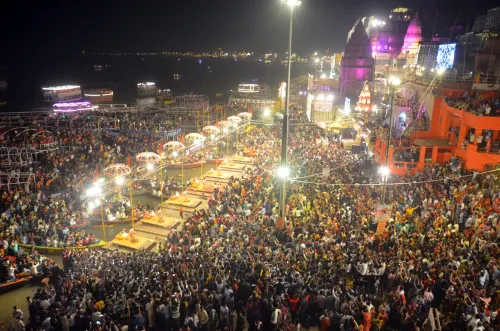
Over 15 crore tourists and pilgrims visit Varanasi annually; the corridor is expected to significantly ease pilgrimage infrastructure.
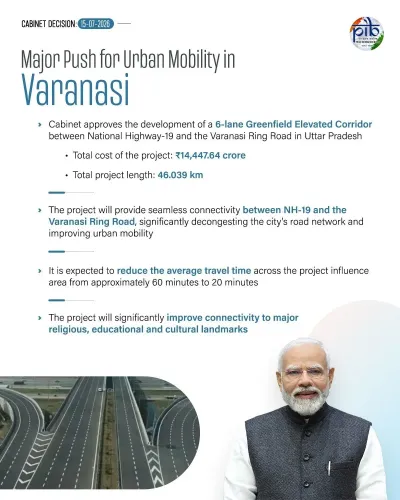
The Cabinet Committee on Economic Affairs (CCEA), chaired by Prime Minister Narendra Modi, on 15 July 2025 approved a ₹14,447.64 crore elevated corridor project in Varanasi, Uttar Pradesh, aimed at decongesting one of India's most densely trafficked religious cities. The project will link National Highway-19 (NH-19) with the Varanasi Ring Road along the banks of the River Ganga, spanning 46.039 km with a six-lane elevated carriageway.
Project Scope and Engineering Highlights
The corridor will be implemented under the Hybrid Annuity Model (HAM) at a civil construction cost of ₹6,037.85 crore and a land acquisition cost of ₹541.11 crore under NH(O). Its centrepiece is a landmark 910-metre cable-stayed bridge across the Ganga — set to become a defining addition to Varanasi's skyline.
The project also includes a 1.32 km extradosed foot-over-bridge-cum-major bridge fitted with travelators for pedestrian access to the Kashi Vishwanath Temple, a Rail Over Bridge over the existing and proposed Malviya Bridge, dedicated emergency parking bays, noise barriers, and façade lighting inspired by Varanasi's cultural heritage. The corridor is designed for an operating speed of 80–100 km/h.
Travel Time Impact
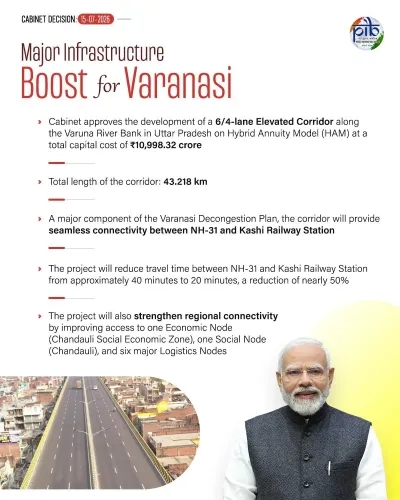
According to the Cabinet communique, the project is expected to cut average travel time across the project influence area from approximately 60 minutes to 20 minutes — a reduction of nearly 67 per cent. Travel time between NH-19 and Kashi Railway Station will be halved, dropping from around 50 minutes to approximately 25 minutes.
An elevated spur between BHU/Lanka and Samne Ghat will further ease congestion at the heavily trafficked Lanka Junction by separating through traffic from local movement — a structural fix that urban planners have long flagged as critical for the city.
Multimodal Connectivity and Economic Nodes
Aligned with the PM Gati Shakti National Master Plan, the corridor will integrate six major logistics nodes: Lal Bahadur Shastri Airport, Kashi Railway Station, Banaras Railway Station, Varanasi City Railway Station, Pt. Deen Dayal Upadhyay Junction, and Ramnagar IWAI Port. It will also link one economic node — the Chandauli Special Economic Zone (SEZ) — and the Chandauli Aspirational District.
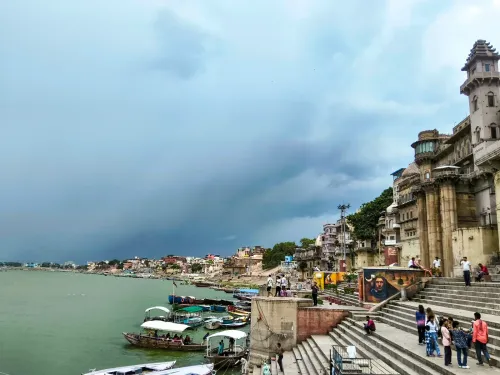
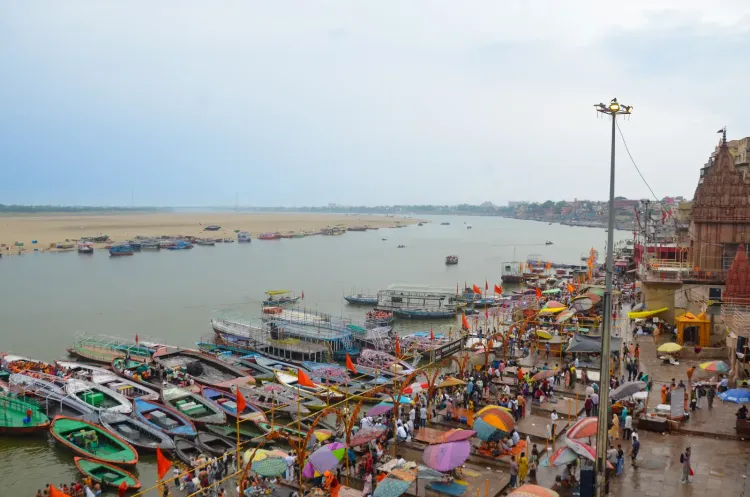
Key destinations such as the Kashi Vishwanath Temple, Banaras Hindu University (BHU), Namo Ghat, Ramnagar Fort, and the city's famed ghats will all receive improved road access. The corridor is also expected to decongest NH-19, the BHU-Ramnagar Corridor, and NH-35 by diverting through traffic away from the densely developed urban core.
Tourism, Pilgrimage and Regional Growth
With more than 15 crore tourists and pilgrims visiting Varanasi annually, the project carries significant economic weight beyond infrastructure. Officials say the corridor will improve logistics efficiency, reduce vehicle operating costs and emissions, and facilitate the smoother movement of both passenger and freight traffic across eastern Uttar Pradesh.
The government has framed the project as a pillar of its broader Viksit Bharat vision, positioning Varanasi's upgraded connectivity as a model for transforming India's heritage cities into high-capacity urban centres without sacrificing their cultural character. Execution timelines and construction commencement dates are yet to be officially announced.
Point of View
447 crore corridor is the most ambitious attempt yet, but the Hybrid Annuity Model means private execution risk is real, and HAM projects across India have a mixed record on delivery timelines. The cable-stayed bridge and pedestrian travelators to the Kashi Vishwanath Temple are politically legible wins, but the harder test will be last-mile integration with the city's interior lanes, where most congestion actually lives. The Chandauli SEZ linkage is also worth watching — it signals this is as much an eastern UP industrial corridor as it is a pilgrimage infrastructure project.
NationPress
14 Oct 2026
Frequently Asked Questions
What is the Varanasi Ganga Elevated Corridor project?
It is a ₹14,447.64 crore, 46.039 km six-lane elevated road corridor approved by the Cabinet on 15 July 2025, linking NH-19 with the Varanasi Ring Road along the River Ganga. The project includes a 910-metre cable-stayed bridge and is designed to cut city travel times by up to 67%.
What is the total cost and funding model for the project?
The total capital cost is ₹14,447.64 crore, comprising a civil construction cost of ₹6,037.85 crore and a land acquisition cost of ₹541.11 crore under NH(O). The project will be implemented under the Hybrid Annuity Model (HAM).
How much will the corridor reduce travel time in Varanasi?
Average travel time across the project influence area is expected to fall from approximately 60 minutes to 20 minutes — a reduction of nearly 67%. Travel time between NH-19 and Kashi Railway Station will drop from around 50 minutes to approximately 25 minutes.
Which key locations will the corridor connect?
The corridor will link NH-19, the Varanasi Ring Road, Lal Bahadur Shastri Airport, Kashi Railway Station, Banaras Railway Station, Ramnagar IWAI Port, the Kashi Vishwanath Temple, Banaras Hindu University, Namo Ghat, Ramnagar Fort, and the ghats of Varanasi.
How does this project align with PM Gati Shakti?
The corridor is planned under the PM Gati Shakti National Master Plan, which aims to build multimodal infrastructure linking economic, social, and logistics nodes. The project connects one economic node (Chandauli SEZ), one social node (Chandauli Aspirational District), and six major logistics hubs across eastern Uttar Pradesh.