PM Modi to Inaugurate Ganga Expressway & Rs 6,350 Cr Projects on April 28-29
Synopsis
PM Modi's April 28-29 UP visit packs a political and infrastructure punch — inaugurating the Rs 36,230 crore Ganga Expressway spanning 594 km across 12 districts, laying foundation stones worth Rs 6,350 crore in Varanasi, and flagging off two Amrit Bharat Express trains. The expressway includes a strategic 3.5-km emergency airstrip, cutting Meerut-Prayagraj travel time nearly in half.
Key Takeaways
PM Modi will visit Uttar Pradesh on April 28–29, 2025 for a series of major infrastructure inaugurations and public events.
The Ganga Expressway , spanning 594 km across 12 UP districts , will be inaugurated at Hardoi on April 29 ; it was built at a cost of Rs 36,230 crore .
The expressway will cut travel time between Meerut and Prayagraj from 10–12 hours to approximately 6 hours .
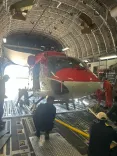
A 3.5-km emergency airstrip in Shahjahanpur gives the expressway dual civilian and strategic military utility.
In Varanasi , the PM will lay foundation stones for 112+ projects worth Rs 5,300 crore , including a 500-bed super-speciality hospital and 13 AMRUT 2.0 water schemes .
Two new Amrit Bharat Express trains — Banaras–Pune and Ayodhya–Mumbai — will be flagged off during the visit.
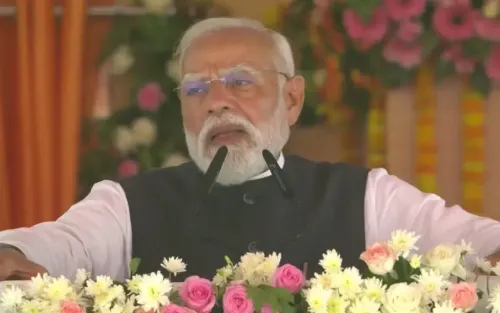
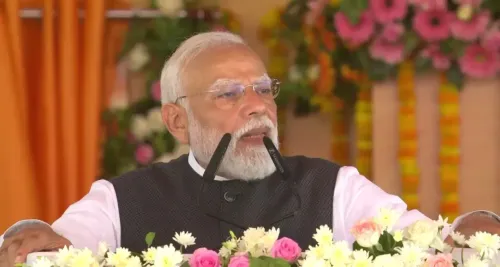
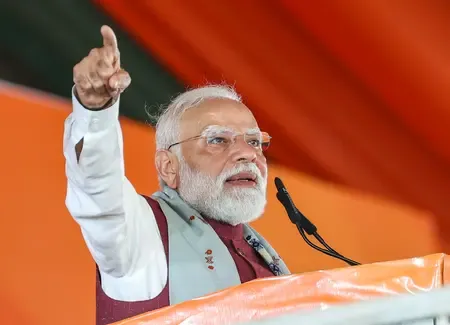
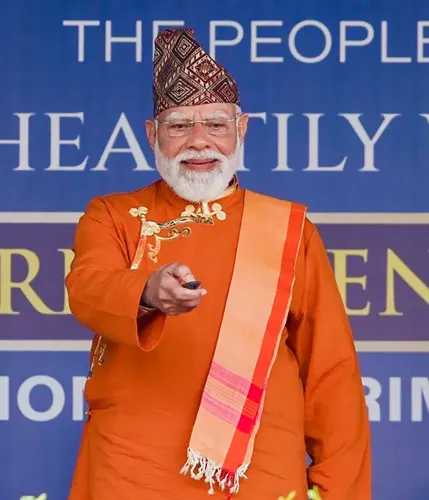
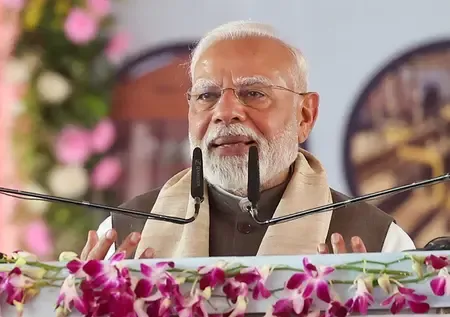
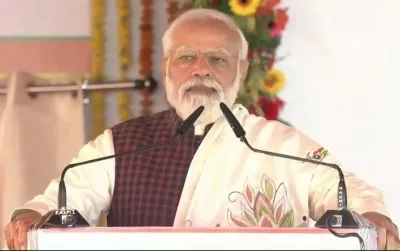
Prime Minister Narendra Modi is set to undertake a high-impact two-day visit to Uttar Pradesh on April 28–29, during which he will inaugurate the much-anticipated Ganga Expressway, lay the foundation stone of projects worth approximately Rs 6,350 crore in Varanasi, and flag off two new Amrit Bharat Express trains. The visit, confirmed by an official on Sunday, underscores the ruling dispensation's continued infrastructure push in India's most populous state ahead of politically significant electoral cycles.
Varanasi Programme: Mahila Sammelan and Massive Infrastructure Push
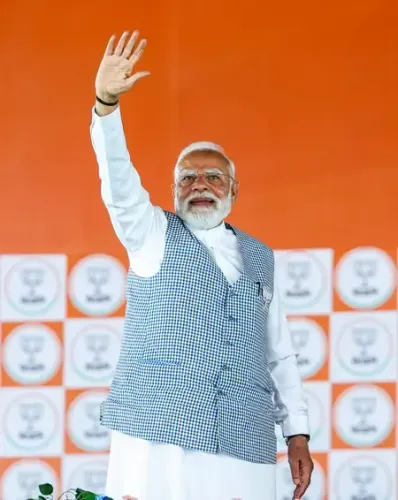
On the evening of April 28, PM Modi will participate in a Mahila Sammelan in Varanasi, where he is expected to spotlight women-centric welfare schemes being rolled out under the double-engine government — a term used by the BJP to describe aligned central and state administrations. The event is likely to draw large crowds and serve as a platform to reinforce outreach among women voters in the region.
During the Varanasi leg of the visit, the Prime Minister will lay the foundation stone of over 112 projects valued at approximately Rs 5,300 crore. Key projects include 13 sewerage and water supply schemes under the AMRUT 2.0 programme, a 500-bed multi-super-speciality hospital at Shri Shiv Prasad Gupta Divisional District Hospital, and the construction of market complexes and commercial office spaces at Bhojuveer and Sigra.
PM Modi will also flag off two new Amrit Bharat Express trains — the Banaras–Pune (Hadapsar) and Ayodhya–Mumbai (Lokmanya Tilak Terminus) routes — further expanding rail connectivity between Uttar Pradesh and major metropolitan centres.
Ganga Expressway: A 594-km Strategic and Economic Corridor
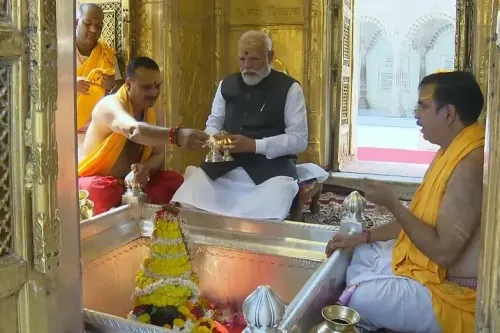
On April 29, after performing darshan and pooja at the Shri Kashi Vishwanath temple in Varanasi, PM Modi will travel to Hardoi to formally inaugurate the Ganga Expressway — one of the most ambitious road infrastructure projects in India's recent history.
The Ganga Expressway stretches 594 kilometres, is designed as a 6-lane access-controlled greenfield corridor (expandable to 8 lanes), and has been constructed at a total cost of approximately Rs 36,230 crore. It passes through 12 districts — Meerut, Bulandshahr, Hapur, Amroha, Sambhal, Badaun, Shahjahanpur, Hardoi, Unnao, Raebareli, Pratapgarh, and Prayagraj — effectively stitching together the western, central, and eastern regions of Uttar Pradesh through a single high-speed artery.
The most immediate benefit for commuters will be a dramatic reduction in travel time between Meerut and Prayagraj — from the current 10–12 hours to approximately 6 hours, a saving of nearly half the journey duration.
Emergency Airstrip and National Security Dimension
A standout feature of the Ganga Expressway is a 3.5-kilometre Emergency Landing Facility (airstrip) located in Shahjahanpur district. This dual-use infrastructure — capable of serving both civilian emergencies and military operations — adds a significant strategic layer to what is primarily an economic corridor. India has been increasingly embedding such airstrip facilities into expressway projects, a trend that reflects evolving national security doctrine.
This comes notably amid heightened security awareness along India's northern belt, making the dual-use design of the expressway especially relevant from a defence preparedness standpoint.
Economic Impact: Logistics, Farming, and Manufacturing
The Ganga Expressway is envisioned as a transformative economic corridor. Plans include the development of Integrated Manufacturing and Logistics Corridors across approximately 2,635 hectares spanning the 12 districts along its alignment. This is expected to slash logistics costs, improve supply chain efficiency, and enhance manufacturing competitiveness in the region.
For the agricultural heartland of Uttar Pradesh, the expressway promises direct connectivity between farmers and urban or export markets — potentially improving price realisation and strengthening rural household incomes. The corridor is also projected to unlock tourism potential and generate both direct and indirect employment across the region.
Notably, UP already operates the Purvanchal Expressway and Bundelkhand Expressway, inaugurated in earlier phases of the current government's infrastructure drive. The Ganga Expressway represents the most ambitious addition yet to this expressway grid, and analysts suggest it could reshape industrial investment patterns across the Gangetic Plain.
Political Significance and Broader Implications
The timing of PM Modi's visit — combining religious optics at Kashi Vishwanath, women-focused outreach through the Mahila Sammelan, and large-scale infrastructure inaugurations — reflects a well-calibrated political strategy in Uttar Pradesh, a state that sends the largest bloc of members to the Lok Sabha. With UP assembly elections on the horizon in 2027, each such visit serves both a governance and an electoral consolidation purpose.
Critics argue that while expressway-led development is visible and politically rewarding, the deeper challenge remains ensuring that the economic benefits percolate to the most marginalised districts along the corridor — many of which rank poorly on human development indices despite being geographically central to UP's growth story.
As PM Modi prepares to inaugurate the Ganga Expressway on April 29, all eyes will be on how swiftly the promised manufacturing clusters and logistics hubs materialise along the corridor — and whether the infrastructure investment translates into measurable employment and income gains for the region's millions.
Point of View
And PM Modi's personal stamp on it signals how central Uttar Pradesh remains to the BJP's national political calculus. But the real test isn't the ribbon-cutting — it's whether the promised industrial clusters along 2,635 hectares of corridor land actually materialise, or remain on paper as past expressway-adjacent zones have in other states. The embedded airstrip in Shahjahanpur is a quietly significant detail that most coverage is missing — it reflects India's growing doctrine of dual-use civil infrastructure, especially along its strategic northern belt. Voters in UP's 2027 assembly elections will ultimately judge this not by the expressway's inauguration, but by whether the farmers of Badaun and Unnao actually see better market access and higher incomes.
NationPress
15 Sept 2026
Frequently Asked Questions
When will PM Modi inaugurate the Ganga Expressway?
PM Modi will inaugurate the Ganga Expressway on April 29, 2025 , at Hardoi in Uttar Pradesh . The inauguration is part of a two-day UP visit scheduled for April 28–29 .
What is the length and cost of the Ganga Expressway?
The Ganga Expressway is 594 kilometres long and has been built at a total cost of approximately Rs 36,230 crore . It is a 6-lane access-controlled greenfield corridor , expandable to 8 lanes .
Which districts does the Ganga Expressway pass through?
The expressway traverses 12 districts : Meerut, Bulandshahr, Hapur, Amroha, Sambhal, Badaun, Shahjahanpur, Hardoi, Unnao, Raebareli, Pratapgarh , and Prayagraj . It connects the western, central, and eastern regions of Uttar Pradesh .
What is the emergency airstrip on the Ganga Expressway?
A 3.5-kilometre Emergency Landing Facility (airstrip) has been built in Shahjahanpur district along the Ganga Expressway . This dual-use infrastructure serves both civilian emergency landings and strategic military purposes.
What other projects will PM Modi inaugurate in Varanasi on April 28?
PM Modi will lay the foundation stone of over 112 projects worth approximately Rs 5,300 crore in Varanasi , including a 500-bed multi-super-speciality hospital and 13 AMRUT 2.0 schemes . He will also flag off two new Amrit Bharat Express trains and address a Mahila Sammelan .