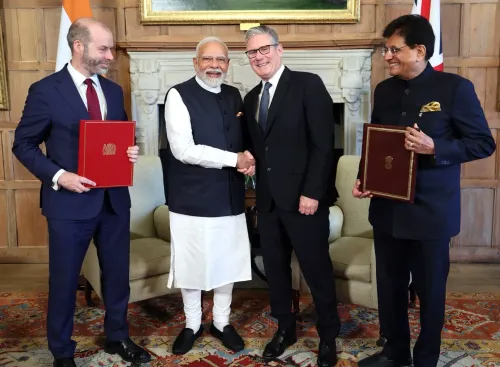
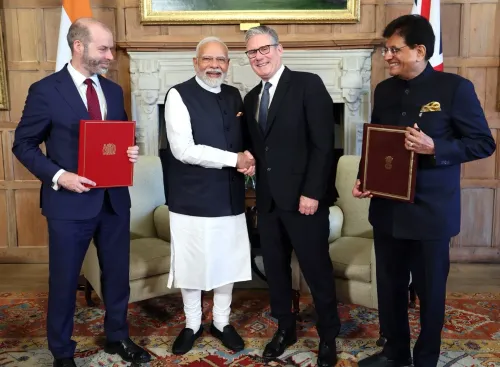
India-UK CETA takes effect: New export and tech opportunities for Indian industry
Synopsis
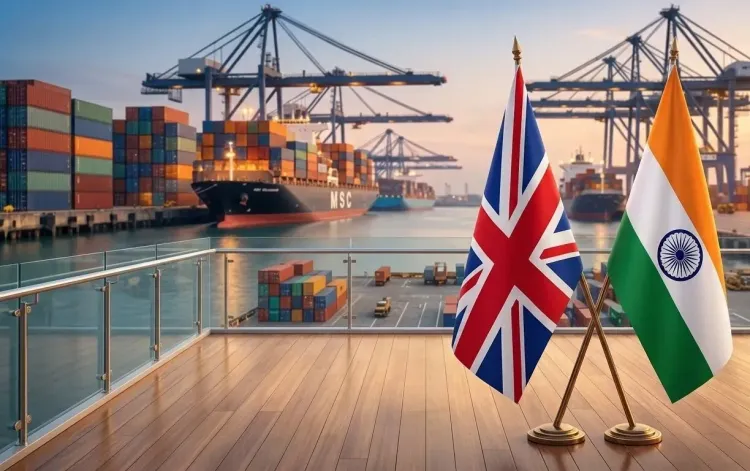
The India-UK CETA came into force on 15 July 2025, and industry chambers are calling it a structural turning point — not just a tariff deal, but a potential gateway for India's PLI-backed manufacturing surge to plug into UK innovation networks. The real question is whether implementation will match the ambition.
Key Takeaways
The India-UK CETA came into effect on 15 July 2025 , marking one of India's most significant bilateral trade deals with a major Western economy.
PHDCCI released a research report assessing the agreement's impact on exports, technology collaboration, and market access.
Fastest-growing export segments include smartphones, pharmaceuticals, engineering goods, aluminium oxide , and processed agricultural products .
PHDCCI President Rajeev Juneja said the deal can shift bilateral trade from a goods-based to a technology-driven strategic partnership .
CII Director General Chandrajit Banerjee called the operationalisation a landmark milestone for Indian enterprise competitiveness.
Industry bodies have urged targeted policy support to help SMEs leverage new market access provisions.
The India-UK Comprehensive Economic and Trade Agreement (CETA) came into effect on Wednesday, 15 July 2025, with leading industry chambers projecting the pact will unlock fresh export avenues, deepen technology collaboration, and sharpen India's global competitiveness across high-value sectors. The agreement marks a structural shift in bilateral trade between India and the United Kingdom, moving beyond conventional goods exchange toward a technology-driven economic partnership.
Key Developments
The PHD Chamber of Commerce and Industry (PHDCCI) marked the implementation by releasing a research report titled 'India–UK CETA: A Strategic Guide to Export Opportunities and Market Access'. The report assesses the agreement's impact on bilateral trade, sectoral competitiveness, technology collaboration, market access, and the policy measures needed to maximise its benefits.
According to the report, India's export basket to the UK is increasingly tilting toward higher-value manufacturing products, supported by Production-Linked Incentive (PLI) schemes, industrial policies, and improved manufacturing competitiveness. Sectors identified as fastest-growing include smartphones, pharmaceuticals, aluminium oxide, petroleum products, engineering goods, machinery components, footwear, and processed agricultural products.
What Industry Leaders Said
PHDCCI President Rajeev Juneja said the CETA has the potential to transform bilateral trade from a traditional goods-based relationship into a technology-driven strategic economic partnership. 'India's growing competitiveness in manufacturing, combined with the UK's strengths in innovation and advanced technologies, creates significant opportunities for expanding exports, attracting investment and integrating into global value chains,' Juneja said.
PHDCCI Secretary General and CEO Dr Ranjeet Mehta said the agreement gives Indian industry an important platform to diversify export markets and strengthen competitiveness in high-growth sectors such as electronics, pharmaceuticals, engineering goods, speciality materials, and digital services.
Confederation of Indian Industry (CII) Director General Chandrajit Banerjee described the operationalisation of CETA as a landmark milestone. 'The Agreement reflects India's growing confidence in securing balanced, high-quality trade outcomes that enhance the global competitiveness of Indian enterprises while safeguarding national interests,' Banerjee said.
Why This Agreement Matters
The India-UK CETA has been years in the making, with negotiations spanning multiple rounds since 2022. Its entry into force represents one of India's most significant bilateral trade agreements with a major Western economy, coming at a time when New Delhi is actively seeking to diversify trade partnerships amid shifting global supply chains. Notably, this deal arrives as Indian exporters face headwinds in some traditional markets, making the UK's consumer and technology ecosystem a strategically important destination.
The agreement is expected to reduce tariff barriers on a range of Indian goods entering the UK market while opening pathways for deeper collaboration in services, digital trade, and advanced manufacturing — sectors where both economies hold complementary strengths.
What Happens Next
Industry bodies have called on the government to introduce targeted policy measures to help exporters, particularly small and medium enterprises, capitalise on the new market access provisions. Analysts note that the real test will lie in implementation — ensuring that tariff concessions translate into actual trade growth and that technology partnership frameworks move beyond intent to verifiable outcomes. The pace at which Indian exporters can scale up in qualifying sectors will determine how quickly the agreement's projected gains materialise.
Point of View
But enthusiasm from industry chambers should be read against a familiar pattern: landmark trade agreements that underdeliver because exporters — especially SMEs — lack the capacity to navigate new market access rules. India's export basket is shifting toward higher-value goods, but smartphones and pharmaceuticals face their own headwinds in the UK market. The technology partnership framing is promising, yet without concrete joint R&D frameworks or investment facilitation mechanisms, it risks remaining aspirational. The agreement's true value will be measured in trade data two years from now, not in press releases today.
NationPress
14 Oct 2026
Frequently Asked Questions
What is the India-UK CETA?
The India-UK Comprehensive Economic and Trade Agreement (CETA) is a bilateral trade pact between India and the United Kingdom that came into effect on 15 July 2025. It aims to reduce tariff barriers, expand market access, and deepen technology and investment partnerships between the two countries.
Which Indian export sectors benefit most from the India-UK CETA?
According to a PHDCCI report, the fastest-growing export segments under the agreement include smartphones, pharmaceuticals, aluminium oxide, petroleum products, engineering goods, machinery components, footwear, and processed agricultural products. Electronics, digital services, and speciality materials are also highlighted as high-growth sectors.
What did PHDCCI say about the India-UK CETA?
PHDCCI released a research report titled 'India–UK CETA: A Strategic Guide to Export Opportunities and Market Access' on 15 July 2025. PHDCCI President Rajeev Juneja said the deal has the potential to transform bilateral trade from a traditional goods-based relationship into a technology-driven strategic economic partnership.
What did CII say about the trade agreement?
CII Director General Chandrajit Banerjee described the operationalisation of the CETA as a landmark milestone that will significantly strengthen bilateral economic relations and improve the global competitiveness of Indian enterprises while safeguarding national interests.
What are the next steps after the India-UK CETA comes into force?
Industry bodies have called for targeted policy measures to help exporters, particularly SMEs, utilise the new market access provisions. Analysts say the pace at which Indian exporters scale up in qualifying sectors will determine how quickly the agreement's projected economic gains are realised.