India-UK CETA takes effect: 99% of India's exports get zero-duty UK access
Synopsis
India's most consequential trade deal in over a decade just kicked in. The India-UK CETA, effective 15 July, hands zero-duty UK access to 99% of Indian exports — with textiles, gems, pharma, and IT services among the biggest winners. With combined bilateral trade already topping $60 billion, the agreement could fundamentally reshape India's export trajectory.
Key Takeaways
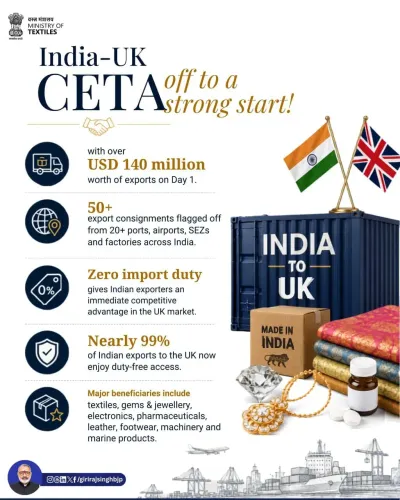
The India-UK CETA came into force on 15 July , granting zero-duty access on nearly 99% of India's exports, covering almost 100% of trade value.
Merchandise trade between the two countries reached $25.12 billion in 2025-26 , with India holding a surplus of $1.76 billion .
Bilateral services trade stood at $35.44 billion in 2024 , with India's services surplus at $7.88 billion .
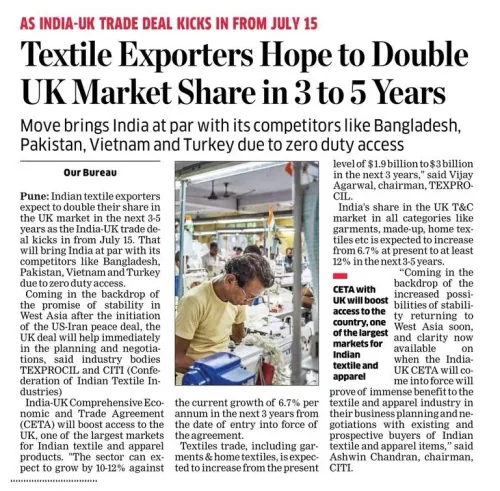
Labour-intensive sectors — textiles , leather , footwear , gems and jewellery , and auto components — are among the primary export beneficiaries.
The deal includes dedicated provisions for women , MSMEs , and youth , alongside professional mobility and qualification recognition for skilled Indian workers.
India's GDP stood at $3.96 trillion in 2025, marginally ahead of the UK's $3.84 trillion .
The landmark India-UK Comprehensive Economic and Trade Agreement (CETA) came into force on Wednesday, 15 July, granting zero-duty access on nearly 99% of India's exports to the United Kingdom — covering almost 100% of bilateral trade value, according to an official government factsheet. The agreement marks the most consequential trade deal India has concluded in over a decade.
What the Agreement Covers
The CETA delivers what officials describe as one of the most ambitious services commitments ever offered by the UK under a free trade agreement. It deepens trade and investment ties through improved market access, simplified trade procedures, enhanced services commitments, and greater professional mobility. New opportunities are created across agriculture, fisheries, manufacturing, services, and other key sectors by reducing trade barriers.
At the same time, the agreement safeguards India's sensitive sectors through calibrated market access and phased tariff liberalisation — a design intended to prevent import shocks while opening export corridors. It also promotes digital trade, innovation, sustainable development, and stronger people-to-people linkages.
Sectors Poised to Gain
Indian farmers and fisherfolk are expected to benefit directly from tariff elimination on agricultural and fisheries products, potentially strengthening rural incomes. Labour-intensive industries — including textiles, leather, footwear, gems and jewellery, handicrafts, food processing, auto components, plastics, and organic chemicals — are positioned for higher export volumes, which could generate significant employment.
The deal places dedicated emphasis on inclusive growth, with specific provisions to expand opportunities for women, youth, and MSMEs. Provisions promoting female participation in trade, innovation, and entrepreneurship are embedded in the agreement's text, alongside commitments to internationally recognised labour rights and fair working conditions.
Services and Professional Mobility
India's services exporters stand to gain substantially. Improved access to the UK services market, mobility provisions, and mutual recognition of professional qualifications open new avenues for skilled Indian professionals and young talent. This is particularly significant given India's existing services trade surplus with the UK.
Bilateral services trade reached $35.44 billion in 2024, with India exporting services worth $21.66 billion and importing $13.78 billion — a services surplus of $7.88 billion. Enhanced UK market access could widen that gap further.
The Trade Numbers in Context
Merchandise trade between the two countries stood at $25.12 billion in 2025-26, with India's goods exports to the UK valued at $13.44 billion and imports at $11.68 billion, yielding a merchandise trade surplus of $1.76 billion. In 2025, India's GDP reached $3.96 trillion against the UK's $3.84 trillion, underlining the near-parity scale of the two economies.
Notably, this is the first major free trade agreement either country has signed with the other — a relationship that had been in negotiation for over three years before reaching conclusion. The CETA's entry into force positions both nations to meaningfully expand what is already a substantial bilateral economic relationship.
What Comes Next
Sectoral implementation and tariff phase-down schedules will now come into effect as per the agreement's timeline. Industry bodies and export councils across textiles, pharma, and IT services are expected to begin leveraging the new market access conditions immediately. The agreement's long-term impact on bilateral trade flows will become measurable over the next two to three financial years.
Point of View
But the headline figure — 99% zero-duty access — needs unpacking. Coverage by tariff lines and coverage by trade value are different metrics, and the agreement's phased liberalisation schedule means not all gains are immediate. The real test is in implementation: whether Indian exporters, particularly MSMEs in textiles and handicrafts, can actually access the new terms without prohibitive compliance costs. India's services surplus with the UK is already robust; the incremental gain from professional mobility provisions will depend heavily on how quickly both sides operationalise qualification recognition. The deal is a genuine win, but its scale of impact will be determined over years, not quarters.
NationPress
14 Oct 2026
Frequently Asked Questions
What is the India-UK CETA and when did it come into effect?
The India-UK Comprehensive Economic and Trade Agreement (CETA) is a landmark bilateral free trade deal that came into force on 15 July. It grants zero-duty access on nearly 99% of India's exports to the UK, covering almost 100% of bilateral trade value.
Which Indian sectors benefit most from the India-UK free trade agreement?
Labour-intensive sectors including textiles, leather, footwear, gems and jewellery, handicrafts, food processing, auto components, plastics, and organic chemicals are expected to see the highest export gains. Indian farmers, fisherfolk, and IT services professionals also stand to benefit.
How large is bilateral trade between India and the UK?
Merchandise trade between India and the UK reached $25.12 billion in 2025-26, with India posting a goods surplus of $1.76 billion. Bilateral services trade was even larger at $35.44 billion in 2024, with India holding a services surplus of $7.88 billion.
How does the CETA protect India's sensitive sectors?
The agreement includes calibrated market access and phased tariff liberalisation for sensitive sectors, meaning not all tariffs are eliminated immediately. This is designed to prevent import shocks while progressively opening India's market over a defined timeline.
What does the India-UK CETA mean for Indian professionals?
The agreement includes provisions for improved access to the UK services market, professional mobility, and mutual recognition of qualifications — creating new opportunities for skilled Indian professionals and young talent in sectors such as IT, finance, and healthcare.