India-UK CETA takes effect: 99.5% of export value gets zero tariff
Synopsis
The India-UK CETA is now live — and it hands Indian exporters something rare: near-total tariff-free access to one of the world's largest consumer markets. With 99.5% of export value covered and a services mobility clause that includes yoga teachers and chefs, this is not just a trade deal. It is a structural shift in how India and Britain do business.
Key Takeaways
The India–UK CETA came into force on 15 July , granting zero tariffs on 99.5 per cent of the value of India's exports to the UK.
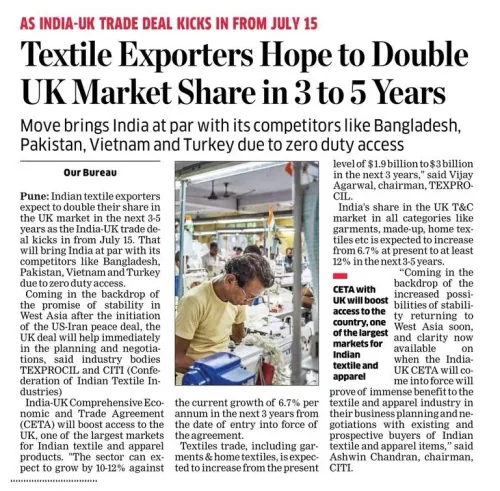
Key beneficiary sectors include gems and jewellery , textiles , engineering goods , agro products , food processing , and auto components .
The agreement extends to services , allowing Indian yoga teachers and chefs to work in the UK — categories not covered under earlier frameworks.
Both sides have agreed to relax the visa regime for skilled Indian professionals.
WTC Mumbai Chairman Vijay Kalantri urged Indian manufacturers to raise productivity and expand capacity to fully leverage the new market access.
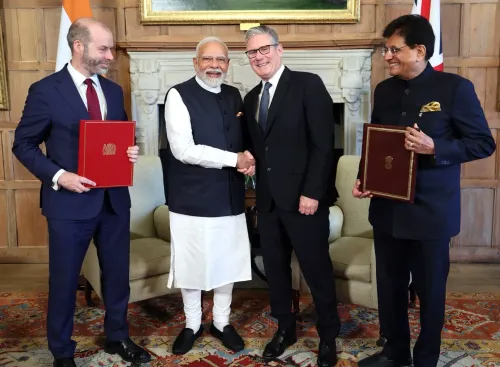
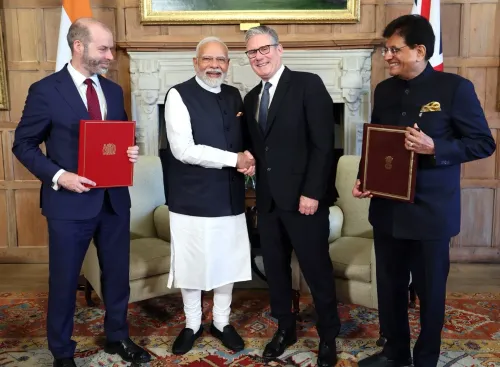
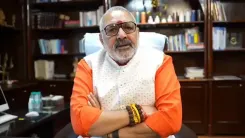
The India–United Kingdom Comprehensive Economic and Trade Agreement (CETA) came into force on Wednesday, 15 July, offering near-complete tariff-free access to the British market and promising a significant lift to India's exports, employment, and services sector. World Trade Centre (WTC) Mumbai Chairman Vijay Kalantri welcomed the development, noting that 99.5 per cent of the value of India's exports to the UK would now attract zero tariffs under the agreement.
What the Agreement Covers
Kalantri clarified the distinction between product count and trade value: while 98.5 per cent of individual product lines gain duty-free status, the value-weighted coverage reaches 99.5 per cent of India's total exports to the UK. The sectors positioned to gain the most include gems and jewellery, textiles, engineering goods, agro products, and food processing.
Auto components are also expected to benefit from improved market access, according to Kalantri. 'There are auto components. Then if you go other way, the various other sectors like services,' he said, pointing to a wider industrial footprint that stands to gain.
Services and Visa Regime: A New Opening
Beyond goods, the CETA extends to the services sector in ways that earlier bilateral arrangements did not. Kalantri specifically highlighted that the UK has agreed to allow Indian yoga teachers and chefs to work there — categories previously outside formal mobility frameworks. The two sides have also agreed to relax the visa regime, which could ease the movement of skilled Indian professionals to Britain.
This comes amid a broader push by India to embed services mobility into its trade agreements, a demand New Delhi has consistently placed at the centre of trade negotiations with developed economies.
What Indian Industry Must Do Next
Kalantri was direct about the obligations on the Indian side: manufacturers must now focus on raising productivity and expanding capacities to fully capitalise on the market access secured. 'We have to tighten our belt and increase productivity,' he said, signalling that the agreement creates opportunity but not automatic advantage.
Notably, this is one of the most significant bilateral trade agreements India has concluded in recent years, coming after negotiations that stretched over multiple rounds. The CETA with the UK is being watched as a template for India's ongoing trade talks with the European Union and other major partners.
Significance for India's Trade Ambitions
The United Kingdom is among India's top trading partners, and the CETA is expected to deepen bilateral commerce substantially. Indian exporters in labour-intensive sectors — textiles, gems, and food processing — stand to gain the most immediately, as tariff elimination directly improves price competitiveness against rival exporters such as Bangladesh and Vietnam, which already enjoy preferential UK access.
With the agreement now in effect, industry bodies and trade associations are expected to roll out sector-specific outreach to help exporters navigate the new rules of origin and compliance requirements. The coming months will be critical in determining how quickly Indian businesses can convert zero-tariff access into actual export growth.
Point of View
But the real test is execution. Zero-tariff access means little if Indian exporters cannot meet UK rules-of-origin requirements or scale fast enough to outcompete Bangladesh and Vietnam, both of which already hold preferential positions in the British market. The services mobility clause — allowing yoga teachers and chefs — is symbolically significant but structurally narrow; India's core services demand has always been in IT and professional services, where movement remains constrained. The visa relaxation language needs scrutiny: 'agreed to relax' is not the same as a binding, time-bound commitment. If New Delhi can convert this framework into verifiable export gains within two years, the CETA becomes a model. If not, it joins a list of agreements that looked better on signing day than on delivery.
NationPress
13 Oct 2026
Frequently Asked Questions
What is the India-UK CETA and when did it come into effect?
The India–UK Comprehensive Economic and Trade Agreement (CETA) is a bilateral free trade pact that came into force on 15 July 2025. It grants near-complete tariff-free access to the UK market for Indian goods and extends cooperation to services and professional mobility.
Which Indian sectors benefit most from the India-UK trade deal?
Gems and jewellery, textiles, engineering goods, agro products, food processing, and auto components are among the primary beneficiaries. These sectors will now face zero or significantly reduced tariffs when exporting to the UK.
How much of India's exports to the UK will be tariff-free under the CETA?
According to WTC Mumbai Chairman Vijay Kalantri, 99.5 per cent of the value of India's exports to the UK will attract zero tariffs. In terms of individual product lines, the duty-free coverage stands at 98.5 per cent.
What does the India-UK CETA mean for the services sector?
The agreement opens new avenues for Indian service professionals, including yoga teachers and chefs, to work in the UK — categories not previously covered under formal mobility frameworks. Both governments have also agreed to relax the visa regime for skilled Indian workers.
What must Indian businesses do to benefit from the India-UK trade agreement?
Industry leaders, including Vijay Kalantri, have stressed that Indian manufacturers must focus on raising productivity and expanding production capacities. Businesses will also need to comply with UK rules-of-origin requirements to qualify for the zero-tariff benefits.