Shekhawat flags Cabinet nod for Varanasi traffic project
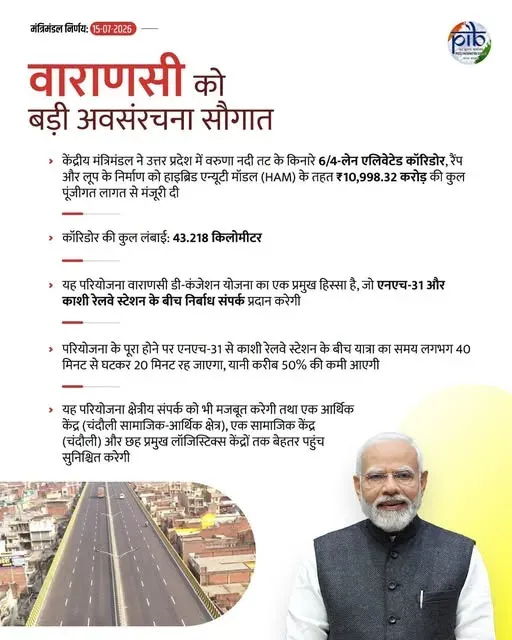
Synopsis
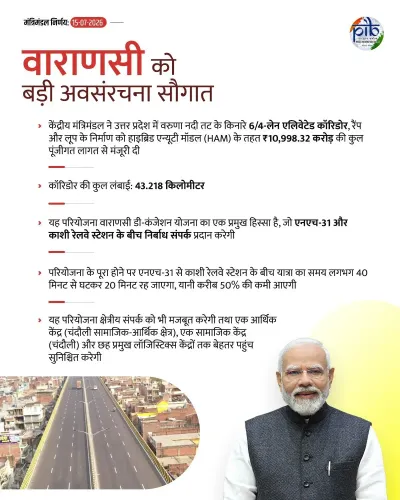
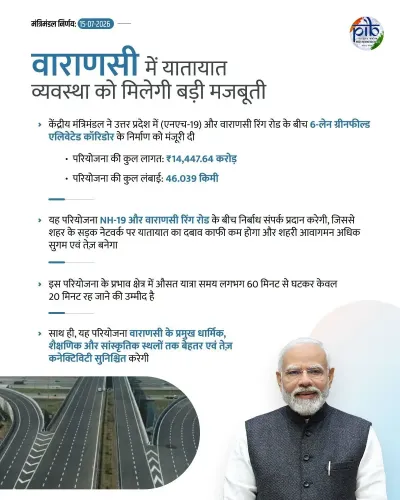
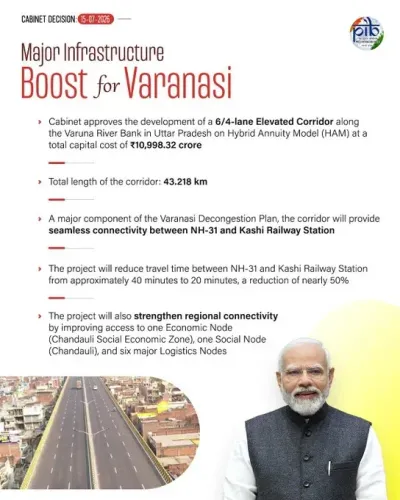
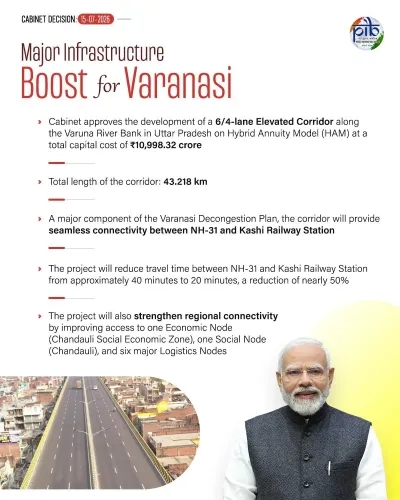
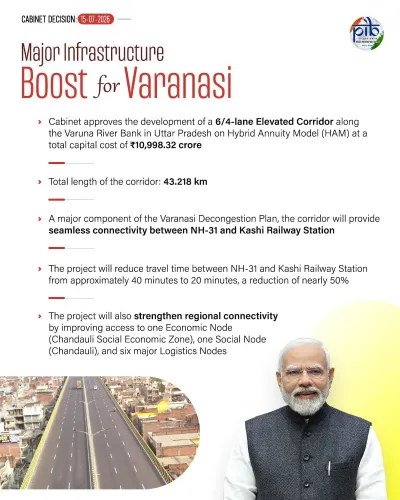
Union Culture and Tourism Minister Gajendra Singh Shekhawat on 15 July 2026 flagged a Union Cabinet-approved project to overhaul traffic management in Varanasi, with stated aims of boosting regional tourism and development in the ancient pilgrimage city.
Key Takeaways
Union Culture and Tourism Minister Gajendra Singh Shekhawat announced a Cabinet-approved infrastructure project for Varanasi on 15 July 2026 .
The project is aimed at 'continuously improving the traffic system' of Varanasi, also called Sanatan Nagari (the eternal city).
Shekhawat stated the project will also 'provide new momentum to tourism and regional development.' Varanasi has been a focus of central government infrastructure investment since 2014 , including the Smart Cities Mission (2015) and the Kashi Vishwanath Corridor (2018) .
The exact project cost, scope, and implementing agency are subject to the detailed sanction order yet to be released publicly.
Varanasi is the parliamentary constituency of Prime Minister Narendra Modi and a leading Hindu pilgrimage and tourism destination.
Union Culture and Tourism Minister Gajendra Singh Shekhawat on Wednesday, 15 July 2026, highlighted a Cabinet-approved infrastructure project aimed at improving traffic management in Varanasi, the ancient pilgrimage city in Uttar Pradesh, while noting its expected boost to tourism and regional development.
Context
Shekhawat shared the update under the hashtag #CabinetDecisions, indicating the project received formal approval from the Union Cabinet. In his post, he stated that the project 'will be operated with the objective of continuously improving the traffic system of Sanatan Nagari Varanasi and will also provide new momentum to tourism and regional development.'
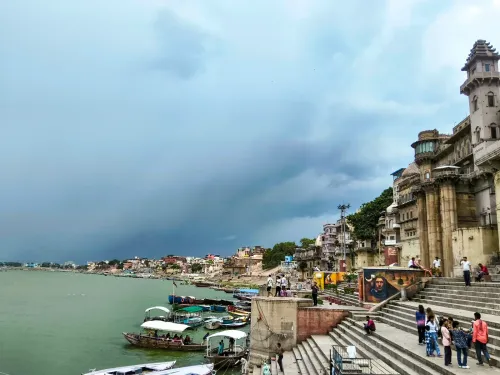
Varanasi, also known as Kashi, is one of the world's oldest continuously inhabited cities and serves as the parliamentary constituency of Prime Minister Narendra Modi. Its dense lanes, heavy pilgrim footfall, and growing tourist numbers have long placed pressure on the city's road and transport network.
Policy Backdrop
The Cabinet approval fits into a sustained pattern of central government investment in Varanasi's civic and transport infrastructure. Since 2014, successive approvals have covered road widening, riverfront development along the Ghats, and rail connectivity upgrades for the city.
Varanasi was included in the Smart Cities Mission in 2015, with urban mobility and tourism infrastructure among its core focus areas. The landmark Kashi Vishwanath Corridor project, approved in 2018, redeveloped the temple precinct and significantly improved access for pilgrims — establishing a template for integrated infrastructure-cum-tourism upgrades in the city.
The latest project, as flagged by Shekhawat, appears to continue this trajectory, though the precise scope, cost, and implementing agency are subject to the detailed sanction order expected from the government.
Stakeholders and Impact
The primary beneficiaries of improved traffic management in Varanasi would be its residents, the millions of pilgrims who visit shrines such as the Kashi Vishwanath Temple each year, and the growing base of domestic and international tourists drawn to the city's cultural heritage.
Better traffic flow is also seen as a prerequisite for unlocking the city's fuller tourism potential, since congestion around key religious and heritage sites has historically deterred longer stays and higher tourist spending. Regional traders, hospitality businesses, and transport operators stand to gain from an improved mobility environment.
What's Next
The formal project sanction order, including funding allocation and implementation timelines, is expected to be released through subsequent government communications. Parliamentary questions on the project's rollout and progress benchmarks are likely once the detailed order enters the public domain.
As the ministry overseeing both culture and tourism, Shekhawat's office is positioned to play a coordinating role alongside the Ministry of Road Transport and Highways and the Uttar Pradesh state government in ensuring the project delivers on its twin promises of smoother urban mobility and enhanced tourism infrastructure in one of India's most visited cities.
Point of View
Reinforcing a political and policy investment that predates and outlasts individual project cycles. By framing a traffic-management approval through the lens of tourism and regional growth, the ministry is deliberately linking hard infrastructure to the softer narrative of cultural heritage promotion — a recurring feature of the government's Kashi-centric communications. The timing, flagged under #CabinetDecisions, suggests the government is keen to publicise incremental wins in Modi's constituency ahead of any electoral or policy review cycle. What remains to be tested is whether implementation pace matches the ambition signalled in Cabinet communiques.
NationPress
14 Oct 2026
Frequently Asked Questions
What is the Varanasi traffic project approved by the Cabinet?
The Union Cabinet approved a project aimed at continuously improving the traffic management system in Varanasi, with the stated goals of easing urban congestion and boosting tourism and regional development. The detailed scope and cost are expected in a subsequent government sanction order.
Why is Varanasi a focus of so many central government infrastructure projects?
Varanasi is Prime Minister Narendra Modi's parliamentary constituency and one of India's most significant Hindu pilgrimage and cultural heritage sites, drawing millions of visitors annually. The city has received sustained central investment since 2014 across road, rail, riverfront, and smart-city initiatives.
What is the Kashi Vishwanath Corridor and how does it relate to this project?
The Kashi Vishwanath Corridor, approved in 2018, redeveloped the precinct around the famous Kashi Vishwanath Temple to improve pilgrim access and urban aesthetics. The latest Cabinet-approved traffic project continues that broader pattern of integrated infrastructure and tourism upgrades in Varanasi.
What did Minister Gajendra Singh Shekhawat say about the Varanasi project?
Shekhawat posted on X that the project 'will be operated with the objective of continuously improving the traffic system of Sanatan Nagari Varanasi and will also provide new momentum to tourism and regional development,' citing the Union Cabinet's decision.
When was Varanasi included in the Smart Cities Mission?
Varanasi was included in the central government's Smart Cities Mission in 2015, with urban mobility and tourism infrastructure among its primary focus areas.