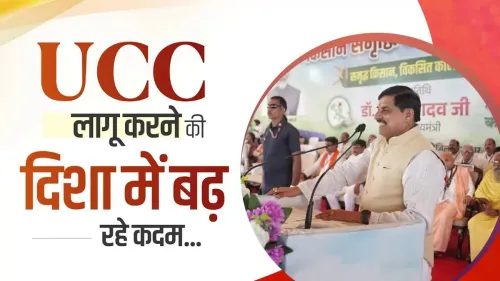
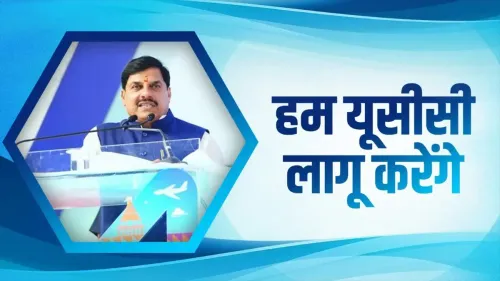
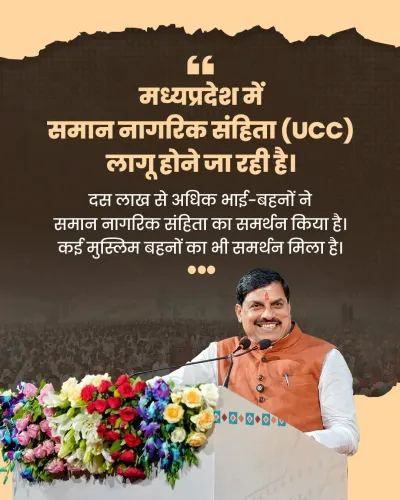
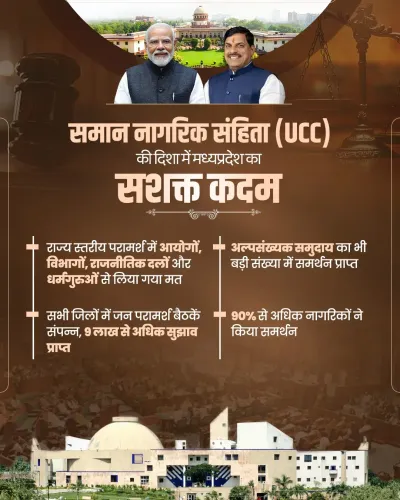
CM Mohan Yadav Pushes UCC in MP Monsoon Session
Synopsis
Madhya Pradesh Chief Minister Dr. Mohan Yadav announced on 15 July 2026 that his government will pass the Uniform Civil Code in the current monsoon session of the state assembly, potentially making MP the second BJP-ruled state after Uttarakhand to enact such legislation.
Key Takeaways
Mohan Yadav announced on 15 July 2026 that the Madhya Pradesh government will pass the Uniform Civil Code in the ongoing monsoon session of the Vidhan Sabha.
Uttarakhand enacted India's first state-level UCC in February 2024 ; Madhya Pradesh would become the second state to do so if the bill passes.
The UCC would create a common legal framework for personal matters — marriage, divorce, inheritance, and adoption — across all religious communities in the state.
Article 44 of the Constitution directs the State to work toward a Uniform Civil Code, a provision that has remained unimplemented at the national level for over seven decades.
The BJP holds a majority in the Madhya Pradesh Vidhan Sabha , making passage contingent on the government's own legislative scheduling rather than coalition dynamics.
The move reflects a broader pattern of BJP-governed states pursuing state-level personal-law reform while a central UCC bill remains pending in Parliament.
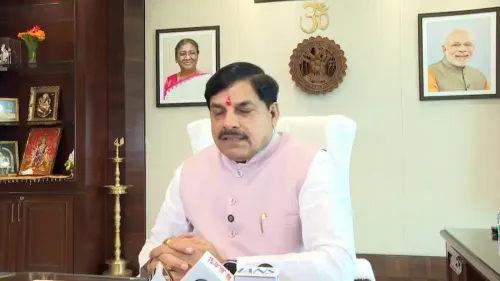
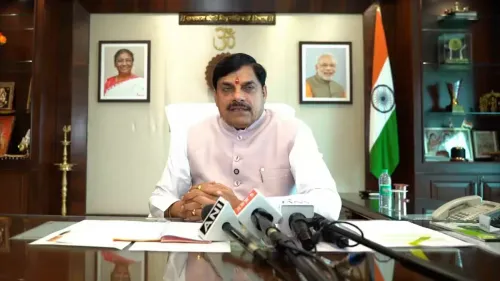
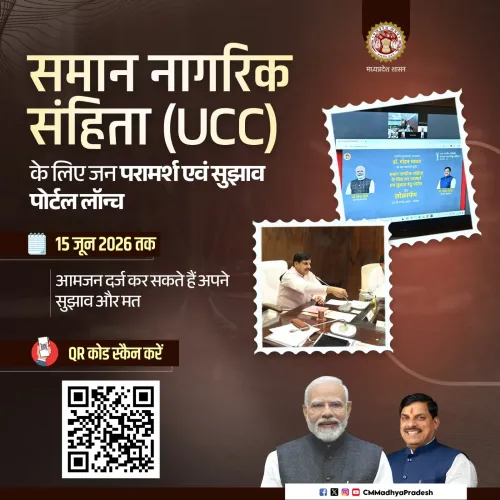
Madhya Pradesh Chief Minister Dr. Mohan Yadav announced on Wednesday, 15 July 2026 that his government is moving to pass the Uniform Civil Code (UCC) in the ongoing monsoon session of the Madhya Pradesh Vidhan Sabha, signalling a significant legislative push on one of the Bharatiya Janata Party's most prominent policy commitments.
Context
In a post on X addressed to @MPVidhanSabha, Chief Minister Yadav stated — 'हमारी सरकार विधानसभा के इसी वर्षाकालीन सत्र में UCC को पास कराने के लिए आगे बढ़ रही है' ('Our government is moving forward to pass the UCC in this very monsoon session of the assembly') — making clear the legislative intent is for the current session, not a future one. The post was tagged with #UniformCivilCode, underscoring the political salience the ruling party attaches to the measure. Dr. Yadav, who assumed office in December 2023, has positioned the UCC as a governance priority since taking charge.
Policy Backdrop
Article 44 of the Indian Constitution, part of the Directive Principles of State Policy, directs the State to endeavour to secure a Uniform Civil Code for all citizens — a provision that has remained aspirational for over seven decades. The BJP has included UCC implementation in its 2019 and 2024 national election manifestos, framing it as a matter of gender justice and national unity. Uttarakhand became the first Indian state to enact a state-level UCC law in February 2024, providing a legislative template that other BJP-governed states have studied closely.
Gujarat and Assam both announced expert committees to examine UCC implementation between 2022 and 2024, reflecting a pattern of state-level experimentation on personal-law reform even as the central government has not yet introduced a nationwide UCC bill in Parliament. Madhya Pradesh's move, if it proceeds to a vote in the monsoon session, would make it the second state to legislate on the matter.
Stakeholders and Impact
A state-level UCC would govern personal matters — including marriage, divorce, inheritance, and adoption — under a common legal framework applicable to all religious communities in the state. Women's rights groups have broadly supported the principle of uniform personal laws, arguing they would end discriminatory practices in certain community-specific codes. Religious community organisations and legal practitioners have raised questions about constitutional jurisdiction and the interplay between state legislation and existing central personal-law statutes.
The BJP holds a comfortable majority in the Madhya Pradesh Vidhan Sabha, which means passage of a UCC bill would depend primarily on the government's own legislative management rather than coalition arithmetic. Opposition parties are expected to raise constitutional and procedural objections during the session.
What's Next
All eyes will be on the proceedings of the Madhya Pradesh Vidhan Sabha monsoon session — specifically whether a UCC bill is formally introduced, referred to a select committee, or brought directly to a floor vote. Parallel developments in other BJP-governed states are also being watched, as a successful Madhya Pradesh legislation could accelerate similar moves elsewhere. The outcome will also inform the broader national debate on whether a central UCC law gains fresh momentum ahead of future electoral cycles.
Point of View
Building on the Uttarakhand precedent. By anchoring the timeline to the current monsoon session rather than a vague future date, the government is raising the political stakes and signalling urgency ahead of local political cycles. The move also puts pressure on the central government, implicitly asking why states must lead on a reform the national party has championed for decades. Whether the bill's substance — particularly its handling of Muslim personal law — survives judicial scrutiny will determine its true legacy beyond the political optics.
NationPress
15 Jul 2026
Frequently Asked Questions
What is the Uniform Civil Code and why is Madhya Pradesh pushing it now?
The Uniform Civil Code is a proposed common set of civil laws covering marriage, divorce, inheritance and adoption that would apply to all citizens regardless of religion. Madhya Pradesh CM Dr. Mohan Yadav announced on 15 July 2026 that his government will pass it in the current monsoon session of the Vidhan Sabha, acting on the BJP's long-standing manifesto commitment.
Which state first passed a UCC law in India?
Uttarakhand became the first Indian state to pass a Uniform Civil Code law in February 2024 under its BJP government, providing a legislative model for other states including Madhya Pradesh.
Does the Constitution allow states to pass their own Uniform Civil Code?
Article 44 of the Indian Constitution directs the State to endeavour to secure a UCC for citizens. While the UCC is not explicitly a state-list subject, state-level legislation in this area has been pursued by BJP-governed states, though its constitutional validity may face legal challenges.
Will the UCC affect all religious communities in Madhya Pradesh?
Yes, a state-level UCC is intended to replace community-specific personal laws — covering Hindu, Muslim, Christian and other communities — with a single uniform framework for personal matters such as marriage, divorce and inheritance.
What happens next after CM Mohan Yadav's UCC announcement?
The Madhya Pradesh Vidhan Sabha monsoon session will be the immediate arena to watch. A UCC bill would need to be formally introduced and voted upon; with the BJP holding a majority, passage is arithmetically feasible, though opposition parties and legal challenges are expected.