CM Mohan Yadav Hails Cabinet Nod to Semicon 2.0 at ₹1.27 Lakh Cr
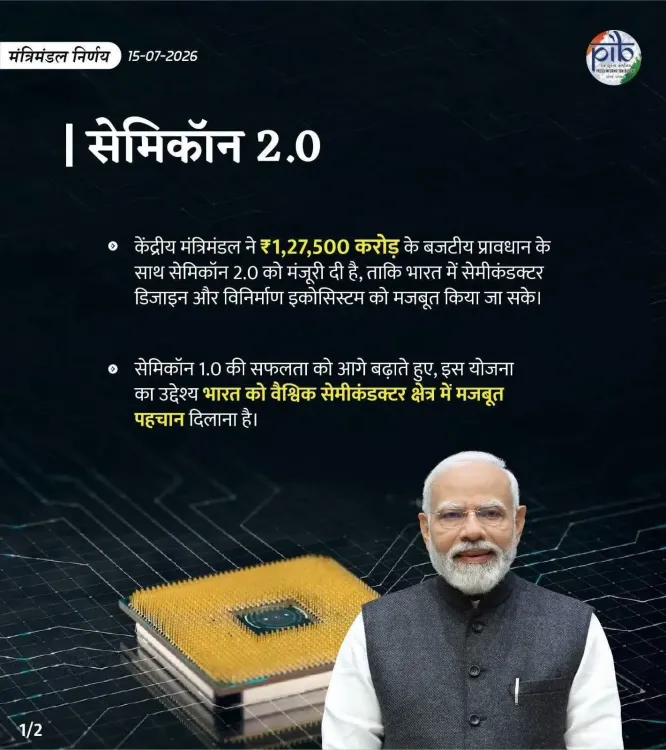
Synopsis
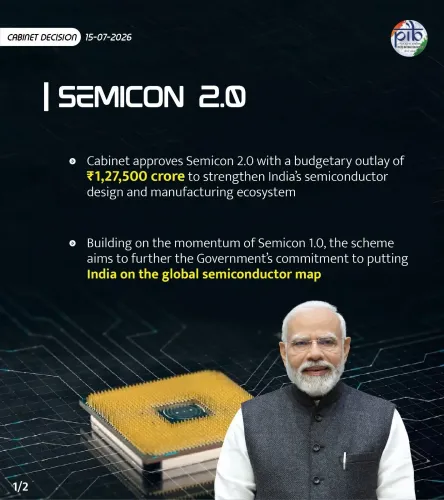
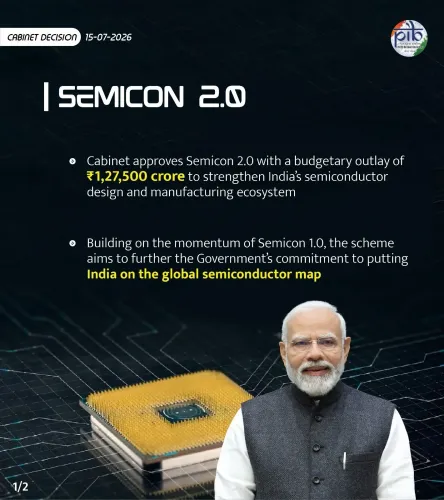
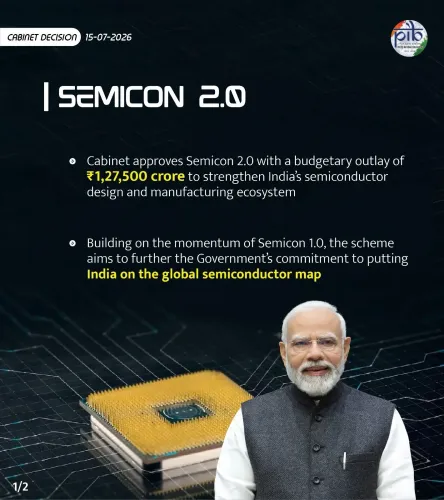
The Union Cabinet approved Semicon 2.0 with a ₹1,27,500 crore outlay, scaling up India's semiconductor manufacturing ambitions. MP Chief Minister Dr. Mohan Yadav praised the decision as a historic stride toward self-reliance and stronger global supply-chain positioning under PM Modi's leadership.
Key Takeaways
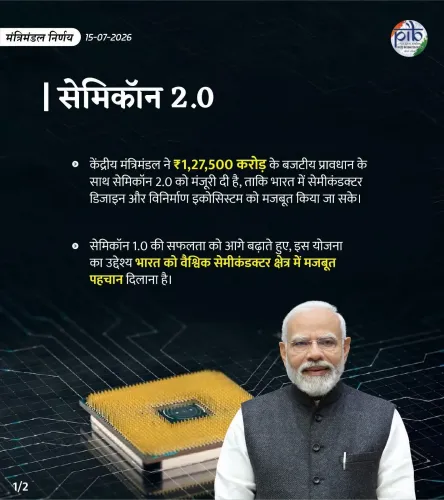
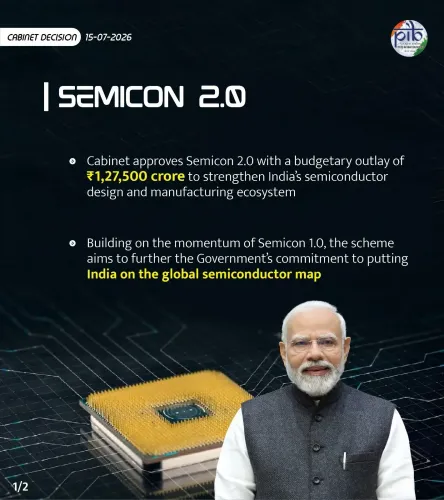
The Union Cabinet approved Semicon 2.0 with a budget of ₹1,27,500 crore , significantly scaling up India's semiconductor manufacturing programme.
MP Chief Minister Dr.
Mohan Yadav welcomed the decision on 15 July 2026 , calling it a historic step toward Atmanirbhar Bharat .
The new outlay is more than 1.6 times the ₹76,000 crore originally approved under the India Semiconductor Mission in December 2021 .
The programme aims to accelerate economic growth, secure global semiconductor supply chains, and strengthen India's position in critical technology sectors.
The India Semiconductor Mission , established in 2021, serves as the nodal agency overseeing the country's chip and display manufacturing ecosystem.
State-level investment announcements and land allocations for new fabrication or assembly units are expected to follow the Cabinet approval.
Madhya Pradesh Chief Minister Dr. Mohan Yadav on Wednesday, 15 July 2026 welcomed the Union Cabinet's approval of Semicon 2.0, a semiconductor manufacturing initiative backed by a budget of ₹1,27,500 crore, calling it a historic step toward an Atmanirbhar Bharat (self-reliant India).
Context
Posting on X, Dr. Yadav credited Prime Minister Narendra Modi for the Cabinet decision, writing that the project would 'give new momentum to the country's economic development, make the global supply chain more secure, and take India's global leadership capacity in critical technology sectors to new heights.' He expressed gratitude to the Prime Minister, tagging the announcement with #CabinetDecisions.
The approval of Semicon 2.0 represents a significant scaling-up of India's semiconductor ambitions. The ₹1,27,500 crore outlay is substantially larger than the ₹76,000 crore programme that the Union Cabinet had originally cleared in December 2021 under the India Semiconductor Mission framework.
Policy Backdrop
India's semiconductor push began in earnest in 2021 when the government established the India Semiconductor Mission (ISM) under the Ministry of Electronics and Information Technology as the nodal agency to develop the chip and display manufacturing ecosystem. The mission was designed to offer fiscal incentives, infrastructure support, and skill development to attract global chipmakers.
The policy gained traction in 2023 when the Cabinet cleared the first semiconductor assembly and test facility by Micron Technology in Gujarat, marking the first major foreign investment under the framework. Semicon 2.0 appears to be the next generational expansion of this strategy, deepening India's integration into global semiconductor supply chains.
The broader Atmanirbhar Bharat initiative, launched in 2020, has served as the overarching policy umbrella for reducing import dependence in strategic sectors, with semiconductors identified as a priority given their centrality to electronics, defence, automotive, and telecommunications industries.
Stakeholders and Impact
The decision is expected to benefit electronics manufacturers, domestic and foreign semiconductor firms, and a large pool of skilled and semi-skilled workers who stand to gain from new fabrication, assembly, testing, and packaging facilities that such a programme incentivises. India has positioned itself as an alternative production hub as global buyers seek to diversify supply chains away from concentrated manufacturing centres.
For Madhya Pradesh, Dr. Yadav's endorsement signals the state's intent to participate in the semiconductor investment wave. Several Indian states have been competing to attract chip-related investments by offering land, infrastructure, and additional fiscal support on top of central government incentives.
What's Next
Attention will now turn to the formal gazette notification and operational guidelines for Semicon 2.0, including the structure of production-linked incentives and eligibility criteria for domestic and foreign investors. State-level announcements on land allocation and investment memoranda of understanding are likely to follow as companies assess the expanded scheme.
The next Union Budget will be a key marker for tracking actual disbursements and scheme utilisation under the enhanced outlay, while progress on existing projects — including the Micron Technology facility in Gujarat — will serve as an early indicator of execution capacity under the broader semiconductor mission.
Point of View
Land clearances, and actual disbursements — can match the ambition of the expanded scheme.
NationPress
15 Jul 2026
Frequently Asked Questions
What is Semicon 2.0 approved by the Indian Cabinet?
Semicon 2.0 is an expanded semiconductor manufacturing programme approved by the Union Cabinet with a budget of ₹1,27,500 crore, building on India's earlier 2021 semiconductor mission to boost domestic chip production and strengthen global supply chains.
What is the budget for Semicon 2.0?
The Union Cabinet approved Semicon 2.0 with a budget of ₹1,27,500 crore, a significant increase over the ₹76,000 crore originally allocated under the India Semiconductor Mission in December 2021.
What did Madhya Pradesh CM Mohan Yadav say about Semicon 2.0?
CM Dr. Mohan Yadav praised the Cabinet's decision on X, saying the project would accelerate economic development, secure global supply chains, and elevate India's leadership in critical technology sectors, crediting PM Narendra Modi for the initiative.
What is India's semiconductor mission?
The India Semiconductor Mission is a nodal agency established in 2021 under the Ministry of Electronics and IT to develop India's chip and display manufacturing ecosystem through fiscal incentives, infrastructure support, and skill development.
How does Semicon 2.0 relate to Atmanirbhar Bharat?
Semicon 2.0 is part of the Atmanirbhar Bharat (self-reliant India) initiative launched in 2020, which aims to reduce India's dependence on imported electronics and semiconductors by building a domestic manufacturing and design ecosystem.