Shekhawat flags Rs 14,447 cr Kashi infra project post Cabinet nod
Synopsis
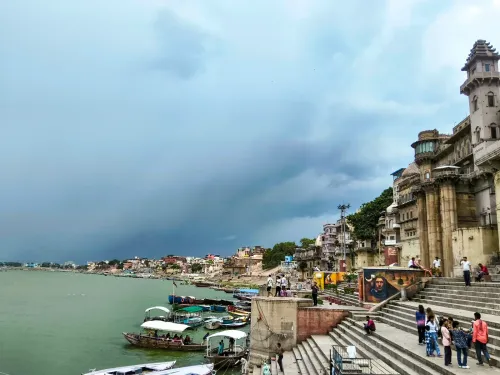
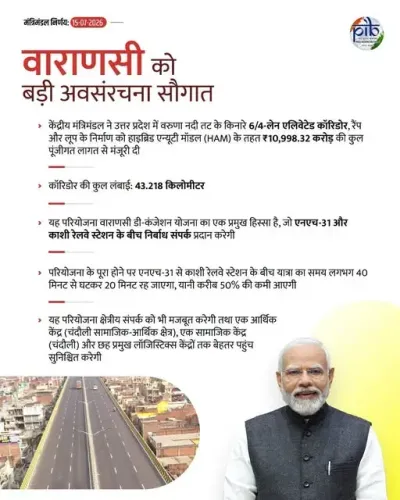
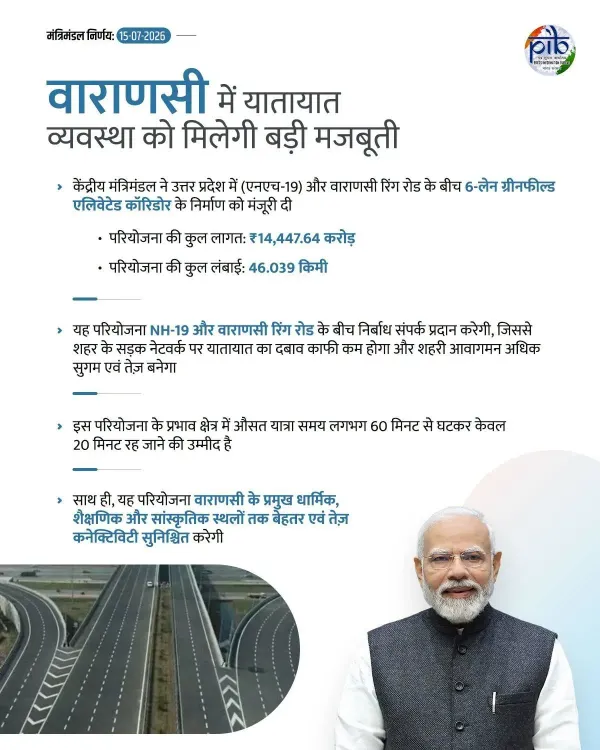
The Union Cabinet has approved a ₹14,447.64 crore infrastructure project for Varanasi (Kashi), Union Culture and Tourism Minister Gajendra Singh Shekhawat announced on 15 July 2026. The project aims to modernise the ancient city's foundational infrastructure while boosting its tourism sector and local economy.
Key Takeaways
The Union Cabinet approved an infrastructure project worth ₹14,447.64 crore for Varanasi (Kashi) .
Union Culture and Tourism Minister Gajendra Singh Shekhawat shared the announcement on 15 July 2026 via X under #CabinetDecisions .
The project is designed to strengthen Kashi 's modern infrastructure while energising its tourism sector and local economy.
Varanasi has previously benefited from the Smart Cities Mission (2015), the PRASHAD scheme (2014-15), and the Kashi Vishwanath Corridor (from 2018).
Key stakeholders include local residents, traders, pilgrims, and the broader hospitality and tourism ecosystem in Varanasi.
Phased rollout timelines and tender awards will be closely monitored as implementation begins.
Union Culture and Tourism Minister Gajendra Singh Shekhawat on Wednesday, 15 July 2026, highlighted a Cabinet-approved infrastructure project worth ₹14,447.64 crore for Varanasi (Kashi), stating it will strengthen the ancient city's modern infrastructure while energising its tourism sector and local economy.
Context
Posting on X with the hashtag #CabinetDecisions, Shekhawat wrote that the project — valued at ₹14,447.64 crore — will 'Kashi ki aadhunik aadharbhoot sanrachna ko sashakt karte hue paryatan evam sthaniya arthvyavastha ko urja pradaan karega' ('empower Kashi's modern foundational infrastructure while providing energy to tourism and the local economy'). The post accompanied an image and was shared shortly after what appears to be a Union Cabinet meeting.
Varanasi, one of the world's oldest continuously inhabited cities and a major Hindu pilgrimage centre in Uttar Pradesh, is also the parliamentary constituency of Prime Minister Narendra Modi. The city has been a focal point of large-scale central government investment across successive terms.
Policy Backdrop
The approval fits within a sustained pattern of central funding directed at Varanasi. The city was included in the Smart Cities Mission in 2015, triggering a series of urban infrastructure upgrades. The PRASHAD scheme, launched in 2014-15, specifically targeted pilgrimage and heritage destinations — with Varanasi among the earliest beneficiaries.
The landmark Kashi Vishwanath Corridor project, approved and executed in phases from 2018 onward, redeveloped the temple precincts and set a template for integrating heritage conservation with modern visitor amenities. The latest Cabinet decision appears to build on that foundation with a significantly larger financial commitment.
As the minister overseeing both Culture and Tourism, Shekhawat's amplification of the Cabinet decision underscores the government's framing of infrastructure investment as a direct driver of tourism receipts and grassroots economic activity.
Stakeholders and Impact
The project's stated twin objectives — modernising infrastructure and boosting tourism — are expected to affect Varanasi's residents, the local trader community, and the broader hospitality and pilgrimage-services ecosystem. The city receives millions of domestic and international pilgrims and tourists annually, making connectivity and civic amenity upgrades critical multipliers for local livelihoods.
Tourism sector stakeholders, including hoteliers, boat operators on the Ghats, and artisans associated with the city's craft traditions, stand to benefit if improved infrastructure translates into higher footfall and longer visitor stays. Local traders in the vicinity of major religious sites have historically seen direct revenue gains from large-scale government-led redevelopment.
What's Next
Attention will now turn to the phased rollout timeline, the specific components covered under the ₹14,447.64 crore outlay, and the award of tenders for individual packages. Implementation progress will be closely watched given the scale of the investment and Varanasi's status as a model site for replication elsewhere.
The government's approach of bundling heritage, connectivity, and civic infrastructure under a single large sanction could also set a precedent for similar Cabinet-approved packages for other pilgrimage cities, a possibility that tourism ministry officials and urban planners are likely to examine in the months ahead.
Point of View
447.64 crore for Varanasi is the latest in a long series of large-ticket central investments in the Prime Minister's constituency, reinforcing the government's strategy of using religious tourism hubs as engines of broader economic development. By publicly amplifying the decision, Tourism Minister Shekhawat signals that the ministry intends to frame infrastructure spending as integral to its tourism mandate — not merely a public-works exercise. The scale of the outlay, if executed efficiently, could position Varanasi as a benchmark for integrated pilgrimage-city development that other states may seek to replicate. The announcement also keeps Kashi's transformation narrative politically salient ahead of what is expected to be a busy calendar of religious and cultural events in the city.
NationPress
14 Oct 2026
Frequently Asked Questions
What is the ₹14,447.64 crore Kashi project approved by the Cabinet?
The Union Cabinet approved an infrastructure project worth ₹14,447.64 crore for Varanasi (Kashi) aimed at modernising the city's foundational infrastructure and boosting its tourism sector and local economy, as announced by Union Minister Gajendra Singh Shekhawat on 15 July 2026.
Who announced the Varanasi infrastructure project worth ₹14,447 crore?
Union Culture and Tourism Minister Gajendra Singh Shekhawat announced the project on X on 15 July 2026, tagging it under #CabinetDecisions.
How will the Kashi infrastructure project benefit local residents and traders?
The project is expected to improve civic amenities and connectivity in Varanasi, which could increase tourist footfall and spending, directly benefiting local traders, hoteliers, artisans, and pilgrimage-service providers.
What earlier infrastructure projects has Varanasi received from the central government?
Varanasi has previously received funding under the Smart Cities Mission (2015), the PRASHAD pilgrimage-development scheme (2014-15), and the Kashi Vishwanath Corridor project initiated in 2018.
Will similar Cabinet-approved infrastructure packages be extended to other pilgrimage cities?
No formal announcement has been made, but analysts and tourism ministry observers will watch whether the Varanasi model — combining heritage, connectivity, and civic upgrades under a single large sanction — is replicated for other major pilgrimage destinations.