Jaishankar Co-chairs Inaugural India-Belgium Strategic Dialogue
Synopsis
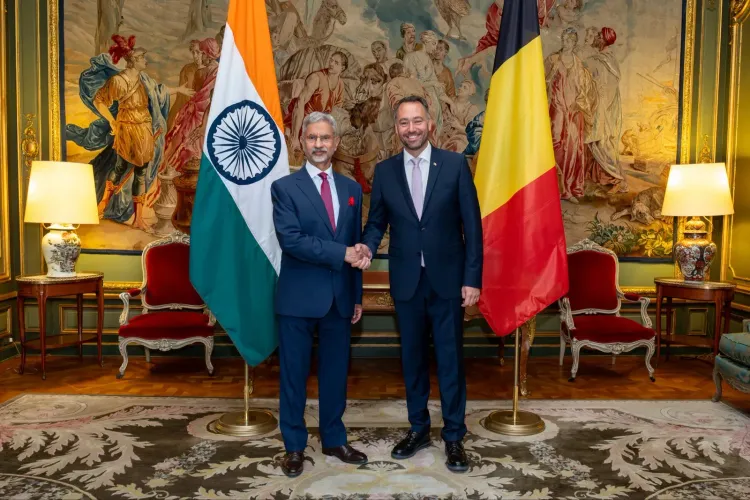
External Affairs Minister Dr. S. Jaishankar co-chaired the first-ever India-Belgium Strategic Dialogue in Brussels on 15 July 2026 with Belgian DPM Maxime Prevot, covering defence, pharma, semiconductors, ports and supply chain de-risking, signalling a significant deepening of bilateral ties.
Key Takeaways
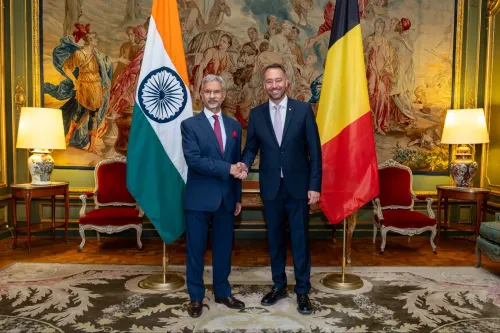
Jaishankar and Belgian DPM Maxime Prevot co-chaired the inaugural India-Belgium Strategic Dialogue in Brussels on 15 July 2026 .
Discussions covered political, economic, investment, clean energy, defence, mobility and pharmaceutical cooperation.
Both sides identified new opportunities in ports , maritime infrastructure , semiconductors and supply chain de-risking .
The ministers exchanged perspectives on global developments, with a specific focus on West Asia .
The dialogue elevates a relationship previously managed through the India-Belgium Joint Economic Commission , active since the 1980s .
The meeting aligns with India's broader strategy of deepening ties with individual EU member states alongside the overarching India-EU partnership.
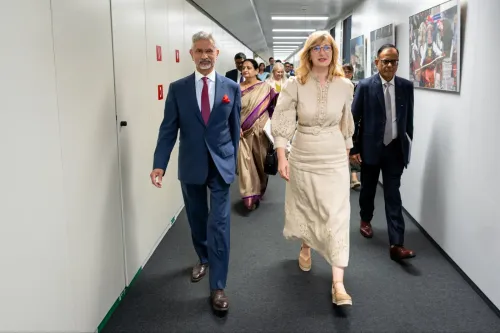
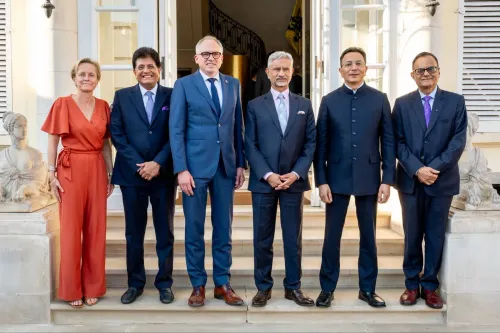
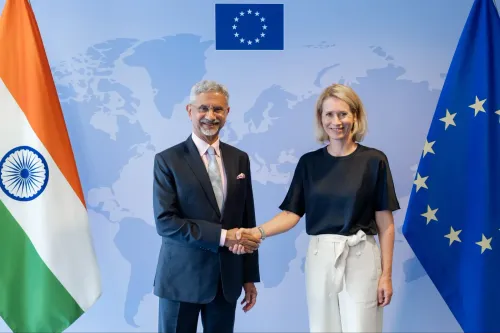
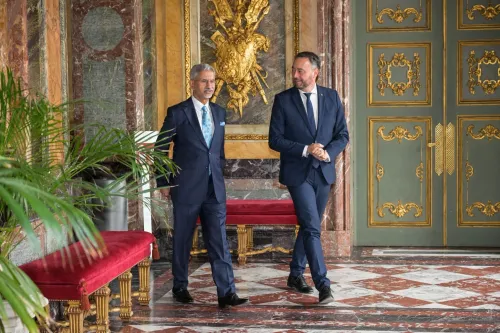
Union External Affairs Minister Dr. S. Jaishankar co-chaired the inaugural India-Belgium Strategic Dialogue in Brussels on Wednesday, 15 July 2026, alongside Belgian Deputy Prime Minister and Foreign Minister Maxime Prevot, marking a significant elevation in bilateral ties between the two nations.
Context
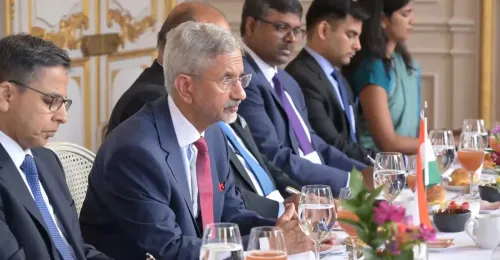
The dialogue, described by Dr. Jaishankar as reflecting 'the ambition of India's ties with Belgium, and the European Union,' covered a broad range of cooperation areas including political, economic, investment, clean energy, defence, mobility and pharmaceutical domains. The two ministers also identified emerging opportunities in ports, maritime infrastructure, semiconductors and supply chain de-risking. The meeting additionally featured an exchange of perspectives on global developments, with a particular focus on West Asia.
Belgium holds a unique position in India's European engagement — it is home to significant Indian investment, a major hub for diamond trade, a key pharmaceutical partner, and hosts the headquarters of core European Union institutions in Brussels. The inaugural nature of this strategic dialogue signals a deliberate move to institutionalise what has been a substantively growing but relatively under-formalised bilateral relationship.
Policy Backdrop
The India-EU Strategic Partnership, established at the first summit in 2000, has served as the overarching framework for India's engagement with EU member states. India has since pursued a parallel track of deepening ties with individual EU members — including France, Germany, and the Netherlands — to complement the broader partnership architecture. The launch of a dedicated strategic dialogue with Belgium fits squarely within this pattern.
The India-Belgium Joint Economic Commission has met periodically since the 1980s to review trade and investment flows. The elevation to a strategic dialogue format introduces a higher-level political dimension, enabling more structured engagement on defence, technology and geopolitical coordination. The emphasis on semiconductors and supply chain de-risking reflects India's broader economic security agenda, which has gained momentum in the post-pandemic global order.
India's push on clean energy partnerships with European nations also aligns with its commitments under international climate frameworks, while defence cooperation with EU members supports the indigenisation drive under the Aatmanirbhar Bharat initiative.
Stakeholders and Impact
Indian pharmaceutical manufacturers stand to benefit from a more structured bilateral framework, given Belgium's prominence as a European pharma hub and its role in the EU's regulatory ecosystem. Similarly, Indian semiconductor firms and port infrastructure players are likely to watch follow-up developments closely, as the dialogue explicitly flagged these as priority sectors.
For Indian exporters and investors, a formalised strategic dialogue creates a more predictable and high-level channel to raise market access concerns and explore joint ventures. The mobility dimension of the talks is also significant for Indian professionals and students in Belgium, one of the larger Indian diaspora destinations in Western Europe.
On the geopolitical side, the shared discussion on West Asia underscores the convergence of strategic interests between India and Belgium at a time of heightened regional volatility — and signals that the dialogue is not limited to economic matters alone.
What's Next
The inaugural dialogue is expected to pave the way for working-level follow-up groups, particularly on semiconductors and maritime cooperation, where both sides identified concrete opportunities. The outcomes of this engagement are also likely to feed into the broader India-EU relationship, including any forthcoming India-EU Summit discussions on trade, technology and connectivity.
With Dr. Jaishankar having now co-chaired this landmark first edition, the institutional momentum created in Brussels will be closely watched by industry stakeholders, European policy circles, and India's diplomatic community as a template for deepening ties with other EU member states.
Point of View
And at times accelerate, the slower-moving India-EU trade and technology negotiations. By explicitly naming semiconductors and supply chain de-risking alongside traditional pillars like pharma and ports, the two sides are signalling alignment with a global economic security agenda that resonates across Washington, Brussels and New Delhi. The inclusion of West Asia in the agenda also reveals that this dialogue is designed to be a genuine geopolitical forum, not merely a trade facilitation exercise. For India, a formalised channel with Belgium — home to EU institutions and a significant Indian business presence — offers strategic leverage that extends well beyond the bilateral balance sheet.
NationPress
15 Jul 2026
Frequently Asked Questions
What is the India-Belgium Strategic Dialogue?
The India-Belgium Strategic Dialogue is a newly launched bilateral forum co-chaired for the first time on 15 July 2026 by Indian EAM Dr. S. Jaishankar and Belgian DPM and FM Maxime Prevot in Brussels, covering political, economic, defence and technology cooperation.
What sectors were discussed at the India-Belgium talks in Brussels?
The talks covered political ties, economic and investment cooperation, clean energy, defence, mobility, pharmaceuticals, ports, maritime infrastructure, semiconductors and supply chain de-risking.
Why is Belgium important for India's EU strategy?
Belgium hosts the headquarters of core European Union institutions in Brussels, is a major hub for diamond trade and pharmaceuticals, and is home to significant Indian investment, making it a strategically important partner within the EU.
What did Jaishankar and Maxime Prevot discuss on West Asia?
The two ministers had an exchange of perspectives on global developments with a specific focus on West Asia, though no specific outcomes or positions were announced publicly beyond this reference in Dr. Jaishankar's post.
What could follow from the inaugural India-Belgium Strategic Dialogue?
Follow-up working groups on semiconductors and maritime cooperation are anticipated, and the dialogue's outcomes are expected to inform broader India-EU engagements including any forthcoming India-EU Summit discussions.