Jaishankar in Brussels: India-Belgium must deepen ties amid global tensions
Synopsis
At a strategic dialogue in Brussels, EAM Jaishankar told his Belgian counterpart that global instability — from Ukraine to the Gulf to the Indo-Pacific — makes deeper India-Belgium engagement not optional but urgent. With an India-EU FTA, a security partnership, and Horizon Europe access all in play simultaneously, this is India's most ambitious European diplomatic push in years.
Key Takeaways
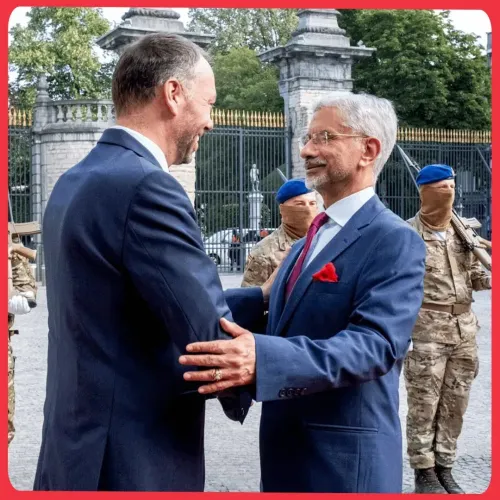
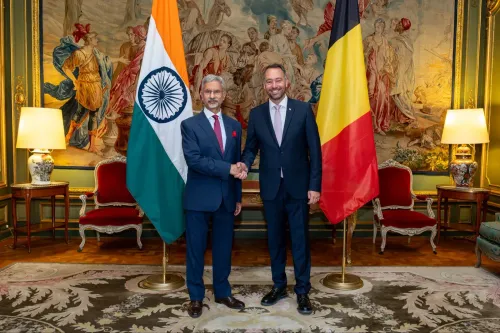
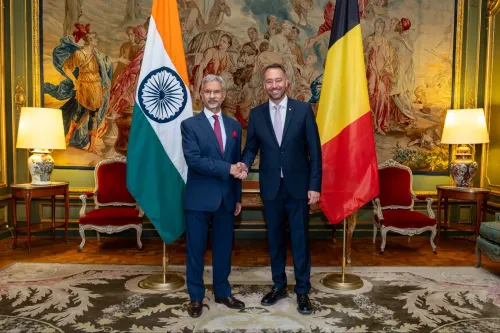
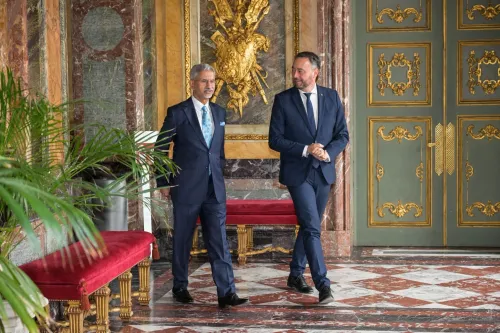
Jaishankar met Belgian counterpart Maxime Prevot in Brussels on 15 July for the India-Belgium Strategic Dialogue .
Jaishankar called for deeper engagement across clean energy, digital technologies, life sciences, chemicals, logistics, and manufacturing .
He described the India-EU FTA as 'much bigger than just a trade agreement,' citing a parallel security and defence partnership and mobility framework .
India is seeking involvement in EU initiatives including the Global Gateway and Horizon Europe research programme.
Jaishankar flagged conflicts in Ukraine, the Gulf, Africa, and the Indo-Pacific as cascading threats that make closer bilateral ties essential.
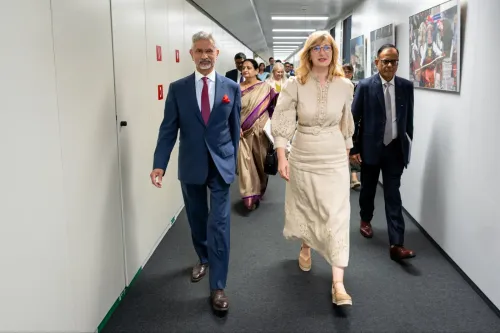
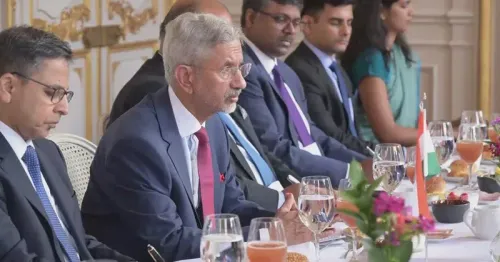
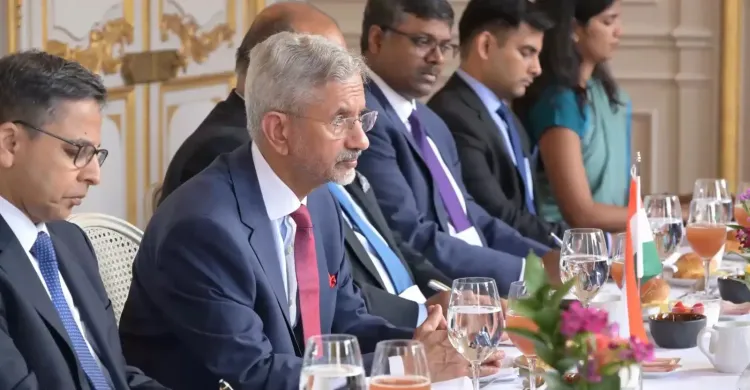
External Affairs Minister S. Jaishankar on Wednesday, 15 July called for significantly deeper engagement between India and Belgium, arguing that the current state of global geopolitics and structural economic challenges makes closer bilateral cooperation not just desirable but necessary. Speaking at the India-Belgium Strategic Dialogue in Brussels, Jaishankar held talks with his Belgian counterpart Maxime Prevot.
Key Developments at the Strategic Dialogue
In his opening remarks, Jaishankar described the existing India-Belgium relationship as 'very substantive' and identified several sectors ripe for expansion — including clean energy, digital technologies, life sciences, chemical industry, logistics, and manufacturing. He framed Belgium's centrality within the European Union (EU) as a strategic asset for India's broader European ambitions.
'Both bilaterally and globally there is a strong case for us to engage more,' Jaishankar said. 'What we are doing with Belgium is very much in tandem to what we are doing with the European Union. You are in a way the core of the European Union and I would say we can see in front of our eyes that the Indian relationship with the European Union is acquiring a strategic character.'
India-EU Framework: Beyond a Trade Agreement
Jaishankar highlighted that the India-EU Free Trade Agreement (FTA) — currently under negotiation — represents far more than a commercial arrangement. Alongside the FTA, he noted that the two sides have established a security and defence partnership, are negotiating a security of information agreement, and have put in place a mobility framework.
India is also engaging with major EU initiatives such as the Global Gateway infrastructure programme and is seeking deeper involvement in Horizon Europe, the EU's flagship research and innovation scheme. Jaishankar said discussions are now focused on accelerating timelines, with earlier estimates pointing to readiness by early next year.
Global Instability as a Catalyst for Bilateral Depth
A significant portion of Jaishankar's remarks addressed the deteriorating global order as a driver for tighter partnerships. He pointed to structural vulnerabilities in the international economy — overdependence on concentrated sources of production, restricted market access, and logistics disruptions, particularly in the Gulf — as challenges that demand coordinated responses.
'The international situation today really warrants countries like ours, which have a close relationship, to engage with each other more deeply,' he said. He warned that in today's interconnected world, conflicts can no longer be contained regionally, citing Ukraine, the Gulf, Africa, and rising tensions in the Indo-Pacific as flashpoints with cascading global consequences.
'If one looks at 25 years ago, you could have had a problem in one part of the world with others relatively insulated... That is not the case now,' Jaishankar observed, underscoring how geopolitical shocks now travel rapidly across supply chains, financial markets, and security architectures.
What Comes Next
Jaishankar indicated that the process of deepening India-Belgium and India-EU ties is already underway and is expected to reach an advanced stage in the near term. The India-EU FTA, trade and technology council engagements, and sector-specific partnerships are all in active negotiation. How quickly these frameworks translate into concrete deliverables will determine whether the strategic rhetoric converts into durable economic and security linkages.
Point of View
A security partnership, a technology council, and Horizon Europe access is unusual in its breadth — and in its speed. What is worth watching is whether Belgium's position at the EU's political core gives India a back-channel advantage in shaping the FTA's final contours, particularly on services and mobility. The repeated invocation of global instability as a rationale for engagement also reflects a broader Indian diplomatic posture: framing multipolarity not as an abstract principle but as a practical argument for why middle and major powers need each other's markets, technology, and security guarantees now more than ever.
NationPress
13 Oct 2026
Frequently Asked Questions
What was discussed at the India-Belgium Strategic Dialogue in Brussels?
EAM S. Jaishankar and Belgian Foreign Minister Maxime Prevot held the India-Belgium Strategic Dialogue in Brussels on 15 July, covering deeper cooperation in clean energy, digital technologies, life sciences, logistics, and manufacturing. Jaishankar also discussed the India-EU FTA, a security and defence partnership, and India's potential involvement in the Global Gateway and Horizon Europe programmes.
What is the India-EU Free Trade Agreement and where does it stand?
The India-EU FTA is a comprehensive trade and partnership agreement under active negotiation. Jaishankar described it as 'much bigger than just a trade agreement,' noting it is accompanied by a security and defence partnership, a mobility framework, and a security of information agreement. Earlier timelines suggested readiness by early next year.
Why did Jaishankar stress global instability at the Brussels meeting?
Jaishankar argued that conflicts in Ukraine, the Gulf, Africa, and the Indo-Pacific can no longer be contained regionally and have cascading global consequences. He used this as a central argument for why countries with close relationships, like India and Belgium, must deepen engagement to stabilise supply chains, diversify production sources, and manage shared security risks.
What is India's interest in Horizon Europe and the Global Gateway?
Horizon Europe is the EU's flagship research and innovation funding programme, and the Global Gateway is the EU's infrastructure investment initiative. Jaishankar indicated India is actively seeking deeper involvement in both, reflecting New Delhi's interest in technology collaboration and connectivity projects alongside its European partners.
Why is Belgium significant for India's EU strategy?
Jaishankar described Belgium as 'the core of the European Union,' given Brussels hosts key EU institutions. Deepening ties with Belgium therefore carries strategic weight for India's broader EU engagement, potentially giving New Delhi closer access to EU decision-making frameworks as FTA and partnership negotiations advance.