Jaishankar in Sofia: India-Bulgaria ties must evolve into forward-looking partnership
Synopsis
EAM Jaishankar's Sofia visit wasn't just a courtesy call — it was a strategic signal. By framing the India-Bulgaria relationship as one that must be 'refashioned,' and spotlighting fresh India-EU agreements on trade, defence, and mobility, New Delhi is making a deliberate push to deepen its European footprint at a time of global volatility.
Key Takeaways
Jaishankar visited Sofia on 11 June 2025 and met Bulgarian Foreign Minister Velislava Petrova .
Jaishankar called for reshaping India-Bulgaria ties into a 'contemporary and forward-looking relationship.' He also met Bulgarian Prime Minister Rumen Radev and conveyed greetings from PM Narendra Modi .
India and the EU concluded a free trade agreement , a security and defence partnership , and a mobility framework in January 2025 .
Jaishankar advocated for zero tolerance on terrorism and stressed supply chain resilience and unimpeded maritime trade .
India reiterated its advocacy for Global South priorities including energy, food, and fertiliser security.
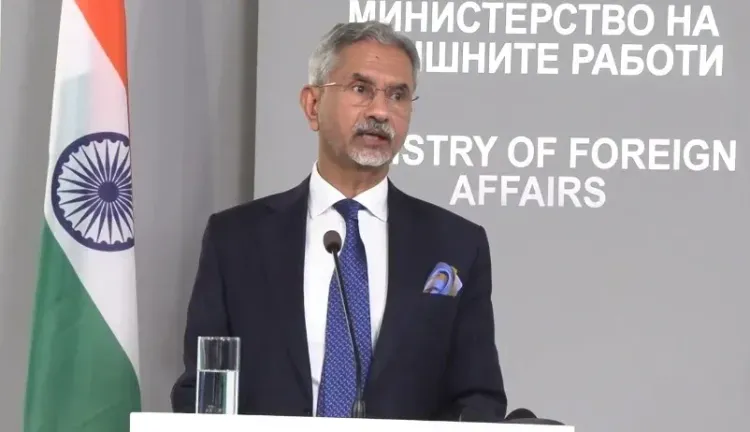
External Affairs Minister S. Jaishankar on Thursday, 11 June called for a fundamental reshaping of India-Bulgaria relations into a more contemporary and forward-looking partnership, saying both nations share similar political outlooks. The remarks came during a joint press conference in Sofia following his bilateral meeting with Bulgarian Foreign Minister Velislava Petrova.
Key Dimensions of the Bilateral Talks
Jaishankar outlined three pillars of the discussions: bilateral cooperation between India and Bulgaria, the broader India-European Union partnership, and the potential for joint action on global issues. 'Our discussions today had three dimensions. First, the bilateral cooperation between India and Bulgaria. Second, the partnership between India and the European Union. And third, what our two countries can do together for the world... That is largely what I came here to discuss,' he said.
On the bilateral front, he acknowledged the depth of existing ties while stressing the need to modernise them. 'Where India-Bulgaria ties are concerned, these are longstanding and very comfortable. Our task is to refashion that into a contemporary and forward-looking relationship. Politically, as our talks confirmed, we share many similar approaches and outlooks,' Jaishankar added.
Modi's Greetings and the Radev Meeting
During the Sofia visit, Jaishankar also called on Bulgarian Prime Minister Rumen Radev and conveyed the personal greetings of Prime Minister Narendra Modi. The high-level engagement signals New Delhi's intent to deepen institutional ties with Bulgaria beyond routine diplomatic exchanges.
India-EU Agreements and Global Stability
Jaishankar highlighted a cluster of agreements concluded between India and the European Union in January this year, including a free trade agreement, a security and defence partnership, and a mobility framework. He said these initiatives carry significant potential to enhance bilateral cooperation between India and the EU.
He also addressed the broader global environment, describing it as 'exceptionally volatile and uncertain,' citing multiple major conflicts, economic security concerns, the legacy of the pandemic, and the recurring threat of terrorism. 'We believe that this is not an era of war,' he stated, reiterating India's consistent position. 'The only solution to conflicts is dialogue and diplomacy.'
Supply Chains, Maritime Trade, and the Global South
On economic risks, Jaishankar stressed the importance of supply chain resilience and diversification, and specifically called for unimpeded maritime trade. He also underscored India's advocacy for the Global South, particularly on energy, food, and fertiliser security — issues he said were shared concerns that formed a basis of convergence between New Delhi and Sofia.
Zero Tolerance on Terrorism
Jaishankar called for a firm global consensus on zero tolerance for terrorism, noting that this was among the issues on which India and Bulgaria found common ground. 'The world must be clear on zero tolerance. On all these issues, there was a meeting of the minds between India and Bulgaria,' he said. The visit marks a renewed push by India to strengthen its diplomatic footprint across Central and Eastern Europe ahead of upcoming multilateral engagements.
Point of View
Built largely during the Cold War era, have not kept pace with India's current strategic and economic weight. The January 2025 India-EU agreements on trade, defence, and mobility give this visit structural backing, but the real test will be whether these frameworks translate into actual investment and technology flows. India's simultaneous push on Global South advocacy and European partnership is a balancing act — one that Sofia, a NATO and EU member with historical ties to both East and West, is well-positioned to appreciate.
NationPress
26 Oct 2026
Frequently Asked Questions
Why did EAM Jaishankar visit Sofia in June 2025?
Jaishankar visited Sofia on 11 June 2025 to meet Bulgarian Foreign Minister Velislava Petrova and Prime Minister Rumen Radev, with the aim of deepening bilateral ties and discussing the broader India-EU partnership. He also conveyed personal greetings from Prime Minister Narendra Modi to the Bulgarian leadership.
What did Jaishankar mean by 'refashioning' India-Bulgaria ties?
Jaishankar said that while India-Bulgaria relations are longstanding and comfortable, both sides must reshape them into a more contemporary and forward-looking partnership aligned with current geopolitical and economic realities. He noted that the two countries share similar political approaches and outlooks.
What are the recent India-EU agreements Jaishankar highlighted?
Jaishankar referenced three agreements concluded between India and the European Union in January 2025: a free trade agreement, a security and defence partnership, and a mobility framework. He said these have the potential to significantly enhance India-EU cooperation.
What is India's position on global conflicts and terrorism?
India believes the current era is 'not an era of war' and that dialogue and diplomacy are the only solutions to conflicts. On terrorism, Jaishankar called for a global consensus on zero tolerance, a position he said was shared by both India and Bulgaria.
What did Jaishankar say about the Global South and economic security?
Jaishankar underscored India's consistent advocacy for Global South priorities, particularly energy, food, and fertiliser security. On economic risks, he stressed the need for supply chain resilience, diversification, and the protection of maritime trade routes.