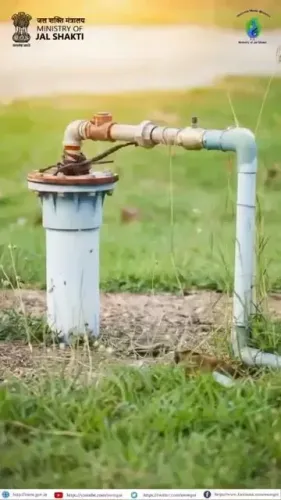
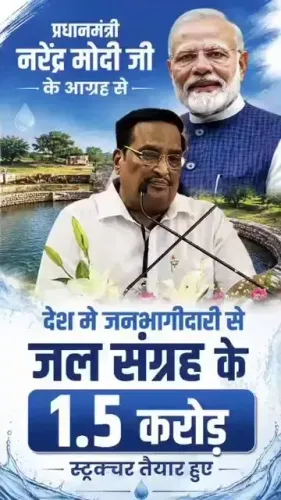
Jal Shakti Min Paatil: 1 Crore Recharge Borewells Installed Nationwide
Synopsis
Union Jal Shakti Minister C. R. Paatil announced on 12 July 2026 that over one crore water recharge borewells have been installed across India through public participation, and shared how PM Modi's conservation message reached schoolchildren in Muradnagar, Uttar Pradesh, who pledged to 'Save Water, Save Life'.
Key Takeaways
Over one crore water recharge borewells have been installed nationwide through community participation, according to Minister C.
The installations are framed as a direct outcome of PM Narendra Modi's call for public involvement in water conservation.
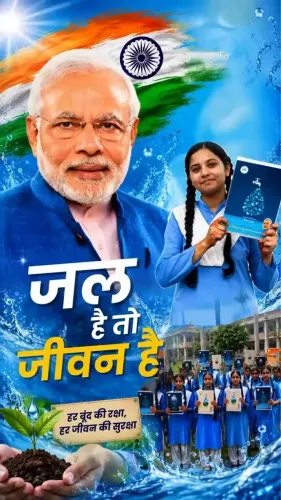
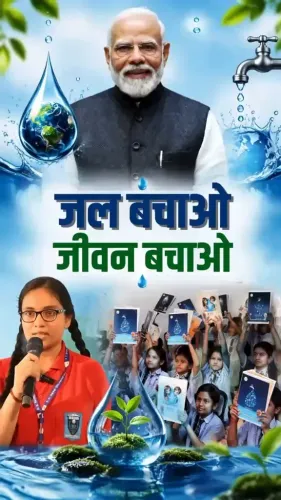
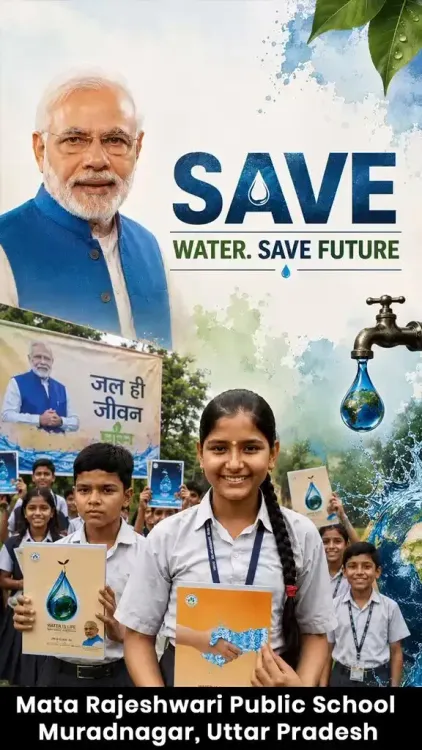
Students at Mata Rajeshwari Public School, Muradnagar, Uttar Pradesh took a 'Save Water, Save Life' pledge as part of an outreach event.
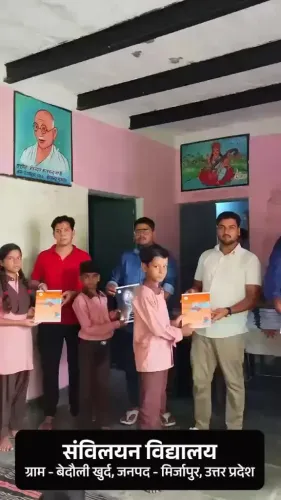
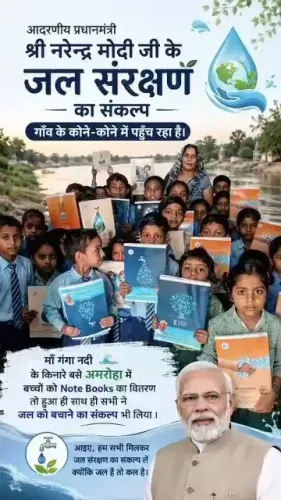
Notebooks were distributed to schoolchildren at the Muradnagar event alongside the awareness session.
The initiative draws on the Jal Shakti Abhiyan , launched in 2019 , which targets rainwater harvesting and artificial groundwater recharge.
Uttar Pradesh faces significant groundwater stress, making community-level conservation outreach especially relevant for the state.
Union Jal Shakti Minister C. R. Paatil on Sunday, 12 July 2026 highlighted that over one crore water recharge borewells have been installed across India through public participation, citing a message from Prime Minister Narendra Modi on community-driven water conservation. The minister also noted that PM Modi's water-saving message was carried to schoolchildren at Mata Rajeshwari Public School in Muradnagar, Uttar Pradesh, where students took a pledge under the theme 'Save Water, Save Life'.
Context
Paatil's post, written in Hindi, conveyed that "janbhagidari se ab tak ek crore se bhi zyada water recharge borewell poore desh mein lagaye ja chuke hain" — meaning that through people's participation, more than one crore water recharge borewells have been installed across the country. The minister framed this as a direct outcome of PM Modi's repeated call for mass involvement in groundwater replenishment. At the Muradnagar school event, students not only took the conservation pledge but were also distributed notebooks as part of the awareness drive.
Policy Backdrop
The push for community-level recharge structures is rooted in the Jal Shakti Abhiyan, launched in 2019 as a nationwide campaign for rainwater harvesting, artificial groundwater recharge, and public awareness. The campaign runs in annual phases, targeting water-stressed districts and over-exploited groundwater blocks across states. The broader Jal Jeevan Mission, also announced in 2019, complements this by focusing on functional household tap connections while emphasising source sustainability.
Successive central governments have integrated community-driven recharge models into national water policy since the 2010s, but the current administration has scaled these through repeated annual campaigns and grassroots school outreach. The twin-track approach — infrastructure installation alongside awareness generation — reflects a deliberate effort to address India's groundwater depletion crisis, which affects hundreds of over-exploited blocks nationwide.
Stakeholders and Impact
The primary beneficiaries of recharge borewell installations are rural and peri-urban households dependent on groundwater for drinking and irrigation. School outreach programmes like the one at Mata Rajeshwari Public School target younger citizens as long-term custodians of water resources, embedding conservation habits early. The distribution of notebooks alongside the pledge ceremony signals an effort to extend the message beyond the event itself, into homes and communities.
Uttar Pradesh, where the Muradnagar event took place, is among India's most populous states and faces significant groundwater stress in several districts, making such outreach particularly relevant to its rural and semi-urban populations.
What's Next
State-level progress reports on recharge structures under the Jal Shakti Abhiyan will be closely watched to assess whether the one-crore milestone translates into measurable improvements in groundwater levels. There is also growing discussion around the possible inclusion of formal water conservation modules in school curricula, which would institutionalise the kind of awareness drive seen in Muradnagar. The ministry's continued use of high-visibility public events and social media outreach suggests that community mobilisation will remain a central pillar of India's water security strategy in the near term.
Point of View
The ministry is attempting to convert a policy target into a social norm, which is harder to reverse than a government scheme. The one-crore borewell figure, if verified through independent audits, would represent one of the more tangible deliverables of the Jal Shakti Abhiyan and could become a key data point in the government's water-security messaging. However, the real test will be whether these structures improve groundwater levels in over-exploited blocks — a metric that state-level hydrology reports will eventually have to answer.
NationPress
12 Jul 2026
Frequently Asked Questions
What is a water recharge borewell and how does it help?
A water recharge borewell is a structure that channels rainwater or surface runoff directly into underground aquifers, replenishing groundwater levels. It helps combat depletion in areas where extraction exceeds natural recharge, benefiting farmers and households dependent on groundwater.
What is the Jal Shakti Abhiyan?
The Jal Shakti Abhiyan is a central government campaign launched in 2019 to promote rainwater harvesting, construction of recharge structures, and public awareness on water conservation, run in annual phases targeting water-stressed districts across India.
What did CR Paatil say about water recharge borewells?
Union Jal Shakti Minister C. R. Paatil stated on 12 July 2026 that over one crore water recharge borewells have been installed across India through public participation, citing PM Modi's conservation message as the driving force.
What happened at Mata Rajeshwari Public School in Muradnagar?
Schoolchildren at Mata Rajeshwari Public School in Muradnagar, Uttar Pradesh, took a 'Save Water, Save Life' pledge as part of a water conservation awareness event. Notebooks were also distributed to students during the programme.
What is janbhagidari in the context of water conservation?
'Janbhagidari' means public or community participation. In the context of water conservation, it refers to citizens, schools, and local bodies actively participating in building recharge structures and adopting water-saving practices, as promoted under the Jal Shakti Abhiyan.