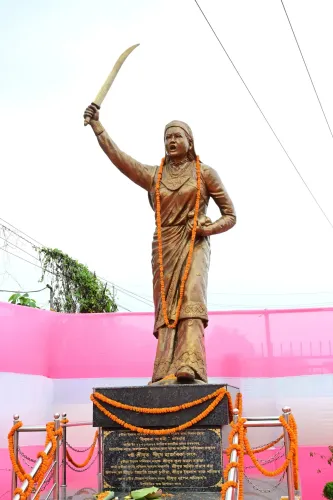
CM Himanta Reaffirms Assam's Ahom Heritage Commitment
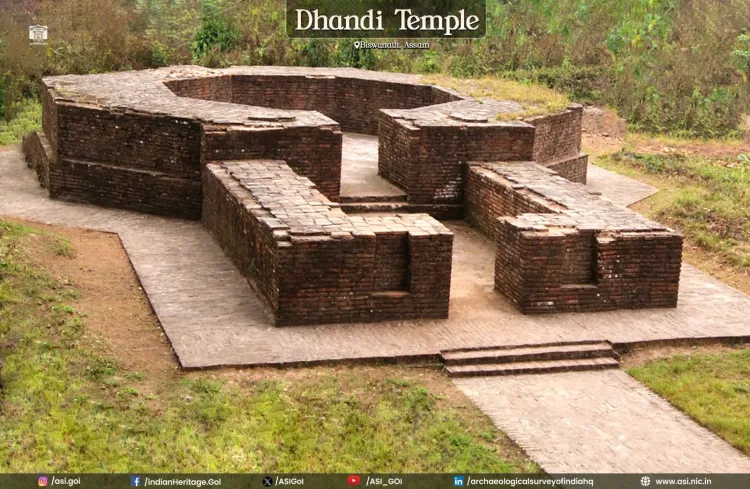
Synopsis
Assam Chief Minister Himanta Biswa Sarma has publicly reaffirmed his government's commitment to preserving the Ahom dynasty's cultural legacy, spotlighting the UNESCO-listed Charaideo Maidams and the Dhandi Temple as cornerstones of Assam's identity and priority conservation targets.
Key Takeaways
CM Himanta Biswa Sarma on 12 July 2026 reaffirmed the Assam government's commitment to Ahom heritage preservation.
The Charaideo Maidams — royal burial mounds of Ahom kings — hold UNESCO World Heritage status, placing Assam on the global cultural map.
The Dhandi Temple was cited alongside Charaideo as a priority site, reflecting a broad-based conservation agenda.
The Ahom dynasty ruled Assam from the 13th to 19th centuries , shaping the region's faith, architecture, and statecraft.
The ASI has protected Ahom-era monuments under national law since the 1950s ; state efforts now complement this with identity-led branding and tourism promotion.
Concrete conservation tenders and possible further UNESCO nominations remain the key indicators to watch.
Assam Chief Minister Himanta Biswa Sarma on Sunday, 12 July 2026, reaffirmed the state government's commitment to preserving the Ahom dynasty's cultural and architectural legacy, citing sites ranging from the Dhandi Temple to the UNESCO World Heritage-listed Charaideo Maidams as central to Assam's identity.
Context
In his post, CM Sarma described the Ahom legacy as encompassing 'faith, architecture and statecraft' that 'continues to define Assam's identity.' He framed the preservation of these sites — from the Dhandi Temple to the Charaideo Maidams — as 'one of our foremost commitments,' signalling that heritage conservation remains a live policy priority for his administration.
The Charaideo Maidams, a series of royal burial mounds of the Ahom kings located in Charaideo district, earned inscription on the UNESCO World Heritage List for their unique funerary architecture and historical significance. The inscription marked a milestone for Assam's cultural diplomacy and placed the state on the global heritage map.
Policy Backdrop
The Ahom dynasty ruled large parts of present-day Assam from the 13th to the 19th century, leaving behind a distinct tradition of statecraft, religious syncretism, and monumental architecture. Their resistance to Mughal expansion — most famously at the Battle of Saraighat in 1671 — remains a touchstone of Assamese pride and regional identity.
The Archaeological Survey of India (ASI) has maintained several Ahom-era monuments under the Ancient Monuments and Archaeological Sites and Remains Act since the 1950s. In parallel, state governments across the Northeast have increasingly linked heritage preservation with regional identity assertion and tourism promotion, channelling efforts through central schemes such as Swadesh Darshan.
Successive Assam administrations have highlighted Ahom legacy sites to differentiate the state's cultural branding while seeking additional central and international funding for conservation. CM Sarma's BJP-led government has continued and amplified this approach since taking office in 2021.
Stakeholders and Impact
The Ahom community, whose descendants remain an influential demographic in upper Assam, views the preservation of these sites as a matter of cultural dignity and historical recognition. Heritage tourists — both domestic and international — represent a growing constituency whose footfall at sites like Charaideo and the Kareng Ghar palace complex has risen alongside the UNESCO designation's global profile.
Conservation commitments at sites like the Dhandi Temple also carry economic implications for local communities dependent on pilgrimage and tourism. A sustained government focus can unlock funding from bodies such as UNESCO and the Ministry of Culture, as well as private heritage-tourism investment.
What's Next
Observers will watch for concrete follow-through: whether the Assam government or the ASI issues conservation tenders for the Dhandi Temple and other Ahom-era sites, and whether the state pursues additional UNESCO-related nominations or international funding mechanisms. The government's ability to translate stated commitment into funded, time-bound conservation projects will be the measure of this pledge's impact.
With the Charaideo Maidams now firmly on the world heritage map, Assam has both the reputational incentive and the institutional scaffolding to deepen its Ahom heritage programme — and CM Sarma's public reaffirmation sets a political benchmark against which future action will be judged.
Point of View
Specifically Ahom, cultural pride — a narrative that simultaneously appeals to indigenous sentiment and sidesteps more contentious contemporary fault lines. By invoking both a local temple and a UNESCO-recognised site in the same breath, the government signals ambitions that span grassroots devotion and international prestige. The UNESCO inscription of the Charaideo Maidams has given this heritage agenda a credibility boost that earlier administrations lacked, making conservation commitments easier to project as governance wins rather than mere symbolism. Whether the rhetoric translates into budgeted, time-bound conservation action will determine if this represents substantive cultural policy or strategic positioning ahead of electoral cycles.
NationPress
11 Oct 2026
Frequently Asked Questions
What are the Charaideo Maidams and why are they significant?
The Charaideo Maidams are a series of royal burial mounds of the Ahom kings located in Charaideo district, Assam. They were inscribed on the UNESCO World Heritage List for their unique funerary architecture and their testimony to the Ahom dynasty's six-century rule over the region.
Who were the Ahoms and what is their legacy in Assam?
The Ahom dynasty ruled large parts of present-day Assam from the 13th to the 19th century. They left behind a distinct tradition of statecraft, religious syncretism, and monumental architecture, and are celebrated for resisting Mughal expansion — most famously at the Battle of Saraighat in 1671.
What is the Dhandi Temple in Assam?
The Dhandi Temple is an Ahom-era religious site in Assam that CM Himanta Biswa Sarma has cited as a priority heritage conservation target alongside the UNESCO-listed Charaideo Maidams.
What is Assam CM Himanta Biswa Sarma's stance on cultural heritage?
CM Sarma has consistently framed Ahom cultural heritage as central to Assam's identity, publicly committing his government to preserving sites like the Charaideo Maidams and the Dhandi Temple through state and central conservation mechanisms.
How does the UNESCO listing of Charaideo Maidams benefit Assam?
The UNESCO World Heritage inscription raises Charaideo's international profile, potentially unlocking global conservation funding and boosting heritage tourism, while also strengthening Assam's cultural diplomacy and the state government's narrative around regional identity.