Giriraj Singh Meets Tamil Nadu Textiles Minister to Boost Sector Ties
Synopsis
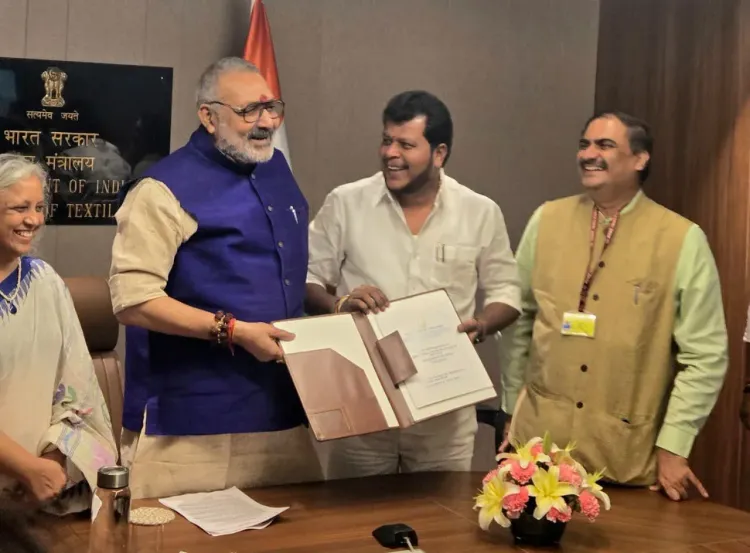
Union Textiles Minister Giriraj Singh met Tamil Nadu's Handlooms and Textiles Minister M. Vijay Balaji on 13 July 2026 to discuss textile sector growth, centre-state coordination, and expanding market access for Tamil Nadu's local textile and handicraft products under the Viksit Bharat 2047 and Aatmanirbhar Bharat frameworks.
Key Takeaways
Union Textiles Minister Giriraj Singh held a formal bilateral meeting with Tamil Nadu Handlooms, Textiles and Khadi Minister M.
Vijay Balaji on 13 July 2026 .
Discussions covered textile sector development , centre-state coordination, and connecting Tamil Nadu's local textile and handicraft products to new markets.
Tamil Nadu is one of India's largest textile-producing states, with significant concentrations of handloom clusters, apparel units and textile MSMEs.
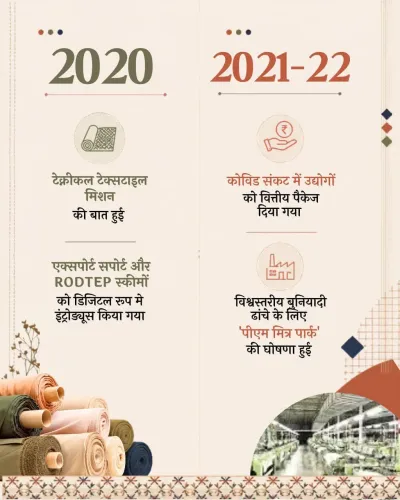
The meeting aligns with central schemes including the National Handloom Development Programme (2015) and the PM MITRA integrated textile parks scheme (2021).
The engagement is framed under the Viksit Bharat 2047 and Aatmanirbhar Bharat policy frameworks emphasising value addition and reduced import dependence.
Follow-up actions expected include joint market-access programmes and potential inclusion of Tamil Nadu clusters in national textile export promotion events.
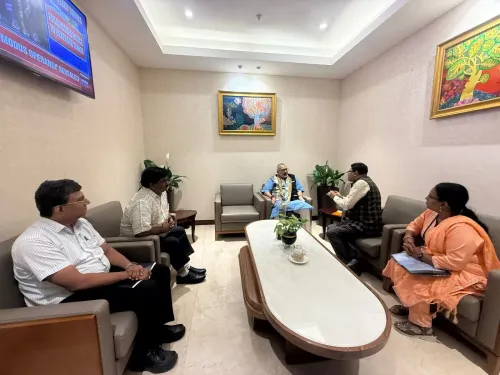
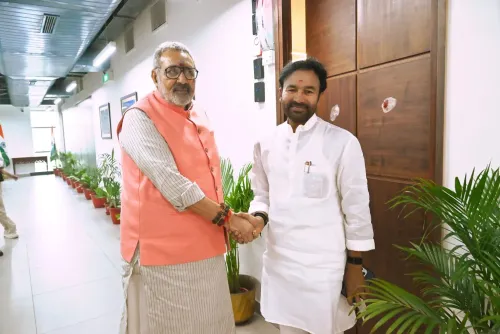
Union Textiles Minister Giriraj Singh held a formal meeting with Tamil Nadu's Handlooms, Textiles and Khadi Minister M. Vijay Balaji on Monday, 13 July 2026, to discuss cooperation on textile sector development, centre-state coordination, and expanding market access for the state's local textile and handicraft products.
Posting about the meeting on X, Singh wrote in Hindi: 'aaj Tamil Nadu sarkar ke maanniya hathkargha, vastra evam khadi mantri shri M. Vijay Balaji ji ke saath aupcharik charcha hui' — 'Today I held a formal discussion with the honourable Handlooms, Textiles and Khadi Minister of the Tamil Nadu government, Shri M. Vijay Balaji.' He added that discussions covered growth in the textiles sector, centre-state coordination, and ways to give Tamil Nadu's local textile and handicraft products wider recognition and connect them to new markets. The post was tagged with the hashtags #Textiles, #ViksitBharat2047, and #AatmanirbharBharat.
Context
Tamil Nadu is one of India's most significant textile-producing states, accounting for a substantial share of the country's cotton yarn, fabric and made-up garment output. The state hosts a dense network of handloom clusters, apparel units and textile MSMEs, making it a critical partner for any national textile policy initiative. Coordination between the central Ministry of Textiles and state governments has intensified over the past decade as both tiers seek to align production clusters with export and self-reliance goals.
The meeting reflects a broader pattern of structured bilateral engagements that have become a regular feature of textile governance, particularly since 2014. Such interactions allow the union ministry to understand ground-level constraints in major producing states and tailor central scheme delivery accordingly.
Policy Backdrop
The Ministry of Textiles has been running the National Handloom Development Programme since 2015, which supports weavers through cluster development and market linkages — areas directly relevant to Tamil Nadu's artisan communities. In 2021, the Union government launched the PM MITRA scheme to establish integrated textile parks across multiple states, aimed at strengthening infrastructure and value chains from fibre to finished product.
Both the Viksit Bharat 2047 and Aatmanirbhar Bharat frameworks — explicitly referenced in Singh's post — emphasise value addition in traditional sectors and reduced import dependence, giving fresh urgency to branding and market-access discussions for state-level textile clusters.
Stakeholders and Impact
The beneficiaries of any follow-through from this meeting would include Tamil Nadu's handloom weavers, textile MSMEs, and exporters who depend on national-level platforms and schemes to access global and domestic markets. Connecting local handicraft products to 'new markets' — as Singh described — could involve inclusion in central export promotion events, e-commerce integration, or GI-tag branding drives.
For handloom weavers in particular, centre-state coordination on cluster development and market linkages has historically been the difference between scheme funds reaching artisans on the ground and remaining unutilised at the state exchequer level.
What's Next
Observers will watch for follow-up announcements on joint market-access programmes or the inclusion of Tamil Nadu textile and handicraft clusters in forthcoming national export promotion events organised by the Ministry of Textiles. Parliamentary questions in the next budget session on state-wise utilisation of central textile schemes are also likely to reflect the outcomes of such bilateral engagements.
The meeting signals that centre-state dialogue on textiles will remain active through 2026, with Tamil Nadu's outsized role in India's textile economy ensuring it stays a focal point for policy coordination under the Viksit Bharat 2047 roadmap.
Point of View
But it carries added weight given Tamil Nadu's outsized share of India's fabric and yarn output. Framing the discussion under Viksit Bharat 2047 and Aatmanirbhar Bharat signals that the BJP-led union government is keen to co-opt even opposition-ruled states into its signature policy narratives. The emphasis on branding local handicrafts and opening new markets suggests the ministry is moving beyond infrastructure-centric schemes toward demand-side interventions — a subtle but meaningful shift. Whether this bilateral warmth translates into measurable scheme utilisation or export gains for Tamil Nadu weavers will be the real test of the meeting's substance.
NationPress
12 Oct 2026
Frequently Asked Questions
Why did Giriraj Singh meet the Tamil Nadu Textiles Minister?
Union Textiles Minister Giriraj Singh met Tamil Nadu's Handlooms, Textiles and Khadi Minister M. Vijay Balaji on 13 July 2026 to discuss textile sector development, centre-state coordination, and ways to give Tamil Nadu's local textile and handicraft products wider recognition and access to new markets.
What is the PM MITRA scheme and how does it relate to Tamil Nadu?
The PM MITRA scheme, launched in 2021, aims to set up integrated textile parks across multiple states to strengthen infrastructure and value chains. Tamil Nadu, as a major textile-producing state, is a key target for such infrastructure investments under the scheme.
What is the National Handloom Development Programme?
The National Handloom Development Programme has been run by the Ministry of Textiles since 2015 to support handloom weavers through cluster development and market linkages, directly benefiting artisan communities in states like Tamil Nadu.
What does Viksit Bharat 2047 mean for the textiles sector?
Viksit Bharat 2047 is India's policy vision for becoming a developed nation by 2047. For textiles, it emphasises value addition in traditional sectors, reducing import dependence, and connecting local producers including handloom weavers to domestic and global markets.
How important is Tamil Nadu to India's textile industry?
Tamil Nadu accounts for a substantial share of India's cotton yarn, fabric and made-up garment output and hosts a dense network of handloom clusters, apparel units and textile MSMEs, making it one of the most critical states for national textile policy.