Kishan Reddy Meets Giriraj Singh on Telangana Textile Growth
Synopsis
Union Coal and Mines Minister G. Kishan Reddy met Union Textiles Minister Giriraj Singh in New Delhi to discuss developmental initiatives and the growth of Telangana's textile sector, including handlooms and apparel manufacturing, signalling deeper central-state coordination on industrial priorities for the southern state.
Key Takeaways
Kishan Reddy met Union Textiles Minister Giriraj Singh in New Delhi on June 3, 2026.
Talks focused on developmental initiatives and the growth of Telangana's textile sector.
Telangana hosts textile hubs in Sircilla, Warangal and the Kakatiya Mega Textile Park.
Central textile policy is anchored in the 2021 PLI scheme and PM MITRA parks.
Stakeholders include Telangana textile units, handloom weavers and apparel exporters.
No specific financial commitments or project decisions were disclosed in the post.
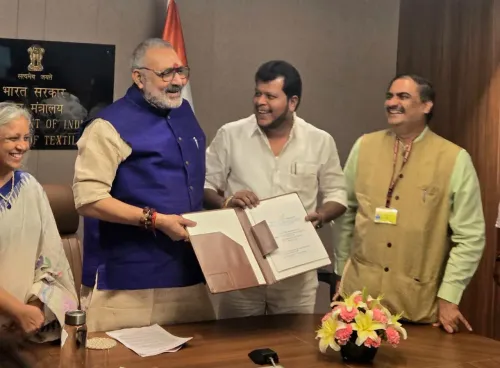
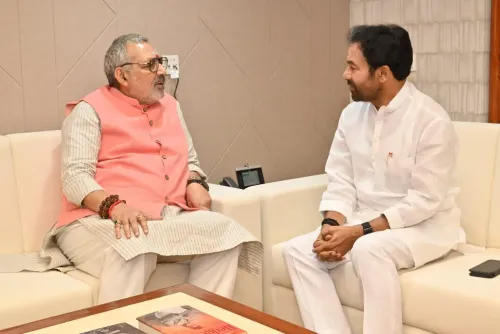
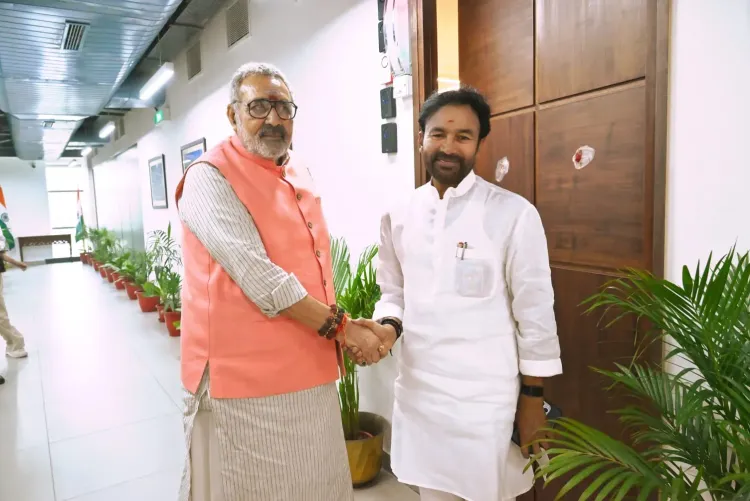
Union Coal and Mines Minister G. Kishan Reddy met Union Textiles Minister Giriraj Singh in New Delhi on Wednesday, June 3, 2026, to discuss developmental initiatives and the growth of the textile sector in Telangana. Reddy, who also serves as the BJP's Telangana state president, said the talks covered 'various developmental initiatives, issues of public importance, and matters concerning the growth and development of the textile sector in Telangana'.
Context
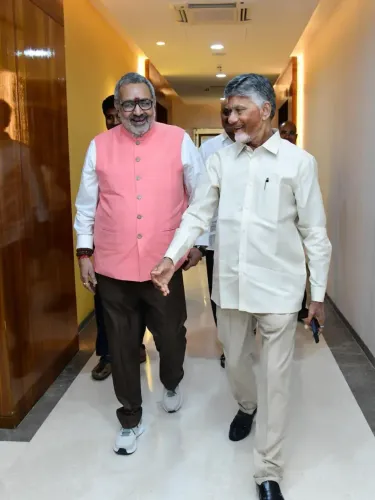
Posting on X after the meeting, Reddy described it as 'an engaging and productive meeting' with the Textiles Minister. Two images accompanied the post, signalling a formal bilateral exchange between two senior Cabinet colleagues at the Centre.
The interaction comes as Telangana, with established hubs in Sircilla, Warangal and the upcoming Kakatiya Mega Textile Park, looks to deepen its share of India's apparel and handloom output. As the senior-most Union Minister from Telangana in the current Cabinet, Reddy has positioned himself as a bridge between the state's industrial aspirations and central ministries.
Policy backdrop
The Centre's textile push is anchored in the Production Linked Incentive (PLI) scheme for textiles, approved in 2021 to attract investment into man-made fibre fabrics, garments and technical textiles. It is complemented by the PM MITRA (Mega Integrated Textile Region and Apparel) parks initiative, under which large integrated parks are being developed across participating states.
Telangana's textile ecosystem spans cotton ginning, power-loom clusters and a sizeable handloom community, and the state has actively courted apparel investors with plug-and-play infrastructure. Aligning these state-level offerings with central schemes typically requires close coordination on land, common facilities, skilling and incentive disbursement — the kind of bureaucratic interface that Wednesday's meeting appears to have addressed.
Stakeholders and impact
The immediate stakeholders are Telangana's textile units, handloom weavers in districts such as Sircilla and Pochampally, and apparel exporters who depend on central duty-drawback and incentive frameworks. Faster clearances or fresh allocations under central schemes can translate into capacity expansion and jobs, particularly for women workers who form a large share of the garment workforce.
Politically, the engagement also matters for the BJP in Telangana, where Reddy is steering the party's organisational push. Demonstrating central attention to the state's industrial agenda — independent of the state government — is a recurring theme in his public messaging.
What's next
Reddy did not disclose specific decisions or financial commitments from the meeting. Follow-up announcements, if any, are likely to surface through the Ministry of Textiles on infrastructure support, cluster funding or skilling tie-ups for Telangana.
For now, the meeting underscores a broader pattern of Union ministers coordinating on state-specific industrial agendas to dovetail with national manufacturing and export targets. Whether the conversation translates into tangible projects on the ground will depend on subsequent central-state engagement and the pace of scheme rollouts in the months ahead.
Point of View
Who wears both a Cabinet hat and the BJP Telangana state president's hat, foregrounding textile sector engagement is as much an economic message as a political one in a state where the party is still building scale. The broader arc is the Centre's attempt to use PLI and PM MITRA to redistribute textile investment beyond traditional clusters in the west and south. The real test will be whether Telangana sees fresh sanctioned projects or scheme drawdowns in the coming quarters.
NationPress
16 Sept 2026
Frequently Asked Questions
Who did G. Kishan Reddy meet on June 3, 2026?
G. Kishan Reddy met Union Textiles Minister Giriraj Singh in New Delhi on June 3, 2026. The two leaders discussed developmental initiatives and the growth of Telangana's textile sector.
What was discussed in the Kishan Reddy-Giriraj Singh meeting?
The leaders discussed developmental initiatives, issues of public importance and matters concerning the growth of Telangana's textile sector. Specific project decisions or funding commitments were not disclosed in the post.
What is the PLI scheme for textiles?
The Production Linked Incentive (PLI) scheme for textiles is a central initiative approved in 2021 to attract investment in man-made fibre, apparel and technical textile segments. It offers incentives linked to incremental turnover and investment thresholds.
Which are the main textile hubs in Telangana?
Telangana's key textile and handloom hubs include Sircilla, Warangal and Pochampally, along with the upcoming Kakatiya Mega Textile Park. These clusters cover power-loom weaving, handlooms and apparel manufacturing.
What role does G. Kishan Reddy hold in the Union Cabinet?
G. Kishan Reddy is the Union Minister of Coal and Mines in the Government of India. He also serves as the BJP's Telangana state president.