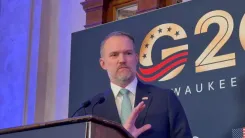
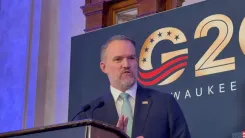
Giriraj Singh Reviews Telangana Handloom, NIFT Initiatives
Synopsis
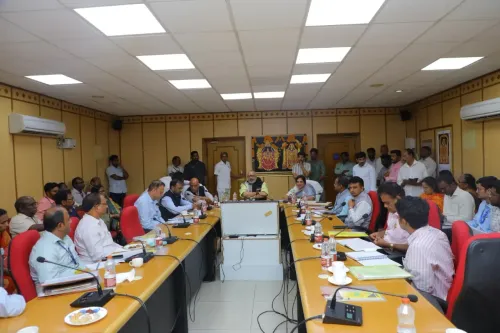
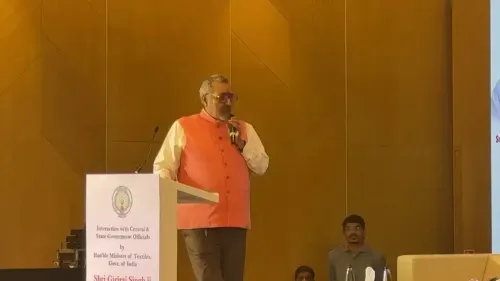
Union Textiles Minister Giriraj Singh visited Telangana on 3 July 2026, chairing a review meeting with handloom, handicrafts, textiles and NIFT officials. Discussions covered weaver clusters, handloom malls, skill development, re-export certification, and NIFT placements — all framed under the Viksit Bharat 2047 agenda.
Key Takeaways
Union Textiles Minister Giriraj Singh conducted a field visit to Telangana on 3 July 2026 .
A detailed review meeting was held with officials from handloom, handicrafts, textiles committee and NIFT .
Arun Kumar , Head of Office (WSC) and Development Commissioner (Handlooms), briefed the Minister on Telangana's handloom industry, clusters, handloom malls and weaver achievements.
Discussions included re-export certification , textiles testing facilities, and NIFT's academic, skill development and campus placement programmes.
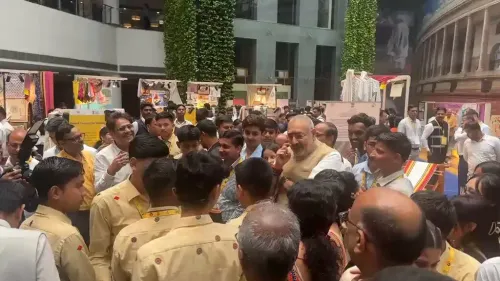
The Minister directly examined the work, products and innovations of weavers and artisans during the visit.
The visit was framed under the #ViksitBharat2047 goal of empowering the textiles and handicrafts sector.
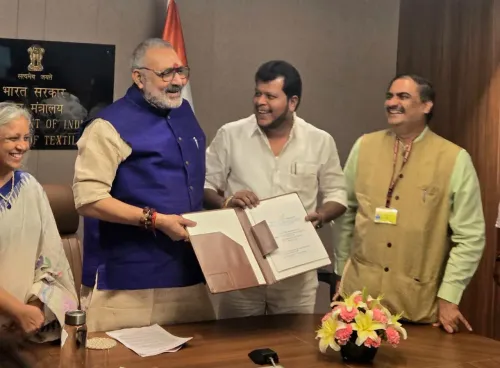
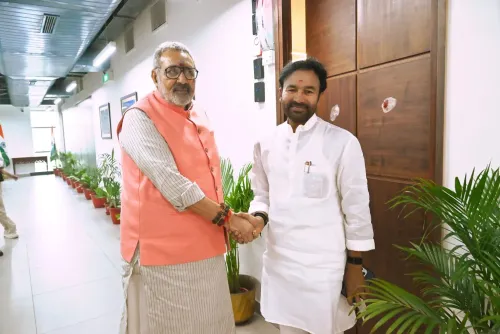
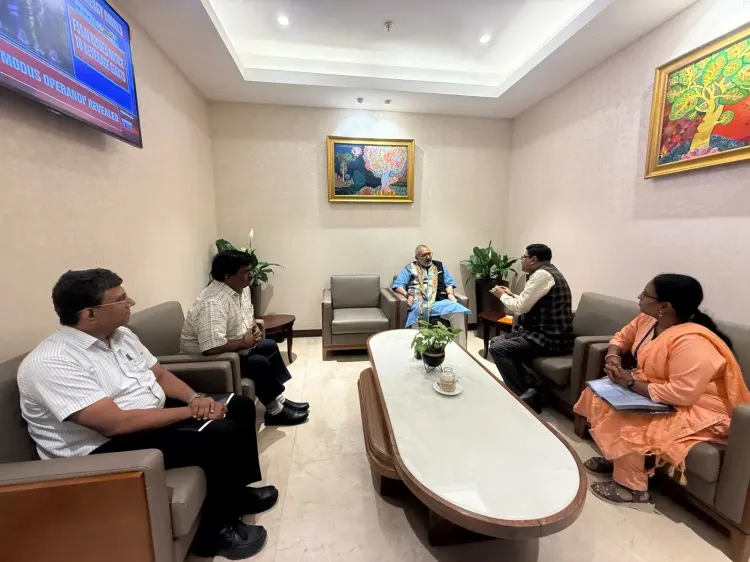
Union Textiles Minister Giriraj Singh visited Telangana on Friday, 3 July 2026, where he was received by Dr. S. Arun Kumar, Head of Office at the Weavers Service Centre and Development Commissioner (Handlooms), before chairing a wide-ranging review meeting with officials from the handloom, handicrafts, textiles committee and the National Institute of Fashion Technology (NIFT).
Context
Posting on X after the visit, Minister Singh described the engagement as part of a broader effort to strengthen the textiles and handicrafts sector. 'ऐसे संवाद वस्त्र एवं हस्तशिल्प क्षेत्र को और अधिक सशक्त बनाने की दिशा में महत्वपूर्ण हैं' — ('Such dialogues are important for further empowering the textiles and handicrafts sector') — he wrote, tagging the visit under #ViksitBharat2047.
During the meeting, Dr. S. Arun Kumar briefed the Minister on the state of Telangana's handloom industry, including handloom malls, weaver clusters, skill development programmes, and notable achievements of artisans and weavers in the state.
Policy Backdrop
The Development Commissioner (Handlooms), operating under the Ministry of Textiles, is the nodal central government office responsible for implementing weaver welfare schemes, cluster development and skill initiatives nationwide. Cluster-based handloom development programmes have been a central policy tool since the early 2000s, later integrated with the Skill India Mission launched in 2015.
NIFT, established in 1986 as an autonomous body under the Ministry of Textiles, runs fashion education, skill development and campus placement programmes. At the meeting, officials discussed NIFT's academic initiatives, skill development outreach and placement outcomes alongside handloom and handicraft production, textiles testing, and re-export certification facilities available in the state.
Telangana is home to significant handloom traditions, most notably Pochampally Ikat, which has Geographical Indication status and a strong export profile. The state's weavers and artisans have historically benefited from central cluster schemes and state-level support structures.
Stakeholders and Impact
The review meeting directly concerns handloom weavers and handicraft artisans across Telangana, whose livelihoods depend on both central scheme funding and market linkages facilitated through clusters and handloom malls. The Minister personally examined the work, products, and innovations of weavers and artisans during the visit, signalling direct ministerial attention to ground-level outcomes.
Discussions on re-export certification and textiles testing facilities point to an effort to improve the export competitiveness of Telangana's textile produce. NIFT's campus placement data, also tabled at the meeting, reflects the ministry's push to integrate formal skill credentials with employment outcomes for the next generation of textile professionals.
What's Next
Ministerial review visits of this nature typically feed into scheme allocation decisions, cluster expansion proposals, and budgetary recommendations ahead of annual textile policy reviews. Stakeholders will watch for any follow-up announcements on enhanced funding for Telangana handloom clusters, expansion of handloom malls, or new central allocations for weaver welfare under the Viksit Bharat 2047 framework.
With the Ministry of Textiles maintaining a focus on preserving traditional production while scaling exports and skill pipelines, this Telangana visit reinforces a pattern of direct ministerial engagement with state-level textile ecosystems — a signal that field-level feedback may shape upcoming policy and budgetary decisions for the sector.
Point of View
Serving both a monitoring function and a political signalling role ahead of budget cycles. Giriraj Singh's Telangana visit — covering clusters, malls, re-export certification and NIFT placements in a single sitting — suggests the ministry is consolidating data points across the value chain rather than addressing isolated concerns. The framing under Viksit Bharat 2047 ties routine scheme oversight to the government's long-horizon development narrative. Whether this translates into fresh allocations or policy revisions for Telangana's weavers will be the real test of the visit's impact.
NationPress
2 Oct 2026
Frequently Asked Questions
Why did Giriraj Singh visit Telangana in July 2026?
Union Textiles Minister Giriraj Singh visited Telangana on 3 July 2026 to chair a review meeting with handloom, handicrafts, textiles and NIFT officials, examining weaver clusters, handloom malls, skill development programmes and re-export certification facilities.
What is the role of the Development Commissioner (Handlooms)?
The Development Commissioner (Handlooms) is a central government office under the Ministry of Textiles responsible for implementing weaver welfare schemes, cluster development programmes and skill initiatives across India.
What is NIFT and what was discussed at the Telangana meeting?
NIFT, the National Institute of Fashion Technology, is an autonomous body under the Ministry of Textiles established in 1986. At the Telangana meeting, officials discussed NIFT's academic programmes, skill development outreach and campus placement outcomes.
What handloom traditions is Telangana known for?
Telangana is known for significant handloom traditions including Pochampally Ikat, which holds Geographical Indication status and has a strong export profile supported by central cluster schemes.
What is Viksit Bharat 2047 and how does it relate to handlooms?
Viksit Bharat 2047 is the Indian government's long-term development vision targeting a developed India by the centenary of independence. The Ministry of Textiles has aligned handloom and handicraft sector development, including weaver welfare and export promotion, under this overarching framework.