Giriraj Singh holds textile seminar with Andhra Pradesh officials
Synopsis
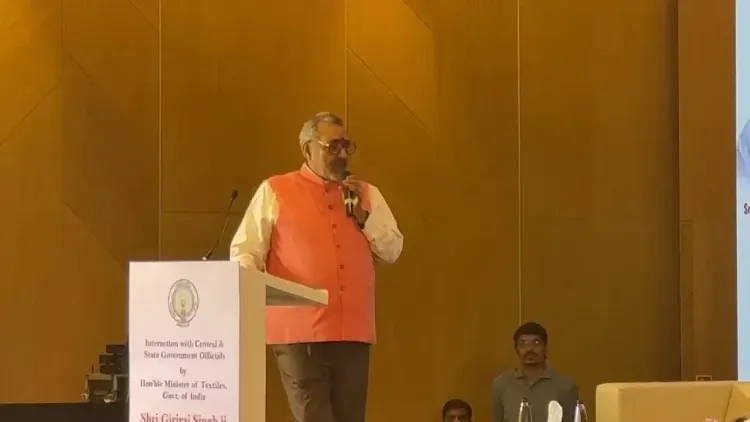
Union Textiles Minister Giriraj Singh participated in a seminar with senior Andhra Pradesh textile officials and industry representatives on 30 May 2026, sharing views on handloom and handicraft development, innovation, and employment generation under the Make in India and Atmanirbhar Bharat frameworks.
Key Takeaways
Union Textiles Minister Giriraj Singh attended a seminar with Andhra Pradesh state textile officials and industry representatives on 30 May 2026 .
Discussions covered handloom and handicraft development, innovation, employment generation, and sector growth potential.
The engagement aligns with national frameworks including Make in India (launched September 2014 ) and Atmanirbhar Bharat Abhiyan (announced May 2020 ).
Andhra Pradesh hosts established weaving clusters and a large artisan workforce, making it a key state for central textile policy outreach.
Potential outcomes include state-level action plans, pilot projects, or Ministry of Textiles guidelines on cluster development and market linkages.
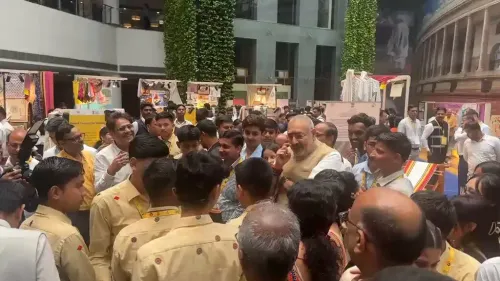
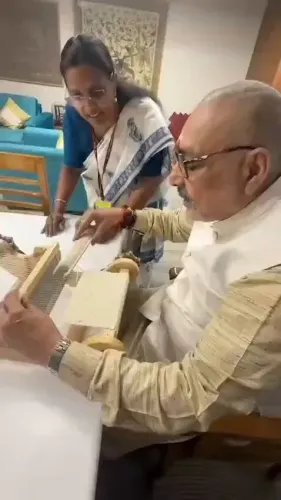
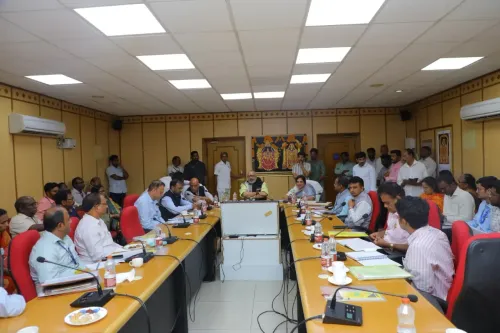
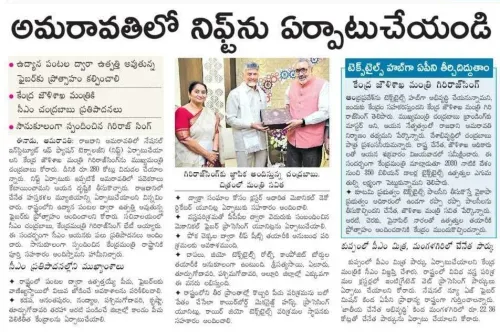
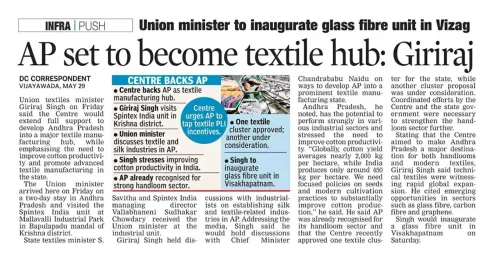
Union Textiles Minister Giriraj Singh participated in a seminar alongside senior officials of Andhra Pradesh's textiles department and prominent representatives of the textile industry on Saturday, 30 May 2026, addressing themes of handloom and handicraft development, innovation, employment generation, and the sector's growth potential.
Context
Posting on X, the minister described his participation in the sangoshtha (seminar), stating he 'shared views and addressed those present on various subjects related to the development of the handloom and handicraft sector, innovation, employment creation, and giving new momentum to the possibilities of the industry.' The event brought together state-level bureaucrats and industry figures from Andhra Pradesh, one of India's established handloom-producing states.
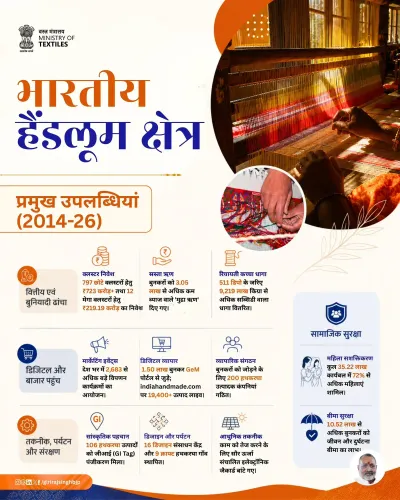
Andhra Pradesh is home to several prominent weaving clusters whose traditions span centuries. The state's handloom sector supports a significant workforce of artisans and weavers, making centre-state coordination on modernisation and market access a recurring priority.
Policy Backdrop
The seminar sits within a broader national framework anchored by two flagship initiatives. The Make in India programme, launched in September 2014, identified textiles and apparel as a priority manufacturing segment, aiming to attract investment and strengthen the domestic value chain. The Atmanirbhar Bharat Abhiyan, announced in May 2020, extended support to MSMEs and labour-intensive traditional sectors, including handlooms, as part of a self-reliance drive.
The Ministry of Textiles has consistently used centre-state seminars and consultations to align state-level clusters with these national goals, covering areas such as skill upgradation, technology infusion, and export market linkages. Andhra Pradesh's weaving traditions have frequently been targeted under modernisation and market linkage programmes flowing from these national schemes.
Stakeholders and Impact
The primary beneficiaries of policy decisions emerging from such consultations are handloom weavers, handicraft artisans, and textile MSMEs operating across Andhra Pradesh's clusters. Employment generation was explicitly cited by the minister as a key discussion point, reflecting the sector's role as one of India's largest employers after agriculture.
Industry representatives at the seminar would have had an opportunity to flag ground-level challenges — including raw material costs, market access, and competition from power-loom substitutes — directly to the Union minister. Such interactions are considered an input mechanism for scheme design and budgetary allocations at the central level.
What's Next
Observers will watch for any state-level action plans, pilot projects, or Ministry of Textiles guidelines that emerge from this centre-state engagement. Announcements related to cluster development, design innovation support, or export facilitation for Andhra Pradesh's handloom and handicraft units would be a direct downstream outcome of consultations of this kind.
As the government continues to push the #AtmanirbharBharat and #MakeInIndia agendas, ministerial outreach to state textile ecosystems is expected to intensify ahead of any forthcoming policy reviews or budget cycles.
Point of View
Which has a competitive textile ecosystem, such engagement can translate into cluster-specific allocations or export facilitation support. The timing, ahead of potential policy review cycles, suggests the Ministry of Textiles is actively mapping state-level needs to sharpen its next round of interventions.
NationPress
15 Oct 2026
Frequently Asked Questions
Why did Giriraj Singh visit Andhra Pradesh for a textile seminar?
Union Textiles Minister Giriraj Singh participated in a seminar with Andhra Pradesh state textile officials and industry representatives to discuss handloom and handicraft development, innovation, and employment generation as part of ongoing centre-state coordination under national schemes like Make in India and Atmanirbhar Bharat.
What is the significance of Andhra Pradesh in India's handloom sector?
Andhra Pradesh is home to several established weaving clusters with centuries-old traditions, supporting a large workforce of artisans and weavers. The state is frequently targeted under central modernisation and market linkage programmes.
What are the Make in India and Atmanirbhar Bharat schemes?
Make in India was launched in September 2014 to strengthen domestic manufacturing, including textiles and apparel. Atmanirbhar Bharat Abhiyan, announced in May 2020, supports MSMEs and labour-intensive traditional sectors such as handlooms as part of India's self-reliance drive.
What outcomes can be expected from the Giriraj Singh Andhra Pradesh textile seminar?
Possible outcomes include state-level action plans, pilot projects, or Ministry of Textiles guidelines on cluster development, design innovation, and export facilitation for Andhra Pradesh's handloom and handicraft units.
Who are the main beneficiaries of handloom and handicraft policy decisions?
The primary beneficiaries are handloom weavers, handicraft artisans, and textile MSMEs, particularly those operating within state clusters. Employment generation in these labour-intensive segments is a stated priority of the Ministry of Textiles.