Giriraj Singh Posts Visual Update on Textiles Ministry Engagement
Synopsis
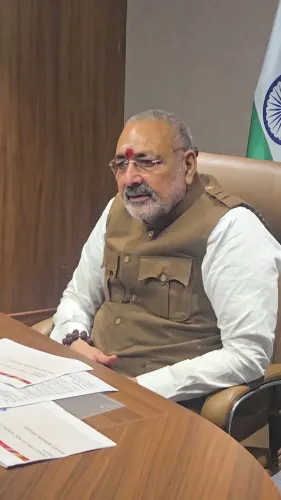
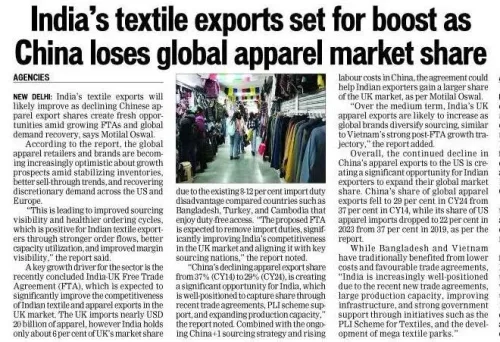
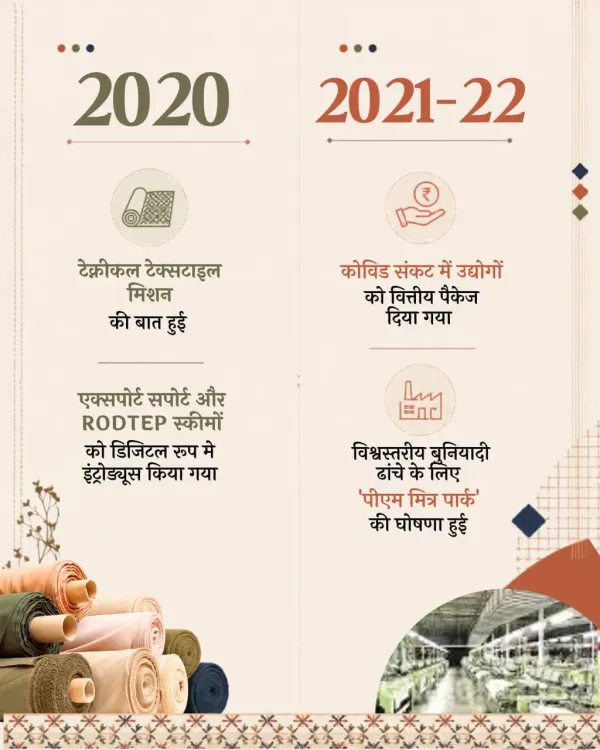
Union Textiles Minister Giriraj Singh posted a two-image visual update on X on 3 June 2026 without a caption. The post lands amid continued focus on PM MITRA parks, the textiles PLI scheme, and India's bid to expand its share of global apparel trade against competitors like China, Bangladesh and Vietnam.
Key Takeaways
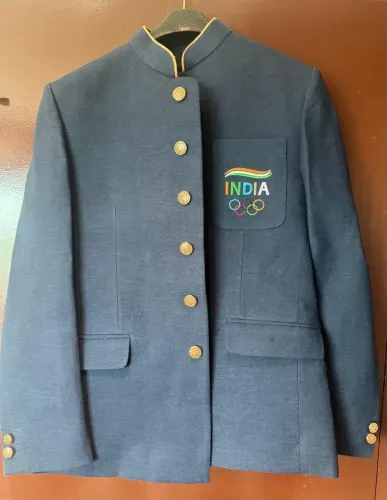
Union Textiles Minister Giriraj Singh shared a two-image post on X on 3 June 2026 .
The update carried no text caption, only visuals tied to the textiles portfolio.
The Centre approved seven PM MITRA textile parks in 2021 for integrated value-chain infrastructure.
The textiles PLI scheme targets man-made fibre garments and technical textiles.
Key stakeholders include garment MSMEs and exporters across clusters like Tiruppur, Surat and Ludhiana.
Watch the next quarterly export figures and fresh PLI disbursements for policy cues.
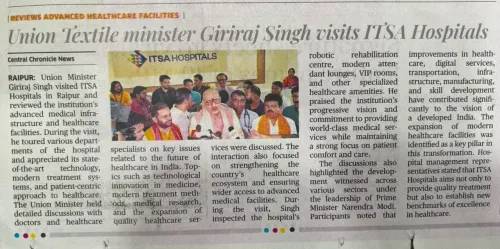
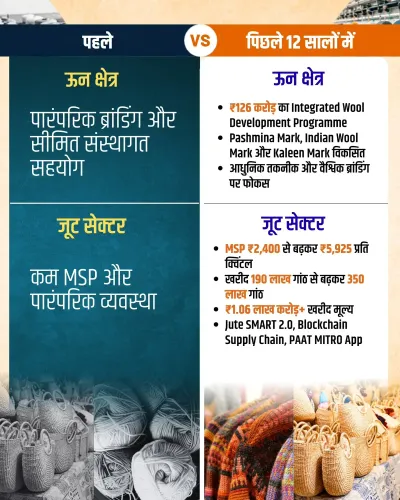
Union Textiles Minister Giriraj Singh shared a visual post on his official X handle on Wednesday, 3 June 2026, accompanied by two images relating to the textiles portfolio he heads. The minister, who is also a senior BJP leader and Lok Sabha MP from Begusarai, Bihar, used the platform to circulate the imagery without an accompanying text caption.
Context
The post is image-led, with no written message attached. Such visual updates from the Textiles Minister's handle typically accompany ministerial engagements, scheme reviews, or sectoral data releases relating to India's apparel and textiles ecosystem.
Giriraj Singh has held the textiles portfolio at the Centre and uses social media regularly to amplify ministry activity, exporter outreach, and project milestones. His posts are watched closely by the garment manufacturing community, given the ministry's role in determining fiscal incentives, infrastructure rollouts, and trade-facilitation measures.
Policy backdrop
India's textile and apparel sector is one of the largest employment-generating industries in the country and a focus area within the Centre's manufacturing-led growth strategy. In 2021, the Union government approved seven PM MITRA (Pradhan Mantri Mega Integrated Textile Region and Apparel) parks aimed at creating integrated, plug-and-play value-chain infrastructure that brings spinning, weaving, processing, dyeing, printing and garmenting onto single campuses.
The Production Linked Incentive (PLI) scheme for textiles, focused on man-made fibre garments and technical textiles, complements the parks programme. Together, these instruments form the spine of the Centre's effort to raise India's share in global textiles and apparel trade, which is currently led by China, Bangladesh and Vietnam.
Successive administrations have leaned on a combination of fiscal incentives and park-based infrastructure to scale the sector. The Textiles Ministry's social-media outreach is part of a broader pattern of communicating scheme progress directly to industry stakeholders and to political audiences in textile-cluster constituencies.
Stakeholders and impact
Textile exporters, garment MSMEs, and the cotton and synthetic-fibre value chain are the immediate stakeholders for any ministry update. The sector is concentrated in clusters across Tiruppur, Surat, Ludhiana, Bhiwandi, Noida, and Panipat, with smaller hubs in eastern and southern states.
Industry bodies tend to interpret ministerial visual updates as signals of project momentum, especially when they coincide with park groundbreakings, exporter conventions, or bilateral trade discussions. Garment MSMEs, in particular, look for cues on duty drawback rates, RoSCTL (Rebate of State and Central Taxes and Levies) continuity, and PLI disbursements that affect working capital cycles.
For the political constituency, textile clusters represent significant blocks of organised employment and small-business voters, making ministerial visibility on the portfolio politically resonant beyond the immediate economic news cycle.
What's next
Attention will turn to the next quarterly textile export figures, fresh PLI disbursement announcements, and the progress of tenders linked to the PM MITRA park sites. Any further captioned posts from the minister's handle are likely to provide the policy context that this image-only update leaves open to interpretation.
As the Centre continues to court global brands looking to diversify sourcing away from a single-country dependence, ministry-level communication — including visual updates of this kind — will remain a barometer of the sector's policy tempo.
Point of View
Visit, or data point. Coming from the Textiles Ministry, the post sits within a deliberate pattern of using social platforms to keep the sector's policy momentum visible to exporters and political audiences alike. The broader arc — PM MITRA parks, the PLI scheme, and the push to capture sourcing diverted from competing geographies — frames every such update. The signal value lies less in the single post and more in the cadence of ministerial engagement around textiles.
NationPress
17 Oct 2026
Frequently Asked Questions
Who is the Union Textiles Minister of India?
Giriraj Singh is the Union Minister of Textiles. He is a senior BJP leader and Lok Sabha MP from Begusarai in Bihar.
What is the PM MITRA scheme for textiles?
PM MITRA is the Pradhan Mantri Mega Integrated Textile Region and Apparel parks scheme. The Centre approved seven such parks in 2021 to create integrated, plug-and-play infrastructure spanning the textile value chain.
What does the textiles PLI scheme cover?
The Production Linked Incentive scheme for textiles focuses on man-made fibre garments, fabrics, and technical textiles. It offers production-linked incentives to eligible manufacturers meeting investment and turnover thresholds.
Which are India's main textile manufacturing clusters?
India's textile and garment clusters include Tiruppur, Surat, Ludhiana, Bhiwandi, Noida and Panipat. These hubs concentrate spinning, weaving, processing and garmenting capacity.
Why does the Textiles Minister post regularly on X?
Social-media updates from the Textiles Minister typically accompany scheme launches, exporter outreach, project milestones, or export-performance data releases. They serve as direct communication with industry stakeholders and political constituencies.