CM Himanta Thanks NDA MLAs After UCC Assam Bill Passes
Synopsis
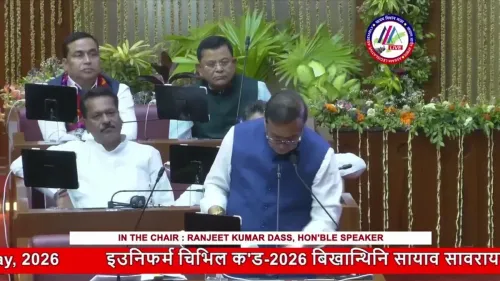
Assam Chief Minister Himanta Biswa Sarma thanked NDA legislators on 27 May 2026 after the UCC Assam Bill passed in the state assembly, framing the legislation as a historic step for women's justice under Prime Minister Modi's leadership.
Key Takeaways
The UCC Assam Bill was passed in the Assam Legislative Assembly on 27 May 2026 .
CM Himanta Biswa Sarma publicly credited all NDA legislators for voting in favour of the bill.
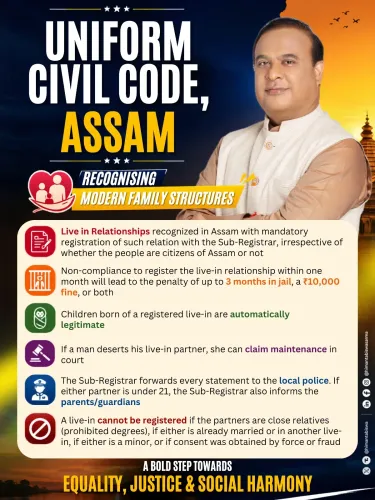
The bill aims to replace religion-specific personal laws on marriage, divorce, inheritance, and adoption with a uniform statute.
Assam follows Uttarakhand , which enacted India's first state-level UCC in February 2024 .
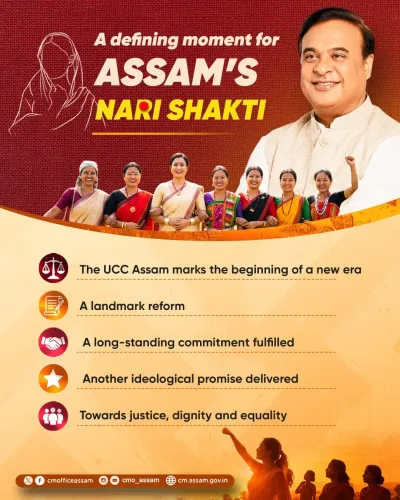
The legislation is framed by the government as advancing justice for Assam's women ( Nari Shakti ).
Constitutional challenges before the Gauhati High Court or Supreme Court are anticipated.
Assam Chief Minister Himanta Biswa Sarma on Wednesday, 27 May 2026, thanked all NDA legislators after the Assam Legislative Assembly passed the Uniform Civil Code (UCC) Assam Bill, describing it as a historic step toward justice for the state's women.
Context
Posting on X, CM Sarma wrote: 'I thank all NDA legislators who have voted for the passage of the historic #UCCAssam Bill. Under the leadership of Prime Minister Narendra Modi, we remain committed to ensure justice to Assam's Nari Shakti.' The message signals that the bill cleared the assembly floor with the support of the ruling National Democratic Alliance bloc, which holds a majority in the Assam Assembly.
The passage makes Assam one of the first states in India to legislate a Uniform Civil Code, following the trail blazed by Uttarakhand, which enacted its own UCC law in February 2024.
Policy Backdrop
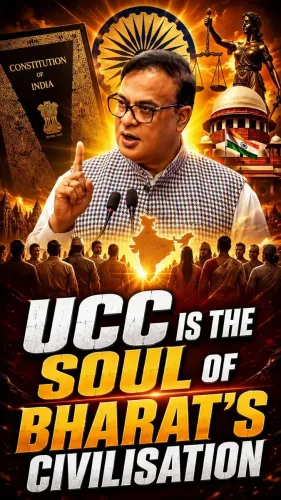
Article 44 of the Indian Constitution has since 1950 directed the state to endeavour to secure a Uniform Civil Code for all citizens — a directive principle that remained largely unimplemented for over seven decades. The BJP's national election manifestos of 2014 and 2019 explicitly committed to enacting a UCC, framing it as a measure for gender equality and national integration.
A UCC replaces religion-specific personal laws — governing marriage, divorce, inheritance, and adoption — with a single, uniform statute applicable to all citizens regardless of faith. Assam, home to a diverse population that includes significant Hindu and Muslim communities, has long been a focal point of debates over personal law reform in the Northeast.
CM Sarma, who also serves as convenor of the North-East Democratic Alliance (NEDA), has positioned the bill as part of a broader governance agenda aligned with the Modi government's national priorities.
Stakeholders and Impact
The bill's stated beneficiaries are women across Assam — referred to by CM Sarma as Nari Shakti [women's power] — who the government argues will gain equal rights in marriage, inheritance, and family matters currently governed by disparate personal laws. Civil society groups and minority community representatives have previously raised concerns about the impact of such legislation on religious and cultural practices, though the government frames the reform as a constitutional obligation.
The vote consolidates the NDA's legislative agenda in the state and is expected to energise the alliance's voter base ahead of future electoral cycles in Assam and the wider Northeast.
What's Next
Attention now shifts to the formal gazette notification of the Assam UCC Act and the framing of implementation rules that will govern how the law is applied on the ground. Legal experts and civil liberties groups are expected to scrutinise the legislation closely, and constitutional challenges before the Gauhati High Court or the Supreme Court of India remain a distinct possibility. How swiftly the state government moves to operationalise the law will be a key indicator of its commitment to the reform.
Point of View
Moving the agenda from a national manifesto promise to enacted state law. By crediting both NDA legislators and Prime Minister Modi in the same breath, CM Sarma is reinforcing the Centre-state alignment that defines BJP governance in the Northeast. The framing around 'Nari Shakti' is deliberate — it positions a constitutionally contested reform as a women's rights issue, making it harder for opponents to challenge without appearing to oppose gender equality. The real test will be implementation and the judicial scrutiny that almost certainly follows.
NationPress
11 Oct 2026
Frequently Asked Questions
What is the UCC Assam Bill?
The UCC Assam Bill is a state legislation that introduces a Uniform Civil Code in Assam, replacing religion-specific personal laws on marriage, divorce, inheritance, and adoption with a single statute applicable to all citizens regardless of faith.
When was the UCC Assam Bill passed?
The UCC Assam Bill was passed in the Assam Legislative Assembly on 27 May 2026 .
Which state was the first to pass a Uniform Civil Code in India?
Uttarakhand was the first Indian state to pass a Uniform Civil Code law, doing so in February 2024 , ahead of Assam.
What does Nari Shakti mean in the context of the UCC Assam Bill?
Nari Shakti means 'women's power' in Hindi. CM Sarma used the term to describe Assam's women as the primary beneficiaries of the UCC, arguing the law will grant them equal rights in family and personal matters.
Can the UCC Assam Bill be challenged in court?
Yes. Legal experts expect that constitutional challenges to the Assam UCC Act could be filed before the Gauhati High Court or the Supreme Court of India , likely questioning whether a state legislature has the competence to enact a uniform civil code.