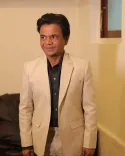
CM Himanta Exempts Assam Tribal Communities From UCC
Synopsis
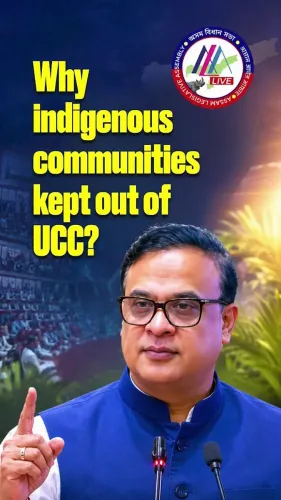
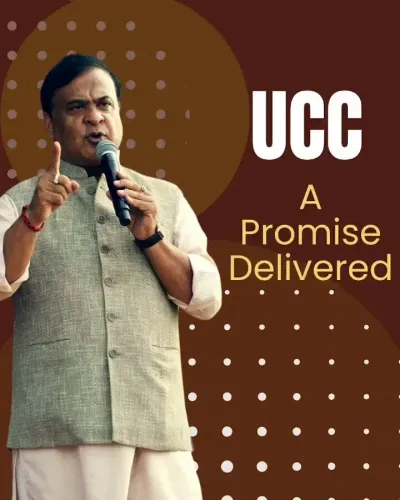
Assam CM Himanta Biswa Sarma announced on May 28, 2026, that Janjatiya indigenous communities will be exempt from the proposed UCCAssam, recognising their self-regulatory customary traditions and the central role of women within them.
Key Takeaways
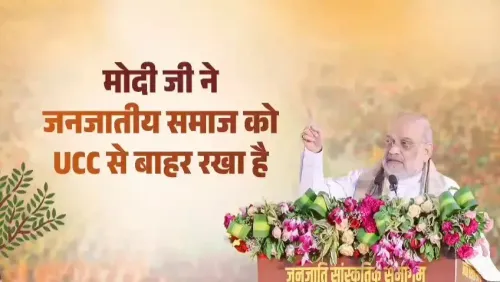
Assam CM Himanta Biswa Sarma announced on May 28, 2026 that Janjatiya communities will be kept outside the purview of UCCAssam .
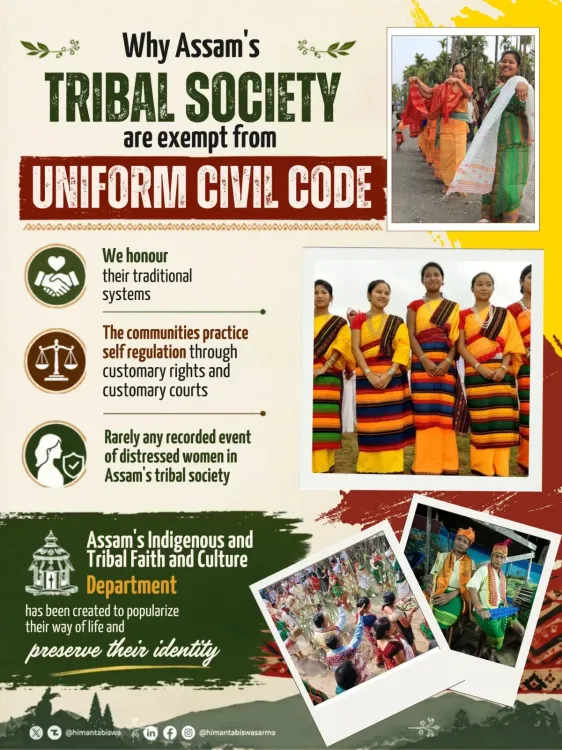
The exemption is framed as formal recognition of tribal communities' centuries-old traditions, faith systems, and customary self-regulation.
Women are identified by the Chief Minister as central to Janjatiya social and cultural systems.
The move aligns with the Sixth Schedule of the Indian Constitution , which protects tribal customary law through Autonomous District Councils in Assam .
Assam follows a pattern set by Uttarakhand's UCC, which also carved out exemptions for Scheduled Tribe communities.
The final UCCAssam draft and formal responses from tribal autonomous councils remain awaited.
Assam Chief Minister Himanta Biswa Sarma on Thursday, May 28, 2026, announced that the state's Janjatiya (indigenous tribal) communities will be kept outside the purview of the proposed Uniform Civil Code for Assam (#UCCAssam), citing their centuries-old traditions, faith systems, and self-regulatory customs as the basis for the exemption.
Context
Posting on X, CM Sarma stated that Janjatiya communities have 'preserved their traditions, faith and social systems for generations, women being central to these.' He described their self-regulation as 'a model to emulate for all' and said the exemption is a formal mark of recognition of their customs. The announcement signals a significant carve-out within the broader UCC framework the Assam government is building.
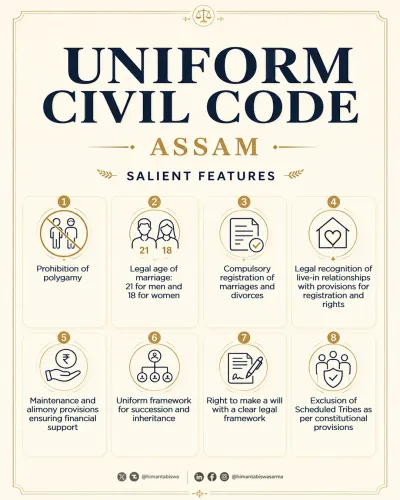
The proposed UCCAssam aims to create common personal laws governing marriage, inheritance, and related matters for residents of the state. By excluding Janjatiya communities, the government is drawing a clear boundary between uniformity in civil law and the constitutional protection of indigenous customary practices.
Policy Backdrop
Article 44 of the Indian Constitution (1950) directs the state to endeavour towards a Uniform Civil Code, but the Constitution simultaneously provides protections for tribal autonomy. The Sixth Schedule of the Constitution, operative in parts of Assam, created Autonomous District Councils with the authority to legislate on customary law, inheritance, and social practices of tribal communities.
This dual framework has long created a tension between the drive for legal uniformity and the imperative to protect indigenous legal systems. Assam's decision follows a pattern already visible in Uttarakhand's UCC legislation, which similarly carved out exemptions for Scheduled Tribe communities. Discussions in other Northeastern states have mirrored the same approach, reflecting a broad political and constitutional consensus that tribal customary law deserves a protected space.
The specific reference to women as being 'central' to Janjatiya traditions is notable. Ethnographic accounts of many tribal societies in Assam and the broader Northeast have long documented women's significant roles as custodians of oral tradition, ritual practice, and community governance — a reality the Chief Minister's framing explicitly acknowledges.
Stakeholders and Impact
Janjatiya communities across Assam stand as the most direct beneficiaries of this exemption, retaining the right to govern personal and social matters through their own customary systems rather than a codified state statute. Indigenous women, highlighted by CM Sarma as central figures in these traditions, are implicitly positioned as key stakeholders whose roles within community structures will continue to be governed by customary norms.
For the broader non-tribal population of Assam, the UCC framework will still apply, meaning the state will operate a dual-track system — a common civil code for the general population alongside protected customary law for tribal communities. This arrangement will require clear administrative and legal demarcation to avoid jurisdictional ambiguity.
What's Next
Attention will now turn to the release of the final UCCAssam draft, which is expected to formally codify the tribal exemption alongside its main provisions. Autonomous District Councils operating under the Sixth Schedule in Assam are likely to weigh in on the specific contours of the exemption and whether additional modifications are sought. The manner in which the exemption is legally defined will determine whether it becomes a durable model for other states navigating the same constitutional tension between uniformity and tribal autonomy.
Point of View
The government positions itself as a protector of indigenous identity rather than an imposer of uniformity. The explicit mention of women as custodians of tribal tradition is a deliberate rhetorical move that pre-empts gender-rights critiques of the exemption. This approach is likely to become a template for other BJP-governed states with large tribal populations as UCC debates intensify nationally.
NationPress
11 Oct 2026
Frequently Asked Questions
Which communities are exempt from UCCAssam?
Janjatiya (indigenous tribal) communities of Assam have been kept outside the purview of UCCAssam, as announced by Chief Minister Himanta Biswa Sarma on May 28, 2026.
Why are tribal communities exempt from the Assam UCC?
The exemption recognises the centuries-old traditions, faith systems, and customary self-regulation of Janjatiya communities, which are also protected under the Sixth Schedule of the Indian Constitution through Autonomous District Councils.
Does the Uttarakhand UCC also exempt tribal communities?
Yes, Uttarakhand's UCC legislation similarly carved out exemptions for Scheduled Tribe communities, and Assam's approach follows the same constitutional and political pattern.
What is the role of women in Janjatiya communities according to CM Sarma?
CM Sarma stated that women are 'central' to the traditions, faith, and social systems of Janjatiya communities, and this recognition is part of the rationale for the tribal exemption from UCCAssam.