Owaisi: Every Poor Indian Is 'Undocumented' Today
Synopsis
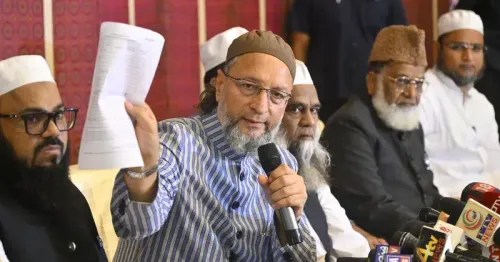
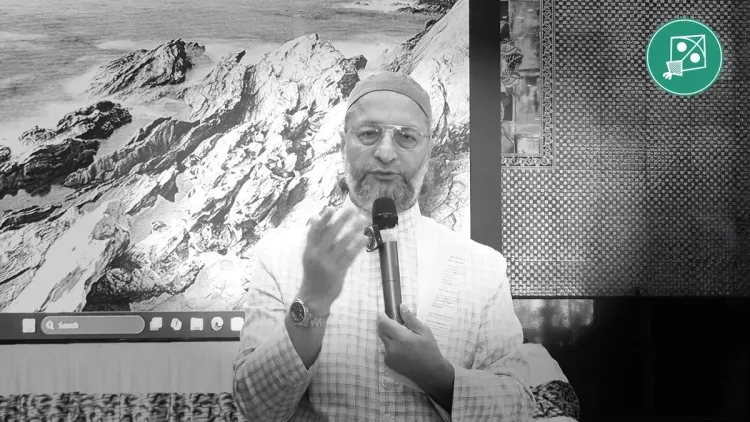
AIMIM president Asaduddin Owaisi declared on 6 July 2026 that every poor Indian — regardless of religion — is effectively 'Undocumented' today, linking documentation-linked welfare barriers and citizenship verification frameworks to the exclusion of India's most marginalised households.
Key Takeaways
AIMIM president Asaduddin Owaisi posted on 6 July 2026 that every poor Indian, irrespective of religion, is 'Undocumented' today.
The statement is cross-religious in framing, centring economic class rather than any single community.
India's welfare delivery has been tied to Aadhaar biometric records since the Aadhaar Act, 2016 , creating access barriers for those with missing or mismatched data.
The Assam NRC final list (2019) excluded roughly 19 lakh residents lacking legacy documents, affecting both Hindu and Muslim households.
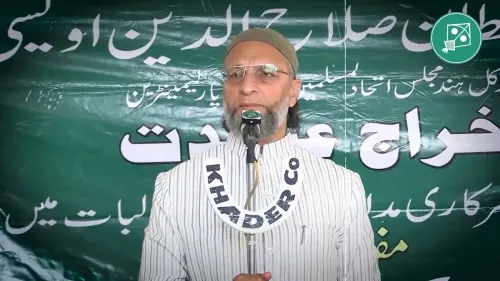
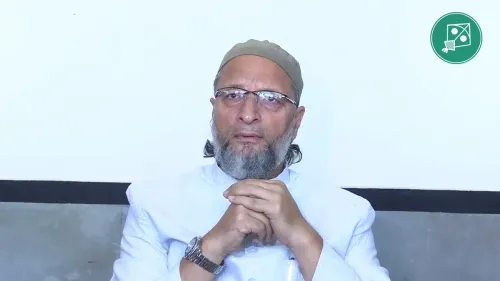
The post was accompanied by a video, suggesting it is part of a broader campaign on documentation and welfare exclusion.
Owaisi is a sitting Lok Sabha MP from Hyderabad and has a record of raising documentation-exclusion cases in Parliament.
AIMIM president Asaduddin Owaisi on Monday, 6 July 2026, declared that every poor person in India — regardless of religion — is effectively 'undocumented' in the current policy environment, sharpening his long-standing critique of documentation-linked welfare delivery and citizenship verification frameworks.
Context
Posting in Hindi, Owaisi wrote: 'Bharat ka har ghareeb, chahe wo kisi bhi mazhab ka ho, aaj Undocumented hai' — 'Every poor person in India, regardless of which religion they belong to, is Undocumented today.' The use of the English word 'Undocumented' embedded in an otherwise Hindi sentence signals a deliberate rhetorical choice, drawing a parallel with the language used in immigration and citizenship debates globally and domestically.
The statement is notably cross-religious in framing. By foregrounding economic class — 'every poor person' — rather than any single community, Owaisi broadens the argument beyond the minority-rights register he typically occupies, positioning documentation exclusion as a universal poverty issue.
Policy Backdrop
India's welfare architecture has undergone a structural shift since the expansion of Aadhaar linkages after 2014, tying access to food rations, direct benefit transfers, and social pensions to biometric identity records. The Aadhaar Act, 2016, formalised this framework, but implementation gaps have repeatedly left marginalised households — migrant workers, landless labourers, elderly residents in remote areas — unable to access entitlements due to mismatched or absent records.
The National Register of Citizens (NRC) exercise in Assam, whose final list was published in 2019, excluded roughly 19 lakh residents who could not produce legacy documents, cutting across Hindu and Muslim communities alike. The process reignited national debate over what constitutes proof of citizenship for India's poorest households, who often lack birth certificates, land records, or continuous address documentation. The Citizenship Amendment Act (CAA), 2019, which created differential documentation pathways by religion, added another layer to that debate.
Stakeholders and Impact
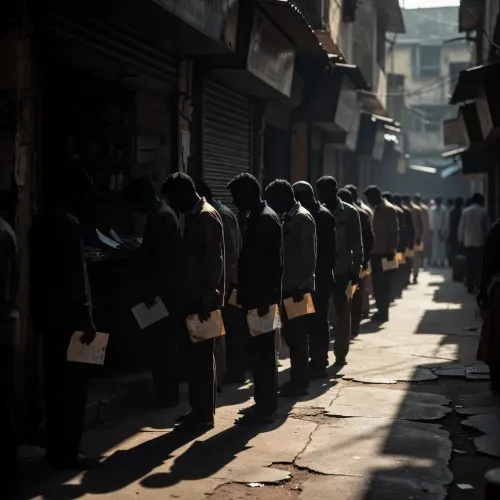
The populations most exposed to documentation gaps include internal migrants, daily-wage workers, tribal communities, and elderly persons in rural India — groups that cut across every religious denomination. Civil society organisations working on welfare rights have documented recurring cases of exclusion from the Public Distribution System and PM-KISAN due to Aadhaar-seeding failures or name mismatches in government databases.
For AIMIM, whose electoral base is concentrated among urban Muslim working-class voters in Hyderabad and parts of Maharashtra, Bihar, and Uttar Pradesh, the framing serves both a constituency-specific and a coalition-building purpose — signalling solidarity with non-Muslim poor households on a shared grievance.
What's Next
Parliamentary scrutiny of any proposed nationwide NRC or tightening of scheme-eligibility norms will be the next formal arena where this argument is likely to be pressed. Owaisi, as a sitting Lok Sabha MP from Hyderabad, has consistently used Question Hour and Zero Hour to raise documentation-exclusion cases. The post, accompanied by a video, suggests the messaging is part of a broader campaign rather than a standalone remark — the full content of the video may elaborate the specific policy trigger, which had not been independently confirmed at the time of publication.
Point of View
' he attempts to universalise a grievance his party is typically associated with, potentially broadening its political resonance ahead of any legislative push on a nationwide NRC. The invocation of 'Undocumented' — an English word dropped into Hindi — consciously borrows from global migration discourse to recast domestic welfare exclusion as a human-rights issue rather than a communal one. This positions AIMIM not merely as a minority-interest party but as a voice for class-based welfare rights, a space traditionally occupied by Left and regional parties. The durability of this framing will depend on whether it translates into concrete parliamentary action or remains campaign messaging.
NationPress
5 Oct 2026
Frequently Asked Questions
What did Owaisi mean by 'every poor Indian is Undocumented'?
Owaisi argued that India's documentation-linked welfare and citizenship systems effectively exclude the economically marginalised regardless of their religion, using the word 'Undocumented' to highlight their inability to access state benefits or prove identity through formal records.
How does Aadhaar create barriers for poor Indians?
Aadhaar linkage is mandatory for many welfare schemes, but mismatched names, biometric failures, or absent records can lock out migrant workers, elderly residents, and others — denying them food rations, pensions, and direct benefit transfers.
What is the NRC and how does it affect poor households?
The National Register of Citizens exercise in Assam, completed in 2019, required residents to produce legacy documents to prove citizenship. Roughly 19 lakh people were excluded, including many poor Hindu and Muslim families who lacked birth certificates or land records.
Is Owaisi's statement directed only at Muslims?
No. The statement explicitly says 'regardless of which religion they belong to,' making it a class-based argument about documentation exclusion affecting all poor Indians.
What could happen next in Parliament on documentation and welfare?
Any proposal for a nationwide NRC or stricter scheme-eligibility norms would be debated in Parliament, where Owaisi as a Lok Sabha MP has previously used Question Hour and Zero Hour to raise documentation-exclusion cases.