Owaisi Questions Which Document Proves Citizenship
Synopsis
AIMIM president Asaduddin Owaisi on 25 June 2026 questioned the government's citizenship-documentation framework, asking what document Indians must produce to prove nationality if a Passport, Birth Certificate, Aadhaar Card, and Voter ID are all considered insufficient — reigniting the CAA-NRC debate.
Key Takeaways
Asaduddin Owaisi posted on 25 June 2026 questioning which document conclusively proves Indian citizenship.
He listed four documents — Passport , Birth Certificate , Aadhaar Card , and Voter ID Card — that have been deemed insufficient in various citizenship-verification contexts.
The Assam NRC , published 31 August 2019 , excluded approximately 1.9 million people despite many holding routine government-issued identity papers.
The Citizenship (Amendment) Act, 2019 fast-tracks citizenship for non-Muslim migrants from Afghanistan , Bangladesh , and Pakistan , adding a religious dimension to the documentary debate.
India's Citizenship Act, 1955 does not designate a single document as definitive proof of nationality, leaving the evidentiary standard ambiguous.
Any future nationwide NRC would require the government to specify an authoritative document list — a step not yet taken.
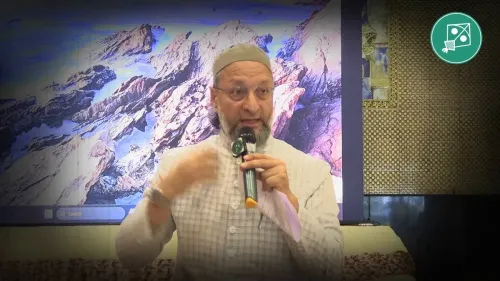
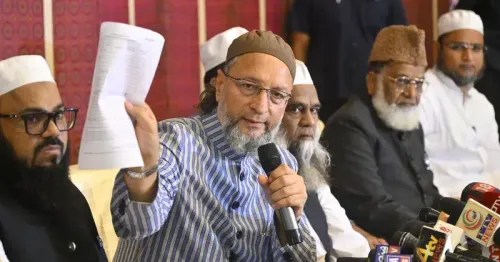
AIMIM president Asaduddin Owaisi on Thursday, 25 June 2026, posed a sharp challenge to the government's citizenship-documentation framework, asking what document a citizen must produce to prove nationality if a Passport, Birth Certificate, Aadhaar Card, and Voter ID Card are all deemed insufficient.
Context
Owaisi's post, written in Hindi, asks: 'अगर Passport, Birth Certificate, Aadhaar Card और Voter ID Card भी नागरिकता के दस्तावेज़ नहीं हैं, तो फिर नागरिकता साबित करने के लिए कौन-सा दस्तावेज़ चाहिए?' — translated: 'If a Passport, Birth Certificate, Aadhaar Card, and Voter ID Card are not documents of citizenship, then which document is required to prove citizenship?' The question reflects a long-running debate about what constitutes conclusive proof of Indian nationality.
The Hyderabad MP has been a consistent critic of the Citizenship (Amendment) Act, 2019 and the National Register of Citizens (NRC) process. His post crystallises a concern shared by civil-society groups and legal scholars: that the government has not clearly defined which documents will satisfy a citizenship verification exercise if one is extended nationwide.
Policy Backdrop
India's Citizenship Act, 1955 governs who qualifies as a citizen, but it does not designate a single document as definitive proof of citizenship. Successive administrations have clarified that Aadhaar establishes identity and residency, not citizenship, while Voter ID confirms electoral eligibility rather than nationality per se. Even a Passport — the strongest of the four documents Owaisi lists — can in narrow legal contexts be challenged.
The Assam NRC, published on 31 August 2019, excluded approximately 1.9 million applicants despite many holding multiple identity documents. That exercise exposed the gap between possessing routine government-issued papers and satisfying the evidentiary bar set by citizenship tribunals. The CAA, passed by Parliament in December 2019, fast-tracks citizenship for non-Muslim migrants from Afghanistan, Bangladesh, and Pakistan, adding a religious dimension to the documentary debate.
Stakeholders and Impact
The question most acutely affects Muslim citizens, stateless residents, and the roughly 1.9 million people excluded from the Assam NRC, many of whom hold Aadhaar cards or Voter IDs. Legal aid organisations working with NRC-excluded families have long argued that the absence of a clear, accessible document standard places a disproportionate burden on marginalised communities.
For the broader population, the post touches a nerve: millions of Indians — particularly from lower-income, rural, or migrant backgrounds — may possess only one or two of the documents Owaisi names, making any future nationwide verification exercise a potential flashpoint.
What's Next
Parliamentary and judicial developments will determine the stakes of this debate. Any move toward a nationwide NRC would require the government to specify an authoritative document list, a step it has not yet taken. Supreme Court hearings on citizenship-related petitions, including those challenging the CAA, may eventually force clarity on what documentary proof satisfies the Citizenship Act, 1955. Until that clarity arrives, Owaisi's question is likely to remain a recurring fault line in Indian political discourse.
Point of View
Universally accepted document that conclusively establishes citizenship under the Citizenship Act, 1955. By naming the four most common identity documents, he forces the question that a nationwide NRC would eventually have to answer — and highlights the disproportionate vulnerability of communities that lack multi-generational paper trails. The post also keeps the CAA-NRC debate alive at a moment when the government has been silent on a nationwide rollout, signalling that opposition pressure on this issue has not abated. For the ruling dispensation, the absence of a clear answer is itself a political liability.
NationPress
24 Sept 2026
Frequently Asked Questions
Which document proves Indian citizenship officially?
India's Citizenship Act, 1955 does not designate a single document as definitive proof of citizenship. A Passport comes closest, but even it can be legally challenged in narrow contexts; Aadhaar and Voter ID establish identity and electoral eligibility, not nationality.
Why does Owaisi say Aadhaar and Voter ID are not citizenship documents?
Aadhaar is issued to residents, including non-citizens, to establish identity and access services. Voter ID confirms eligibility to vote but does not certify nationality under the Citizenship Act, 1955 — a distinction that became critical during the Assam NRC exercise.
What is the NRC and how does it relate to citizenship documents?
The National Register of Citizens (NRC) is a register of verified Indian citizens. The Assam NRC , published on 31 August 2019 , excluded approximately 1.9 million applicants, many of whom held Aadhaar cards or Voter IDs, underscoring that routine documents may not satisfy the NRC's evidentiary standard.
What is the CAA and why is it controversial?
The Citizenship Amendment Act (CAA) , passed in December 2019 , fast-tracks Indian citizenship for non-Muslim migrants from Afghanistan , Bangladesh , and Pakistan . Critics, including Owaisi , argue it discriminates on religious grounds and, when combined with a potential nationwide NRC, could leave Muslim residents stateless.
Could a nationwide NRC happen in India?
The central government has not announced a timeline for a nationwide NRC . Any such exercise would require Parliament to specify which documents satisfy the citizenship standard — the very question Owaisi raised on 25 June 2026 . Supreme Court hearings on related petitions may eventually compel that clarity.