CM Rio Backs Cooperative Federalism, Viksit Bharat 2047

Synopsis
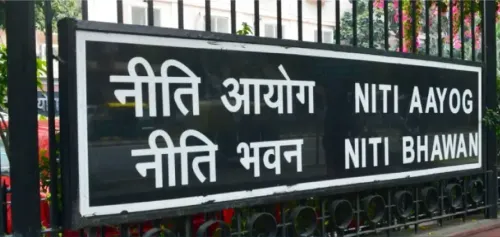
Nagaland Chief Minister Neiphiu Rio on June 11, 2026 reaffirmed commitment to cooperative federalism and the Viksit Bharat 2047 vision, thanking the Government of India and NITI Aayog for their support to the northeastern hill state.
Key Takeaways
CM Neiphiu Rio publicly endorsed cooperative federalism and the Viksit Bharat @ 2047 national development vision on June 11, 2026 .
Nagaland is constitutionally protected under Article 371A , giving it a unique position in centre-state negotiations.
NITI Aayog , established on January 1, 2015 , replaced the Planning Commission to institutionalise state participation in national policy design.
The North Eastern Council , set up in 1971 , remains a key institutional mechanism for regional development planning in states like Nagaland.
Rio's statement signals political alignment with central development goals ahead of anticipated NITI Aayog Governing Council consultations.
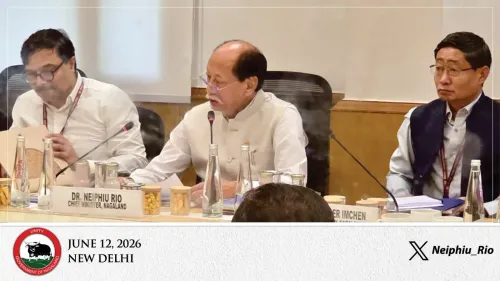
Nagaland Chief Minister Neiphiu Rio on Thursday, June 11, 2026, reaffirmed his government's commitment to cooperative federalism and sustainable development, expressing gratitude to the Government of India and NITI Aayog for their support to the hill state. Rio underscored Nagaland's resolve to contribute meaningfully to the national vision of Viksit Bharat @ 2047.
Context
Chief Minister Rio posted on X, stating: 'As a hilly State with unique opportunities and challenges, we are committed to strengthening cooperative federalism, governance and sustainable development. Grateful to the GoI and NITI Aayog for their support. We look forward to contributing meaningfully to the vision of Viksit Bharat @ 2047.'
The statement positions Nagaland as an active partner in India's long-term development roadmap rather than a passive recipient of central assistance. It signals alignment between the state government's priorities and the overarching national framework ahead of key policy consultations.
Policy Backdrop
NITI Aayog was constituted on January 1, 2015, replacing the earlier Planning Commission to institutionalise cooperative federalism by bringing states into the heart of policy design. The shift was intended to move away from top-down planning and allow states, particularly those with unique constitutional or geographic profiles, to shape national priorities from the ground up.
Nagaland holds a distinct position within this framework, protected by Article 371A of the Constitution, which safeguards tribal customs and land rights. The state's hilly terrain, insurgency history, and demographic character have historically required tailored development approaches distinct from those applied to the plains states.
The Viksit Bharat @ 2047 vision, formally articulated by the Government of India, sets a national roadmap to transform India into a fully developed nation by the centenary of independence. The framework integrates state-level inputs on infrastructure, governance, and sustainable development as essential building blocks toward that target.
Stakeholders and Impact
Rio's statement carries significance for Nagaland's hill communities, who stand to benefit from stronger centre-state coordination on infrastructure, livelihood, and governance. The North Eastern Council, established in 1971 to address regional planning needs of northeastern states, provides an additional institutional channel through which such commitments are operationalised.
Northeastern states broadly share the challenges Rio referenced — difficult terrain, connectivity deficits, and the need for development models sensitive to local ecology and culture. A public reaffirmation from a sitting Chief Minister of alignment with NITI Aayog's cooperative federalism model reinforces the political will required to translate central schemes into ground-level outcomes in the region.
What's Next
NITI Aayog's upcoming state consultation rounds and Governing Council meetings will be closely watched to see whether specific provisions for northeastern hill states are formalised. Any dedicated allocations in the Union Budget or updates to the Act East Policy could provide the next concrete test of the centre-state partnership Rio has publicly endorsed.
With 2047 as the horizon, the trajectory of Nagaland's integration into national development planning — balancing its constitutional protections with the ambitions of a modernising economy — will remain a key indicator of cooperative federalism's depth in India's northeastern frontier.
Point of View
Visible alignment with cooperative federalism also serves a domestic governance narrative, projecting stability and developmental intent. The explicit mention of 'unique opportunities and challenges' is a subtle assertion that Nagaland's development trajectory cannot be measured by a one-size-fits-all national yardstick. Across the northeast, such public endorsements from Chief Ministers have historically correlated with increased engagement in Governing Council deliberations and Act East Policy provisions.
NationPress
26 Oct 2026
Frequently Asked Questions
What is Viksit Bharat 2047?
Viksit Bharat 2047 is the Government of India's long-term vision to transform India into a fully developed nation by 2047, the centenary of independence, integrating state-level inputs on governance, infrastructure, and sustainable development.
What is NITI Aayog and why does it matter for Nagaland?
NITI Aayog is India's policy think tank established on January 1, 2015, to replace the Planning Commission and promote cooperative federalism. For Nagaland, it serves as the primary platform through which the state can shape national policies sensitive to its hilly terrain and constitutional protections.
What is Article 371A and how does it affect Nagaland's governance?
Article 371A of the Indian Constitution provides special protections for Nagaland, safeguarding Naga customary law, land rights, and tribal practices from parliamentary legislation without the state assembly's consent, giving Nagaland a distinct position in centre-state relations.
What did Nagaland CM Neiphiu Rio say about cooperative federalism?
On June 11, 2026, CM Rio stated that as a hilly state with unique opportunities and challenges, Nagaland is committed to strengthening cooperative federalism, governance, and sustainable development, and expressed gratitude to the Government of India and NITI Aayog for their support.
What is the North Eastern Council and its role in Nagaland's development?
The North Eastern Council, established in 1971, is the statutory body for regional planning and development across northeastern states including Nagaland, providing an institutional channel to coordinate infrastructure and livelihood programmes tailored to the region's needs.