NITI Aayog holds Guwahati workshop to strengthen Panchayats for Viksit Bharat 2047
Synopsis
NITI Aayog took the Viksit Bharat@2047 agenda to the grassroots in Guwahati, convening policymakers and rural development experts to reimagine Panchayats as data-driven, spatially aware local governments — a significant upgrade from the fund-and-forget model that has long limited India's 2.5 lakh gram panchayats.
Key Takeaways
NITI Aayog and GBSIPRD co-organised the national workshop 'Viksit Panchayat' in Guwahati on 29 September 2026 .
The event focused on empowering Panchayats to drive inclusive growth under the Viksit Bharat@2047 vision.
Key themes included decentralised spatial planning , GIS integration , GPDP reform , and grassroots capacity building .
Speakers called for stronger devolution of powers under the 73rd Constitutional Amendment and active Gram Sabha participation.
Integration of spatial data with eGramSwaraj and the Panchayat Advancement Index (PAI) was highlighted as a tool for evidence-based planning.
India has over 2.5 lakh gram panchayats, with wide variation in effectiveness across states due to uneven devolution of funds and functions.
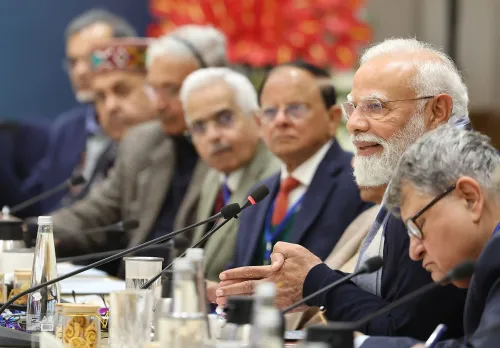
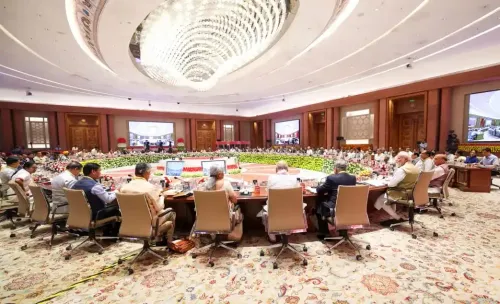
NITI Aayog, in collaboration with the Golap Borbora State Institute of Panchayat and Rural Development (GBSIPRD), convened a national workshop in Guwahati on 29 September 2026 to deliberate on empowering Panchayats as engines of grassroots development under the Viksit Bharat@2047 vision. The one-day event, titled 'Viksit Panchayat: Connecting People, Places, Resources and Opportunities', brought together policymakers, administrators, and rural development experts to chart a roadmap for inclusive, decentralised growth.
Key Participants and Inauguration
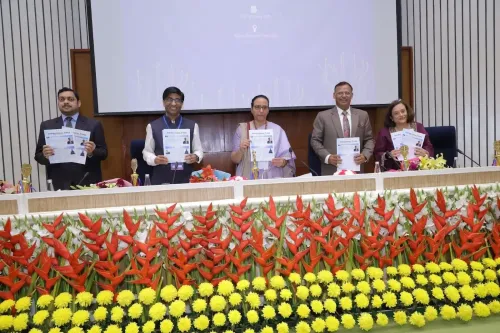
The workshop was inaugurated by Assam Panchayat and Rural Development Minister Atul Bora. NITI Aayog Member Dr R. Balasubramaniam attended as Guest of Honour. Also present were Assam Chief Secretary Dr Ravi Kota and Rural Development Secretary Rohit Kansal, underlining the event's significance as a joint Centre-state initiative.
Core Themes: Decentralisation and Spatial Planning
Discussions at the inaugural session centred on four pillars: decentralised and spatial planning, grassroots capacity development, spatial planning for priority sectors, and the integration of spatial planning into the Gram Panchayat Development Plan (GPDP) process. Speakers stressed the constitutional foundation of Panchayati Raj institutions under the 73rd Constitutional Amendment, calling for clearer activity mapping, adequate financial resources, appropriate staffing, and greater decision-making authority at the local level. Active Gram Sabha participation and stronger institutional accountability were also emphasised.
A notable shift discussed was the move away from a sector-specific approach toward a spatial and integrated model of local development. Experts highlighted the use of Geographic Information Systems (GIS), geospatial data, village master plans, and digital platforms to map local resources, identify infrastructure gaps, track land-use patterns, and uncover development opportunities. Integrating spatial data with eGramSwaraj and the Panchayat Advancement Index (PAI) was presented as a means to strengthen evidence-based planning and improve convergence across government schemes and departments.
Capacity Building at the Grassroots
Capacity development emerged as a recurring theme, with participants stressing the need to equip elected representatives and Panchayat functionaries with skills in data analysis, investment prioritisation, resource mobilisation, convergence planning, and outcome monitoring. Discussions also covered devolution of powers, the role of District Planning Committees, digital and hybrid learning systems, competency frameworks, and last-mile technical support — all seen as essential for turning Panchayats into effective local governance units.
Broader Context and What Comes Next
This comes amid a renewed national push to make Panchayati Raj institutions the primary vehicles for achieving Sustainable Development Goals (SDGs) at the village level, a goal embedded in the Viksit Bharat@2047 blueprint. India has over 2.5 lakh gram panchayats, and experts have long argued that their effectiveness varies sharply across states due to uneven devolution of funds, functions, and functionaries. The Guwahati workshop signals an intent to close that gap through structured capacity building and data-driven planning tools. Follow-up action on activity mapping guidelines and GPDP integration frameworks is expected in the coming months.
Point of View
But India has been 'strengthening Panchayats' through conferences and policy papers for three decades since the 73rd Amendment. The real bottleneck is not awareness — it is the chronic under-devolution of funds, functions, and functionaries that state governments have been reluctant to relinquish. Until activity mapping is legally binding and financial flows are formula-driven rather than discretionary, spatial planning tools and GIS dashboards risk becoming sophisticated wallpaper. The Viksit Bharat framing adds urgency, but urgency without structural reform is a rebranding exercise.
NationPress
29 Sept 2026
Frequently Asked Questions
What was the NITI Aayog Viksit Panchayat workshop in Guwahati about?
The workshop, held on 29 September 2026, aimed to strengthen Panchayats as engines of grassroots development under the Viksit Bharat@2047 vision. It brought together policymakers and rural development experts to discuss spatial planning, GIS tools, capacity building, and reforms to the Gram Panchayat Development Plan process.
Who attended the Guwahati NITI Aayog panchayat workshop?
The workshop was inaugurated by Assam Panchayat and Rural Development Minister Atul Bora. NITI Aayog Member Dr R. Balasubramaniam attended as Guest of Honour, with Assam Chief Secretary Dr Ravi Kota and Rural Development Secretary Rohit Kansal also present.
What is the Gram Panchayat Development Plan (GPDP) and why is it significant?
The GPDP is a village-level planning document that guides resource allocation and scheme convergence at the panchayat level. The workshop highlighted integrating spatial data and GIS tools into the GPDP process, along with platforms like eGramSwaraj and the Panchayat Advancement Index, to make local planning more evidence-based and effective.
What is the 73rd Constitutional Amendment and how does it relate to Panchayati Raj?
The 73rd Constitutional Amendment, enacted in 1992, constitutionally recognised Panchayati Raj institutions and mandated devolution of powers, functions, and finances to local governments. Workshop participants underscored the need to fully implement its provisions through clearer activity mapping, adequate financial resources, and greater decision-making authority at the panchayat level.
How does the Viksit Panchayat initiative connect to Viksit Bharat@2047?
Viksit Bharat@2047 is India's long-term development vision targeting a developed nation status by 2047. The Viksit Panchayat initiative positions India's over 2.5 lakh gram panchayats as the primary units for achieving grassroots-level Sustainable Development Goals, with empowered local governance seen as essential to reaching that target.