Has Viksit Bharat Become a Mass Aspiration? PM Modi's Vision for 2047
Synopsis
In a significant address, PM Modi highlights how the dream of a Developed India by 2047 resonates with the masses, calling for reforms and strategic insights to enhance India's global standing. Join us as we delve into the discussion that promises to reshape India's future.
Key Takeaways
PM Modi's vision for Viksit Bharat by 2047 Need for mission-mode reforms across sectors Importance of institutional capacity and infrastructure planning Role of AI in enhancing productivity Focus on household savings and robust infrastructure
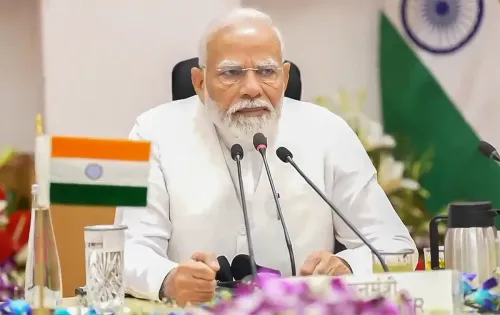
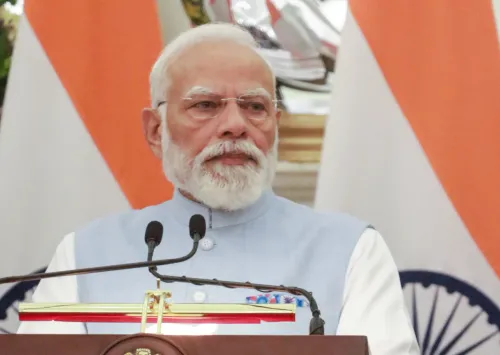
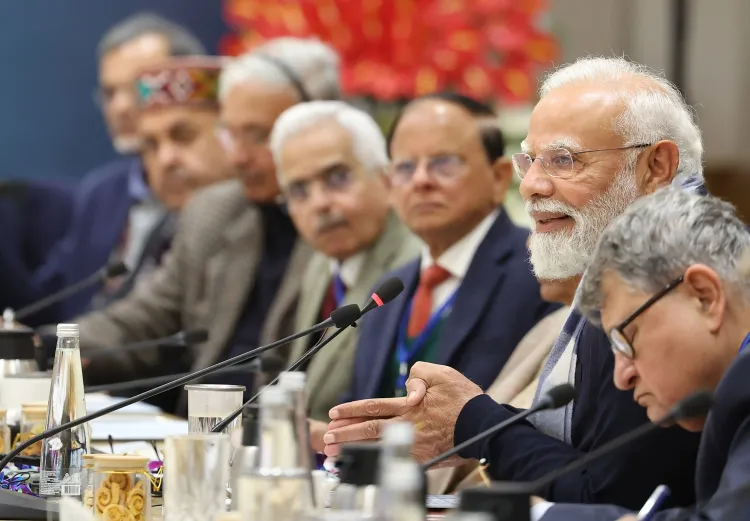
New Delhi, Dec 30 (NationPress) Prime Minister Narendra Modi stated on Tuesday that the aspiration for a Viksit Bharat (Developed India) by 2047 has evolved beyond mere government policies to become a true mass aspiration.
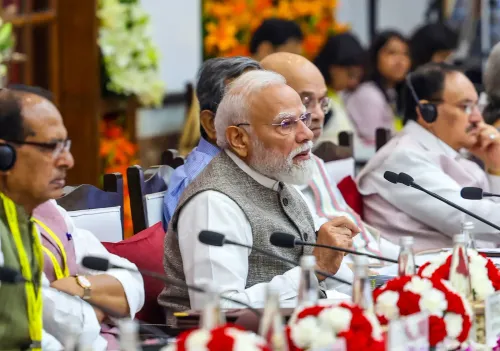
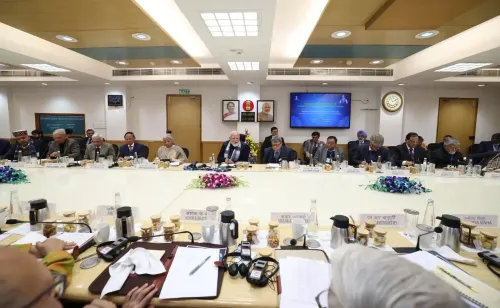
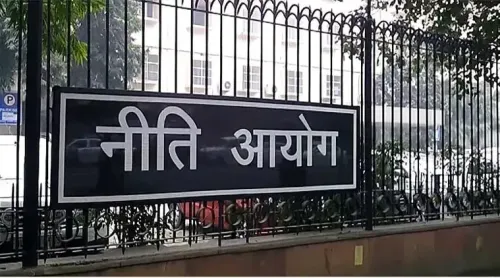
During his address to a group of distinguished economists and experts at NITI Aayog, PM Modi emphasized that this transformation is reflected in changing trends in education, consumption, and global mobility. This shift demands greater institutional capacity and proactive infrastructure planning to cater to an increasingly aspirational society.
The Prime Minister called for reforms to be implemented in a mission-mode across various sectors to ensure sustainable long-term growth. He highlighted the importance of aligning India’s policymaking and budgeting with the vision for 2047.
Furthermore, he stressed the need for India to remain a pivotal hub for the global workforce and international markets.
The theme of the interaction was ‘Aatmanirbharta and Structural Transformation: Agenda for Viksit Bharat’.
During the discussions, economists provided strategic recommendations for boosting productivity and competitiveness in both the manufacturing and services sectors.
Topics of discussion included accelerating structural transformation through increased household savings, robust infrastructure development, and embracing advanced technology.
The role of Artificial Intelligence (AI) as a catalyst for productivity across sectors was explored, along with the ongoing expansion of India’s Digital Public Infrastructure (DPI), as per an official statement.
Participants noted that the unprecedented wave of cross-sectoral reforms expected in 2025 and their further consolidation in the upcoming year will ensure that India continues to position itself as one of the fastest-growing global economies, reinforcing its foundations and unlocking new opportunities.
Several prominent economists and experts, including Shankar Acharya, Ashok K Bhattacharya, N R Bhanumurthy, Amita Batra, Janmejaya Sinha, Amit Chandra, Rajani Sinha, Dinesh Kanabar, Basanta Pradhan, Madan Sabnavis, Ashima Goyal, Dharmakirti Joshi, Umakant Dash, Pinaki Chakraborty, Indranil Sen Gupta, Samiran Chakraborty, Abhiman Das, Rahul Bajoria, Monika Halan, and Siddhartha Sanyal participated in the discussion.
Point of View
It is paramount to recognize the significance of PM Modi's vision for a Viksit Bharat. This initiative not only aims for economic growth but also seeks to elevate the aspirations of every Indian citizen, positioning the nation on the global stage. It is crucial to support this long-term vision for a brighter future.
NationPress
22 Sept 2026
Frequently Asked Questions
What is the vision of Viksit Bharat?
The vision of Viksit Bharat refers to the aspiration of achieving a Developed India by 2047, focusing on comprehensive growth across various sectors.
Who were the participants in the discussion?
The discussion featured several prominent economists and experts, including Shankar Acharya, Ashok K Bhattacharya, and many others.
What are the key areas of focus for reforms?
Key areas include enhancing productivity in manufacturing and services, increasing household savings, and improving infrastructure development.
What role does AI play in this vision?
Artificial Intelligence is seen as a catalyst for cross-sectoral productivity improvements.
When is the significant wave of reforms expected?
An unprecedented wave of cross-sectoral reforms is anticipated in 2025.